After the fifth refusal, a lot of families end up saying the same thing: “He says he’s fine, and I don’t know what else to try.” If that’s where you are tonight, the hard truth is that you can’t make his decision for him. What you can control is how you stay in his life while he makes it. If you’ve been searching for what to do with a mentally ill family member who refuses treatment, this guide walks you through it in order. It covers what to gather first, what to do in a crisis, how to keep talking with him, how to take the money question off the table, and what happens on the day he finally says yes. By the end, you may have a safety plan, a calmer way to keep the conversation going, and a coverage answer in hand, so nothing slows him down when he’s ready.
If he may be overdosing or anyone is in danger right now, stop reading and call 911. If he is talking about suicide or is in a mental health crisis, call or text 988.
What Do You Need Before You Start?
You need three things: realistic expectations, a safety plan, and a few facts about him and his insurance. With those in hand, you can act from a steadier place instead of a scared one.
Start with the hard truth. An adult who can make his own decisions generally has the right to refuse care, even care his family believes he needs. Medical ethics guidance like StatPearls on refusal of care describes that principle. Your love alone can’t make a grown man say yes, and TruHealing Cincinnati’s admissions team has had conversations that went on for months, sometimes years, before a man agreed to come in. That’s common. That being said, families who stay involved are sometimes part of why a man eventually picks up the phone, so your job isn’t to win one argument. Your job is to stay a person he can trust when he’s ready to talk.
Next, build a simple safety plan. Save 911 and 988 in your phone. If opioids or pills are part of the picture, keep naloxone (Narcan) in the house and make sure everyone knows where it is. Decide ahead of time who in the family makes the call in an emergency, so nobody freezes. Then gather a few facts in one place:
- His full legal name and date of birth
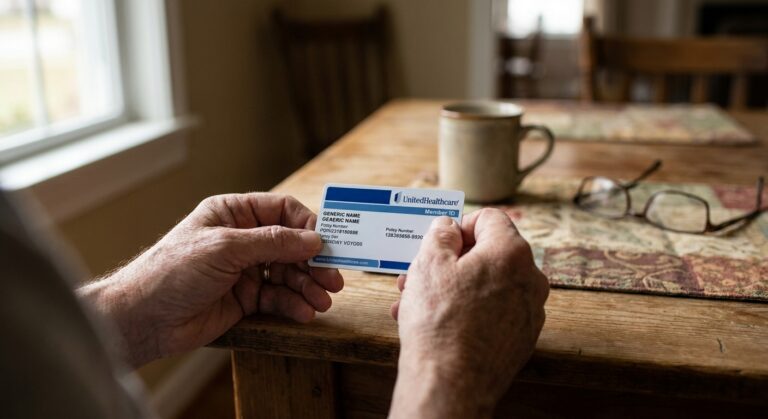
- His insurance member ID (a photo of the front and back of his card works)
- What he uses, how much, how often, and when he last used
- Mental health symptoms you’ve seen, such as changes in sleep, mood swings, paranoia, or talk of hopelessness
- Any past treatment, diagnoses, or medications
These notes matter for a practical reason. TruHealing Cincinnati decides whether a man belongs in the mental health level of care or the substance use level of care based on his use patterns and on what his insurance company will approve him to attend treatment for. One more fact up front: TruHealing Cincinnati treats adult men 18 and older only. It’s an all-male center in Cincinnati, OH, built around the way men carry pressure as providers and protectors.
Step 1: How Do You Know If This Is a Crisis Right Now?
Call 911 if he may be overdosing or if anyone is in immediate physical danger. Call or text 988, the Suicide & Crisis Lifeline, if he’s in a mental health crisis or talking about suicide but nobody is in immediate physical danger.
Signs of a possible overdose include slow, gurgling, or stopped breathing, blue or gray lips and nail beds, pinpoint pupils, and not waking up when you shake him or say his name. Signs of a mental health crisis include talk about ending his life, giving away his things, saying goodbye in strange ways, or seeing and hearing things that push him toward hurting himself or someone else. Cincinnati also has local crisis services, so look up the current number on an official local government website and save it in your phone today. That way you aren’t searching for it in the worst moment.
If a family calls TruHealing Cincinnati scared that he may have overdosed, the call doesn’t start with treatment. The intake reps follow a three-stage script the center calls Stabilize-Locate-Follow. First, they ask whether he’s breathing and what color his lips and nail beds are, and they check for pinpoint pupils. If Narcan is on hand, they walk the caller through giving it by nose and through rescue breaths every 5 seconds. If there’s no Narcan, they have the caller start CPR. At the same time, they get the address so EMS can be sent, and they keep the callback number so they never lose contact if the line drops. They stay on until paramedics take over. Only after he’s safe does anyone talk about next steps, and even then the talk starts with safety planning, not admission. As the team puts it, “You can’t recover if you’re not alive.”
Not every bad night is an emergency, though. If he’s drinking again, isolating, or snapping at everyone, but he’s breathing, awake, and not talking about hurting himself or anyone else, you’re dealing with a slower problem. That calls for the steps below, not a siren. Knowing the difference can keep you from burning out on panic and saves the 911 call for when it truly counts.
Step 2: Why Does Tough Love Often Fail, and What May Work Better?
Tough love can fail because cutting a man off may leave him feeling like a number instead of a person, and it can remove the one relationship that might pull him toward help. An approach some families find more workable is a loving one with healthy boundaries, where you stop paying for his use without pushing him out of your life.
TruHealing Cincinnati’s team tells families that tough love does not always work. They walk families through how to put healthy boundaries in place while still loving him through the process, without enabling him to keep using. That balance is hard, right? A lot of men already carry a heavy load of guilt and shame, especially men raised to be the provider and the protector. An ultimatum like “Get help or never come home” can land on that shame like a hammer, and he may dig in just to keep his pride, and now he’s alone with the very things that got him here.
A boundary is different from an ultimatum. An ultimatum tries to control what he does. A boundary describes what you will do, and it protects your home and your health without closing the door. Here are some examples:
- “I won’t give you cash anymore, but I’ll buy groceries and pay your phone bill so we can stay in touch.”
- “You can’t drink or use in this house. If you’ve been using, you can come back tomorrow, and I’ll still be here.”
- “I won’t call your boss to cover for you, but I’ll drive you to an assessment any day you say yes.”
- “I’m not going to argue tonight. I love you, and I’m calling you Thursday.”
Each of those lines stops the enabling and keeps the relationship. That’s what loving him through it can look like. You aren’t the bank, the excuse-maker, or the cleanup crew. You’re still his family, and he knows where to find you.
Step 3: How Do You Keep Talking When He Keeps Saying No?
You keep talking by listening more than you push, checking in on a steady rhythm, and letting him have a real say in his own process. TruHealing Cincinnati’s admissions team has seen steady contact precede a phone call from a man who had said “not yet,” sometimes months or years later.
In TruHealing Cincinnati’s experience, what may help things move forward starts with listening so he feels heard, valued and appreciated. That sounds soft, but it’s practical. A man who feels lectured may stop talking, and a man who feels heard may keep talking, and the longer he talks, the more he may hear himself. University family guidance on helping a loved one with mental illness who doesn’t want treatment points the same way, toward patience and listening over pressure. Try questions instead of verdicts, like “What’s been the hardest part lately?” or “What would have to change for you to feel like yourself again?”
Next, weigh both sides with him, and don’t pretend treatment costs him nothing. He may worry about his job, his kids, a court date, or what people will think, and if he has relapsed before, he may be carrying fresh guilt and shame about going back. Say that out loud: “I know this is a hard call to make.” Then gently lay the other side next to it, which is what keeps happening when nothing changes. Inside treatment, TruHealing Cincinnati’s clinicians use a lot of motivational interviewing, asking men why they do what they do and helping them connect their behavior to what has happened to them. You can borrow the spirit of that at home by asking instead of telling.
Then remove as many barriers as you can, and keep reminding him what’s on the line. TruHealing Cincinnati’s team reminds men that their family deserves recovery, their children deserve it, and most of all, he deserves it. Check in on a steady rhythm, even daily if you can manage it, whether he says yes or not. The goal is for him to feel like he has somebody in his corner who is genuinely trying to help, not somebody trying to push him through a door. Take it one day at a time, because you’re building trust, and trust is slow.
Step 4: What If He Wants to Try It His Way First?
You can let him try, stay in touch, and keep the door open so he can call you back if his way runs out. Don’t argue, and if he comes back, don’t say “I told you so.”
This is a pattern TruHealing Cincinnati sees often. A man decides he can handle it himself, so he goes to a meeting, goes back to church, quits a job that stresses him out, or tries a change of scenery. When a man tells the admissions team he thinks a meeting will help, they don’t argue. They give him a list of meetings. For someone who has been using for months or years, one meeting may not be enough to hold every single day, but some men need to see that for themselves before they believe it.
What sometimes changes a man’s mind is withdrawal. TruHealing Cincinnati sees men whose withdrawal symptoms get in the way of managing at home, and some call back ready for detox, asking what it looks like and how to start. When that call comes, the team’s answer isn’t a lecture. It’s closer to “that’s OK, you’re human.” He made an attempt, and that counts for something. Your words matter the same way, so if he comes back after his way fell short, the first thing he hears from you should make it easy to keep going.
One safety warning belongs here. Withdrawal can be medically dangerous, especially from alcohol, benzodiazepines, and opioids. If he plans to stop on his own, urge him to talk with a doctor or a medical detox program first, and never push a heavy drinker to quit cold turkey without medical advice. While he tries it his way, keep two things ready: the meeting list he asked for and the detox number for the day he needs it.
Step 5: How Do You Remove the Cost Barrier Before He Says Yes?
Check his benefits now, before he agrees, so money is less likely to be the reason he waits. At TruHealing Cincinnati, that check takes only his name, date of birth and insurance member ID.
Philip Wilson, TruHealing Cincinnati’s director of admissions, handles benefit verification and has done this work for more than five years. He pulls the benefits on the first call. TruHealing Cincinnati is a fully out-of-network facility, which means it works with commercial PPO plans by billing his out-of-network benefits. Because the center isn’t agreeing to take a lesser rate, it doesn’t have to collect anything upfront. Philip explains the out-of-network deductible and out-of-pocket amounts, which are often larger than in-network amounts, and he walks the family through how and when payment works. He also explains what’s different about the center: private rooms, higher quality food, a lower patient census, and a high staff-to-client ratio. Then the family decides.
There are honest limits here. TruHealing Cincinnati does not accept Medicaid or Medicare, and insurance controls a lot. For example, a man who uses only marijuana and has no mental health concerns usually won’t get approval for treatment there. On the brighter side, men between 20 and 26 sometimes have coverage through a parent’s plan that nobody realized included these benefits. As the admissions team says, plans are “designed to be confusing by the insurance companies,” and their job is to help families understand them. Federal law is relevant too. The Mental Health Parity and Addiction Equity Act generally keeps health plans that offer these benefits from making them more restrictive than medical benefits, and marketplace plans must cover mental health and substance use services.
Here’s how to start, in order:
- Take a photo of the front and back of his insurance card.
- Call TruHealing Cincinnati’s admissions team at 513-429-7900 with his name, date of birth and member ID.
- Listen as the team pulls his out-of-network benefits and walks you through his deductible and out-of-pocket amounts.
- Ask how payment timing works and what his stay would include.
- Keep the answer ready, so the next time he softens, you can say, “I already checked, and here’s what it looks like.”
- When he says yes, call back to set up his intake assessment, where the team screens him and builds his plan.
Step 6: What Happens When He Says Yes?
When he says yes, TruHealing Cincinnati screens him for both mental health and substance use in his first session, builds his personalized treatment plan that same day, and starts detox first if the medical team finds he needs it. His mental health and his substance use are addressed together, not one after the other.
TruHealing Cincinnati is located in Cincinnati, OH 45249, and serves adult men 18 and older. At intake, the team runs a full biopsychosocial assessment, a trauma screen, a mental health screen, and a full substance use screen, and the clinical team builds his individualized plan in that same session. The medical provider and nursing staff decide whether he needs detox. When he does, detox comes first, because his physical symptoms need attention right away and because a more stable body gives the clinical team a baseline for targeted care.
That’s where dual-diagnosis treatment comes in, and it speaks to one of the biggest questions families have, which is whether one place can address both problems at once. For TruHealing Cincinnati, substance use treatment is mental health treatment. If depression or anxiety shows up under his drinking or drug use, he moves from a detox-only track into integrated dual-diagnosis care, where a licensed therapist uses dialectical behavior therapy (DBT) alongside the medical detox protocol. Therapists also do in-depth psychological assessments and GeneSight testing as part of his mental health treatment, which is intended to inform his plan early in his stay. The clinical team includes master-level clinicians, an ART certified counselor, and staff with master-level social work and counselor licensure, and the center keeps a high staff-to-client ratio.
His care is shaped around what he walks in with. The center doesn’t use a one-size-fits-all approach, and it treats:
- Alcohol, opioid, heroin, prescription painkiller, cocaine, and meth addiction
- Depression and other mental health disorders
- Trauma and PTSD
- Co-occurring conditions, meaning mental health and substance use together
The therapies used there include:
- Cognitive behavioral therapy (CBT)
- Dialectical behavior therapy (DBT)
- EMDR therapy
- Trauma therapy
- Individual counseling
- Group counseling
- Family programming
All of it is built from a male perspective, with the aim of helping men learn to handle and regulate their emotions in a healthy way.
If you’re still figuring out what level of help he may need, it helps to see the common options in Cincinnati side by side:
| Level of care | What it means | Who it may suit | At TruHealing Cincinnati? |
|---|---|---|---|
| Medical detox | Around-the-clock medical care while his body clears alcohol or drugs | A man whose body depends on a substance and whose withdrawal may be risky | Yes |
| Residential | He lives on-site with daily therapy, groups, and structure | A man who keeps returning to use at home or has mental health symptoms tangled with his use | Yes |
| Intensive outpatient (IOP) | Several hours of therapy a few days a week while he lives at home | A man who is medically stable, has a safe home, and can keep his commitments | Yes |
| Outpatient | Regular therapy sessions, often weekly | A man with steady footing who needs ongoing support | No, available from other providers |
| Inpatient psychiatric hospital | A hospital unit for acute psychiatric danger | A man who is an immediate danger to himself or others | No, call 911 or 988 |
For most men, the first step at TruHealing Cincinnati is medical detox, followed by residential treatment under the same roof.
How do you know whether IOP or residential may fit him better? Here’s a general guide, though the final call comes from his assessment:
- IOP may fit a man who is medically stable, has a safe and sober place to live, can keep a work or family schedule, and has some support at home.
- Residential may fit a man who has tried outpatient care and returned to use, lives where alcohol or drugs are easy to get, has depression, anxiety, or trauma tangled up with his use, or needs distance from the daily pressure that keeps pulling him back.
- Detox comes first for a man whose body depends on alcohol, opioids, or benzodiazepines, whatever level comes next.
Many men are scared when they arrive, whether it’s their first time or their third. If he shows up frightened or ready to leave, the team connects him with his therapist right away. As the team sees it, he’s at a fork in the road, and change isn’t something most people are big fans of. That’s normal. A lot of men also expect a hospital where they lose control and freedom, and the team says that’s not how it works there. Treatment is work, and it’s tiring, so the workout facility, arcade, movie theater, hot tub, cold plunge, red light sauna, and TVs in every room are there to help him recharge.
And if your fear is that this will be one more program and you’ll be right back here in six months, that’s a fair worry to name. TruHealing Cincinnati recommends aftercare for every client and sets it up before he leaves, and he’s connected with the alumni director, who follows up with him after discharge.
Is Court-Ordered Treatment an Option in Cincinnati, Ohio?
Sometimes, but only in serious situations, and it’s generally a last resort. Ohio has a civil commitment process for adults, and the requirements are strict.
Involuntary treatment usually takes more than a family’s worry. As NAMI explains in its guidance for families of a loved one who won’t get treatment, the standards vary by state and usually center on whether a person is a danger to himself or others, or can’t care for his basic needs. “He drinks too much and won’t listen” usually doesn’t meet that bar on its own. In Ohio, these petitions generally go through the county probate court.
This section is general information, and nobody can promise how a court will rule. If you think his situation may qualify, talk with your local probate court, an attorney, or his doctor about whether it applies. Weigh the cost, too. Forced treatment can be short and can strain trust, so some families find that the steps above keep more doors open over time.
If he’s in immediate danger, don’t wait on a court process. Call 911. For a mental health crisis without immediate physical danger, call or text 988.
The Questions Families Ask When He Keeps Saying No
Once the refusals start piling up, most families end up asking the same handful of questions. Here are plain answers.
What to do with a mentally ill family member who refuses treatment?
Keep him safe first, then stay connected. Have a crisis plan, set loving boundaries that stop enabling without cutting him off, check in on a steady rhythm, and verify his insurance ahead of time so you’re ready the moment he says yes.
Can I force an adult family member into mental health treatment?
Generally, no. An adult who can make his own decisions must agree to treatment. Ohio does have legal options for serious situations, usually involving danger to himself or others. Talk with the court or an attorney about whether they apply.
What should I say when he says he doesn’t need help?
Listen first and skip the argument. Ask what feels hardest for him right now, weigh the pros and cons with him, let him have a say, and keep checking in. TruHealing Cincinnati’s team has seen steady, caring contact keep some men talking when a lecture might have shut them down.
What if he has a mental illness and uses drugs or alcohol?
Look for dual-diagnosis care, where both are screened and addressed together. At TruHealing Cincinnati, intake includes mental health, trauma, and substance use screens, and detox comes first when the medical provider and nursing find it’s needed.
When should I call 911 or 988?
Call 911 for a suspected overdose or any immediate danger. Call or text 988 for a mental health or suicide crisis.
Can I check insurance before he agrees to treatment?
Yes. TruHealing Cincinnati’s admissions team can check benefits with his name, date of birth and member ID. The center bills out-of-network benefits on commercial PPO plans and does not accept Medicaid or Medicare.
How long can it take before he says yes?
It can take months or even years. TruHealing Cincinnati has had men call back long after a first “not yet,” after someone stayed in touch with healthy boundaries.
What to Do With a Mentally Ill Family Member Who Refuses Treatment: What Can You Expect?
You can expect that these steps may reduce conflict and keep a door open, but not that he will say yes. They may help him feel able to call when he’s ready, and if he does, you’ll already have the safety plan and the coverage answer in hand.
Families who stay involved may find they stop living from crisis to crisis. A boundary can replace the screaming match. A Thursday phone call can replace the silent treatment. A photo of his insurance card can replace the fear of a bill nobody can read. None of that can make his choice for him, but it may make saying yes easier when the moment comes. So take it one day at a time, and give yourself credit for every check-in, because you’re doing the hard, patient work of staying in his corner.
If you want a broader look at how care works locally, read this guide to mental health treatment options in Cincinnati. TruHealing Cincinnati is a healing community built for working men in Cincinnati who have spent years struggling in silence while trying to provide for and protect everyone else. It’s a place where they can set down that armor without fear of judgment and work toward recovery.
If he’s ready, or if you want to check coverage first, call TruHealing Cincinnati’s admissions team at 513-429-7900 with his name, date of birth and insurance member ID for a benefits check. If there’s any chance of overdose or danger, call 911 first. And do one thing tonight, before you need it: take a clear photo of the front and back of his insurance card and save it in your phone. That one photo can be the difference between “let me look into it” and “I already checked, let’s go” on the day he finally says yes.
You Don’t Have to Figure This Out Alone
When someone you love refuses help, it’s easy to believe you’ve run out of options or that nothing you say will matter. Often the most useful next step is simply talking with people who understand how hard this is, and who can help you think through what comes next for your family. The team at TruHealing Cincinnati is ready to listen, answer your questions, and help you take that step at a pace that feels right, so reach out when you’re ready.
This article is general information, not medical or legal advice. In an emergency, call 911. Experiences with treatment vary from person to person.