
Addiction Treatment in Cincinnati, OH: Your Full Continuum of Recovery Care
You have called three facilities today, and each one told you they offer “a continuum of care.” But when you asked what happens if he finishes their detox and needs more time, two of them handed you a referral list, and the third said they would help you find a bed somewhere else. So now you are sitting at the kitchen table wondering whether everyone offering addiction treatment in Cincinnati, OH means the same thing by that phrase, or whether “continuum” is just a word that sounds good on a phone call. Whether he is your son or your partner, that question deserves a straight answer, because the man you love is the one who will live with the difference.
At TruHealing Cincinnati, the continuum is not a list of partners. It is three levels of care (medical detox, residential treatment, and a partial hospitalization program, or PHP), all inside one program for men. When he is medically ready to leave detox, he keeps working with the team that already has his intake screens, his GeneSight results, and his treatment plan. This guide walks you through each level, who decides when he moves, who builds his plan, and what happens when you call.
What Does a Full Continuum of Care Actually Mean, and Why Does Staying Put Matter?
A full continuum of care means a man moves through medical detox, residential treatment, and PHP inside one program instead of being handed off to a new facility at each step. TruHealing Cincinnati offers all three levels of care for men.
The word “continuum” has been stretched a long way. In some places it means a detox unit in one building, a residential partner across town, and an outpatient clinic that has never opened his chart. Every time he changes level of care, he changes people. He has to tell his story again to strangers, you have to sort out paperwork again, and nobody in the new place heard what he finally admitted once he stopped defending himself. That is not continuity. That is a referral network with a nicer name.
When a man transfers mid-stream, the clinical work often starts over. A new team has to build rapport from scratch, reassess what the last team already knew, and figure out which approaches work for him. Every restart costs him time he does not need to lose. You have probably seen it yourself: the way trust builds slowly, the weeks it takes before he stops giving rehearsed answers and starts talking about what actually scares him. Starting that process over at every level of care means he spends half his treatment getting comfortable instead of getting better.
For you, staying put means fewer phone calls, fewer gaps, and fewer moments where he has to decide all over again whether to walk through a new door. You are not managing three intakes and three sets of strangers. You are dealing with one program that knows him, and when you are already this tired, that matters more than any brochure can explain.
Why Detox Comes First, and What the Team Learns About Him There
So where does all of this begin? At TruHealing Cincinnati, medical detox comes first for two reasons: the physical symptoms of addiction need treatment immediately, and detox establishes a baseline so the clinical team can deliver prompt, targeted care. Once his body is stable, it becomes much clearer what is the substance talking and what may be a mental health condition that was there all along.
When a man arrives with alcohol, opioids, meth, cocaine, or another substance in his system, withdrawal can make everything look worse than it is, or it can hide what is really there. Sweats, shaking, anxiety, sleeplessness, and mood swings can all come from withdrawal itself. The medical staff keep current on procedures for easing withdrawal symptoms, because a man who is safe and more comfortable may be better positioned to start paying attention to his own recovery, though individual experiences vary.
While his body settles, the clinical team is already learning who he is. Intake at TruHealing Cincinnati includes four screens: a full biopsychosocial assessment (his physical health, mental health, and life circumstances like work, family, and relationships), a trauma screen, a mental health screen, and a full substance use screen. Beyond those, the team runs in-depth psych assessments and GeneSight testing, a genetic test that can show how his body may process certain medications. Those results go directly into building his treatment plan, so medication choices are informed rather than guessed.
Here is the part most programs skip. If the team uncovers something like depression or anxiety underneath the substance use, they do not park it until detox is over. They move him from a detox-only track into integrated dual-diagnosis care, pairing a licensed therapist using dialectical behavior therapy (DBT) with the medical detox protocol, so both are treated together rather than in sequence. You may have spent months wondering which came first, the drinking or the darkness, the pills or the panic. You do not have to answer that question anymore. That is the team’s job, and they start on it early.
Who Decides When He Is Ready to Leave Detox for Residential?
His medical provider and nursing staff decide when he is ready to leave detox. That decision rests on his medical care, not on a set number of days or an outside bed opening up. His mental health is assessed the whole way through detox, but it is not what determines whether he stays in substance use detox or moves on.
It probably feels like someone is going to decide he is done before he is actually done. That fear makes sense, especially if you have heard stories about men being discharged because a clock ran out. At TruHealing Cincinnati, the medical provider and nurses assess whether he still needs detox services. When his body is medically stable, he moves forward. When it is not, he stays. The decision lives with the people watching his withdrawal, not with a calendar.
That does not mean his mental health gets set aside. The clinical team keeps assessing it throughout detox. If he shows symptoms that look like untreated mental illness, clinical brings that to the medical provider so medications can be addressed. So he is not stuck waiting for his depression to be “fixed” before he can move into residential, and his depression is not ignored while he moves. The two tracks run side by side, with clinical and medical staff in the same program.
Because detox and residential are part of the same program, the step down does not mean a new intake at a different facility or a wait for strangers to review his file. You might get a call that sounds like this: he is medically cleared, he is moving into residential, and the team that ran his screens and started his dual-diagnosis work is still the team treating him. That is the kind of call that lets you breathe for the first time in a while.
Residential Treatment Gives Him Room to Face What Drove His Use
Once his body is stable, the deeper work can begin. Residential treatment at TruHealing Cincinnati is where a man starts working on the reasons behind his substance use, with licensed therapists, DBT, and dual-diagnosis care woven together rather than delivered one after the other. It all happens inside an all-male healing community, part of the program’s dedicated Men’s Addiction Treatment and Men’s Mental Health Treatment tracks.
Most men do not drink or use for no reason. Substances often become the answer to something else: trauma that never got talked about, depression he called “being tired,” anxiety he called “stress,” or the guilt and shame that piled up after years of broken promises. TruHealing Cincinnati’s named specialties are trauma, substance use disorder, mental health disorders, and dual diagnosis, because those threads usually show up tangled together. That is also why intake includes a trauma screen from the start. Pulling on only one thread rarely holds.
DBT gives him practical skills for the moments that used to send him back to a bottle or a bag. He learns how to sit with an intense emotion without acting on it, how to get through a crisis without making it worse, and how to ask for what he needs without blowing up. Those skills matter for you too, because a man who can name what he is feeling can actually talk to you about it. And because depression and anxiety are treated alongside his substance use disorder, he is not finishing residential with half the problem untouched.
The all-male setting is not a small detail. Many men walk in carrying years of armor: the “I’m fine,” the jokes, and the walls. In a group of men who have been in the same place, it may become easier to set that armor down, because nobody is performing for anyone. With fewer distractions, trust may build faster in group therapy, and rapport can turn into real conversation, though each person’s experience varies. If he calls you tired and raw some evenings, that is not a sign treatment is failing. That is what the work feels like.
Why Not Just Bring Him Home After Residential?
PHP exists so the move from residential to home can be a more gradual step, rather than moving from round-the-clock support to nothing. In PHP, he attends structured programming every day, so he can practice what he learned in residential under real-world pressure while still having daily clinical support.
Think about what home looks like right now. The same routines, the same stress, the same streets, and maybe the same friends texting him. Going straight from full-time support into all of that on a single afternoon asks a lot of a man who has only recently learned a new way to cope. The first few weeks out of residential are where old patterns may try hardest to come back.
PHP gives him a middle ground. He keeps showing up for programming every day within the same TruHealing Cincinnati program, so the people helping him are not starting over. He gets to test his DBT skills on real problems, like a frustrating day or a hard phone call, and then bring those moments back to his therapist and his group. If his thinking starts to slip, there are people around him every day who know him well enough to notice. That is the continuum doing its job.
Before he is discharged, the team sets up aftercare so he stays connected once formal treatment ends. That plan is in place before he walks out, not something you scramble to arrange afterward. For you, PHP also means time to rest, get the house ready, and figure out what support looks like for your family. You do not have to become his entire support system on day one. You were never supposed to be.
Who Is Actually Building His Treatment Plan?
Knowing the steps is one thing, but you also want to know who is guiding them. TruHealing Cincinnati’s clinical program is led by clinical director Savannah Cain, and the team includes two Independent Chemical Dependency Counselors, a credential held by counselors who have met the highest level of education and understanding in substance use counseling. His treatment plan is built from in-depth psych assessments and GeneSight testing, not pulled from a generic template.
You deserve to know who is treating the person you love. Too many programs talk about “experienced staff” and never say who that is. A named clinical director and specific counselor credentials give you something you can actually check and ask about. They also tell you something about how the program thinks: clinical decisions are made by people trained to make them.
That depth of training matters when a man’s case is complicated, when his substance use is mixed up with trauma, depression, or anxiety, and a one-size plan would miss what is really driving him. Personalized treatment here has a concrete source: the biopsychosocial assessment, the trauma and mental health screens, the full substance use screen, the psych assessments, and the GeneSight results, all feeding one plan that follows him from detox through PHP.
Whether you choose TruHealing Cincinnati or not, ask every program the same questions. Who is your clinical director? What credentials do your counselors hold? How do you build a treatment plan, and what testing goes into it? If the answers are vague, that tells you something. Evidence-based care starts with people who can explain exactly what they are doing and why.
Which Insurance Plans Does TruHealing Cincinnati Accept for Addiction Treatment in Cincinnati, OH?
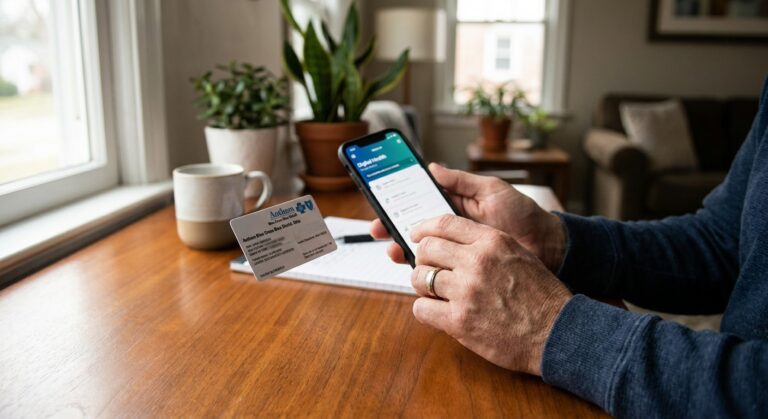
TruHealing Cincinnati accepts Aetna, Cigna, UnitedHealthcare, Anthem Blue Cross Blue Shield, Optum, and UMR, and also accepts private pay. The admissions team can verify his specific benefits during your first call, so you have a clearer picture of what your plan may cover before you commit to anything.
It is completely fair to be afraid that getting him help could sink your family financially. You are already carrying so much, and the last thing you need is a surprise you cannot handle. Every insurance plan is different, and benefits depend on the details of his policy, so the honest answer is that nobody can tell you what your plan will do until it is checked. That is why verification is the first thing to ask for. It takes the guessing out of the decision.
You may also be wondering whether getting him help means sending him far from home. TruHealing Cincinnati is located just off Interstate 275 on the east side of the city, where Beechmont Avenue meets the suburbs, making it accessible from neighborhoods like Anderson Township, Mount Washington, and Mariemont. For most families in the area, that means addiction treatment in Cincinnati, OH close enough that home is not a plane ride away, so his recovery stays rooted in the place he is coming back to.
Cincinnati as a community takes this seriously. The city’s public health department runs behavioral health programs as part of its work, and a regional university addiction research center studies addiction right here in the area. You are not the only family in this city facing this, and you do not have to face it with an out-of-state program that has never heard of your neighborhood.
What Happens When You Call TruHealing Cincinnati, and in His First Hours There?
When you call TruHealing Cincinnati at 502-830-3523, the admissions team talks with you about his situation, verifies insurance benefits, and tells you about current bed availability. Once he arrives, the medical provider and nursing staff assess his detox needs, and the clinical team begins the intake screens that shape his plan.
Maybe he has not said yes yet. Maybe you are afraid he will refuse, or agree and then want to leave the first night. Nobody can promise you he will stay, because he is a grown man and his choices are his. What you can do is be ready when the window opens. Having the information in hand before he agrees means you can move the moment he does, instead of starting from zero while his willingness fades. You are allowed to call for yourself first, just to understand your options.
It helps to have a few things ready before you call:
- His insurance card
- What he has been using, roughly how much, and how often
- When he last used
- Any medications he takes
- Any mental health history you know of
- Whether he has been through treatment before
You do not need perfect answers. Admissions has these conversations every day, and “I’m not sure” is a fine answer to plenty of questions.
Early in his stay, the medical provider and nurses evaluate where he is in withdrawal and what medical support he needs. The clinical team starts the biopsychosocial assessment, trauma screen, mental health screen, and full substance use screen, followed by in-depth psych assessments and GeneSight testing. From the start, he is inside the program that will carry him through every level of care, so he can begin the work right away instead of waiting for the “real” program to start somewhere else.
Questions Families Ask Before They Make the Call
These are short, straight answers to the questions parents and partners most often ask when they are comparing programs for the man they love. If yours is not here, admissions can answer it on the phone.
What happens if he finishes detox but is not ready to go home?
At TruHealing Cincinnati, he moves into residential treatment within the same program rather than being referred to another facility. Detox, residential, and PHP are all offered in one program, so he keeps working with people who already know him.
How long does the full continuum of care take at TruHealing Cincinnati?
There is no fixed timeline. Movement out of detox is based on his medical care, as assessed by the medical provider and nursing staff. Treatment duration varies by individual, and each person’s path through recovery is different.
Does TruHealing Cincinnati treat dual-diagnosis conditions like depression and addiction together?
Yes. If the clinical team identifies depression or anxiety under the substance use, they move him from a detox-only track into integrated dual-diagnosis care, pairing a licensed therapist using DBT with the medical detox protocol so both are treated together.
What insurance does TruHealing Cincinnati accept for addiction treatment?
TruHealing Cincinnati accepts Aetna, Cigna, UnitedHealthcare, Anthem Blue Cross Blue Shield, Optum, and UMR, plus private pay. Admissions can verify his benefits during your first call.
Why does staying in one program for the full continuum matter?
Transferring mid-stream often means starting clinical work over and losing continuity. One patient’s experience may differ from another’s, and recovery paths vary significantly among individuals.
Is TruHealing Cincinnati only for men, and does that make a difference in treatment?
Yes, TruHealing Cincinnati is an all-male program with dedicated Men’s Addiction Treatment and Men’s Mental Health Treatment tracks. The male-centric setting may help some men feel more comfortable opening up in group therapy, though individual responses to treatment settings vary.
One Question to Ask Before You Choose Any Program
Before you choose any program, ask this: “If he finishes your detox and needs more time, who will be treating him next, and will they already know his history?” The answer tells you whether you are looking at a real continuum or a referral list.
If the answer involves another building, another company, or another intake, you know what you are signing up for. If the answer is the same program, the same treatment plan built from his screens and GeneSight results, and a step down based on his medical care, you have found the kind of continuity that may support a person working toward lasting recovery. That is the difference worth holding out for as you weigh your options for addiction treatment in Cincinnati, OH. You have already done the hard part by searching and asking these questions. You do not have to sort out the rest alone.
Call TruHealing Cincinnati’s admissions team at 502-830-3523 to verify insurance benefits, ask about current bed availability, and learn what the intake process looks like for your situation. You can also learn more at truhealingcincinnati.com.
Start Your Recovery Journey in Cincinnati Today
If you or someone you care about is struggling with substance use, reaching out is the hardest step and the most important one. TruHealing Cincinnati offers a full continuum of care designed to meet you wherever you are in your recovery journey, from detox through outpatient support. You don’t have to figure this out alone.
Individual experiences with addiction treatment vary. Recovery is a personal process, and outcomes depend on many factors unique to each person, including individual circumstances, commitment, and the presence of co-occurring conditions.