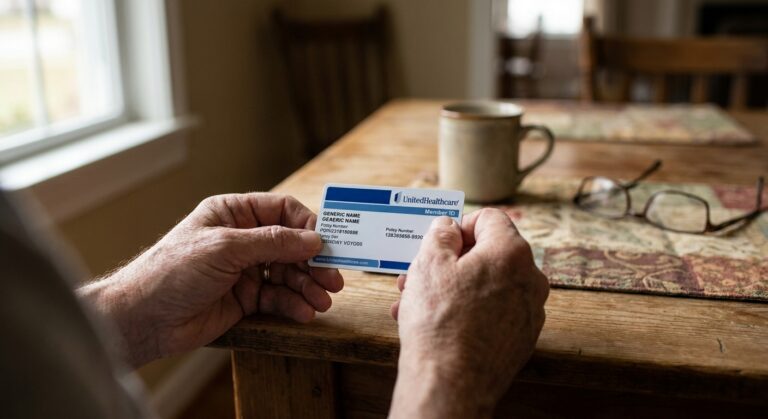

You are holding your son’s Aetna insurance card in one hand and your phone in the other. The question keeping you from dialing is not whether he needs help. It is whether his plan will actually pay for it and what you will owe before he can even walk through the door. That is a fair question, and asking it does not make you a cold or careless parent. If you have been searching for rehab that takes Aetna in Cincinnati, OH, here is the short answer: TruHealing Cincinnati accepts Aetna, our Director of Admissions checks your son’s benefits while you are still on the phone, and we do not ask families to hand over thousands of dollars before admission.
You have probably been carrying this for a long time. Maybe you have watched your son try to quit on his own, set rules that did not hold, or go through a program that ended with him right back where he started. Now he is in crisis, or he finally said yes, and you are at a fork in the road. One path means waiting until you figure out the money. The other means making one call and getting real answers today. This guide walks you through what that call looks like, how your son’s Aetna benefits work, how payment works at TruHealing Cincinnati, and what kind of care your son would receive here, so you can make this decision with your eyes open.
Is TruHealing Cincinnati a Rehab That Takes Aetna in Cincinnati, OH?
Yes. TruHealing Cincinnati accepts Aetna. TruHealing Cincinnati does not collect money up front. Director of Admissions Philip Wilson can check your son’s benefits in real time during your first call.
Here is a simple way to picture how insurance networks work. An in-network facility is like a restaurant that signed a deal with your insurance company to charge a set, lower price. An out-of-network facility never signed that deal. Your insurance can still help pay the bill if a plan includes out-of-network benefits; the rules for how much it pays, and how much you pay, are just different. Many parents hear “out-of-network,” assume it means “not accepted,” and hang up before anyone checks. That assumption costs families time they do not have.
Payment timing works differently here too. TruHealing Cincinnati does not collect anything up front, which is why it can delay billing and set up a payment plan with your family instead of asking for a large check on admission day. Your son’s plan still has a deductible and an out-of-pocket amount, and Philip will walk you through them honestly. What changes is the timing, and when your son is ready right now, timing matters more than almost anything.
Philip has handled benefit verification and approvals at TruHealing Cincinnati for more than five years. Insurance rules and products change all the time, so he keeps reading and stays current. His goal on every call stays the same: help people know exactly what they are stepping into before they ever come through the door of treatment. TruHealing Cincinnati also accepts Cigna, UnitedHealthcare, Anthem Blue Cross Blue Shield, Optum, UMR, and private pay. So if your family has more than one policy, or your son turns out to be on a different plan than you thought, bring that up on the call too.
What Happens on the First Call When You Ask About Your Son’s Aetna Plan?
Philip Wilson asks for three things: your son’s name, his date of birth, and his Aetna member ID. With those, he pulls the benefits while you are on the line. Then he explains the deductible, the out-of-pocket maximum, and the plan’s benefits in plain words before anyone commits to anything.
You do not need to dig up a stack of paperwork or read your plan booklet cover to cover first. Here is the order things usually go in:
- You share your son’s name, date of birth, and Aetna member ID.
- Philip pulls the benefits in real time and confirms what the plan covers.
- He explains the deductible, the out-of-pocket maximum, and what Aetna may pay compared to what your family may owe.
- He explains how TruHealing Cincinnati’s delayed billing and payment plans work.
- You and your son decide, with no pressure, whether TruHealing Cincinnati is the right fit.
Two terms will come up, so here they are in plain language. The deductible is the amount your family pays before the insurance company starts sharing the cost. The out-of-pocket maximum is the most you would pay in a plan year for covered care before the insurance company pays the rest. Philip will not skip past those numbers. He tells you the real numbers for your son’s plan so nothing surprises you later.
Part of Philip’s job is finding coverage families did not know they had. Young adults can usually stay on a parent’s health plan until age 26, and some young men in their early twenties are still on a parent’s insurance without realizing it, or without knowing what that plan includes. TruHealing Cincinnati can pull those benefits, work to get an approval, and use that insurance if your son chooses to. Other times a family has a stronger policy than they realized. When that happens, Philip tells them plainly that the plan can help them access care, and that they should use it.
Then there are the benefits that hide in plain sight. You might look at your health plan summary and see nothing about substance use treatment at all. Many people also do not know what the different levels of care are called, so they cannot spot them in the fine print. “It is designed to be confusing by the insurance companies,” Philip says. “Our job is to help people understand it.” That is the heart behind these conversations, because people need to be heard, valued, and appreciated, especially a parent calling in the middle of the worst week of their life. So the first call is not a sales pitch. It is someone who reads policies every day reading yours with you.
Will You Have to Pay Thousands Before He Walks Through the Door?
No. TruHealing Cincinnati does not collect payment up front. Billing is delayed, and Philip Wilson works with your family to set up a payment plan once he knows what your son’s Aetna plan will pay.
This is the part that surprises most families. Many in-network facilities collect the copay or deductible at or before admission. When a parent is trying to move fast, that up-front amount can become the wall that stops everything. You may have a son who is willing to go today, right now, and a facility that needs a large payment before he can even unpack, so the window closes while you scramble. TruHealing Cincinnati’s model is built so money does not have to be the reason he waits.
Let’s be honest about the cost, because you deserve the truth and not a sales line. Your son’s plan still has a deductible and an out-of-pocket maximum, and your family may owe a meaningful amount over the course of treatment. What changes at TruHealing Cincinnati is how and when you pay it. Delayed billing and a payment plan spread that amount out, and In Philip’s experience with families at TruHealing Cincinnati, this approach has helped some ease financial stress on the patient and his family during the admission process, though every family’s financial situation and stress level is different. You will know your estimated share before admission, not after.
A lot of parents also carry guilt and shame about even thinking of the cost when their son’s life feels at stake. Thinking about the money is not selfish. It is responsible, because a plan you cannot keep up with helps no one. Treatment is work, for your son and for the family supporting him, and the less your household is drowning in a sudden bill, the more energy everyone has for the work that actually matters. If your son’s Aetna plan turns out not to cover his care, you still have options. TruHealing Cincinnati accepts private pay, and the free, confidential SAMHSA National Helpline runs 24 hours a day, every day of the year, and can point you toward other programs. An honest guide tells you about every door, not only its own.
Can One Place Treat His Addiction and His Depression or Anxiety at the Same Time?
Once the money question has a clear answer, most parents turn to the bigger worry: will this help? TruHealing Cincinnati treats substance use disorder and mental health conditions together. Medical detox comes first to manage withdrawal symptoms safely. During intake, the clinical team runs assessments that can uncover depression, anxiety, or trauma, then builds one integrated dual-diagnosis plan.
Detox comes first for a clear reason. The physical symptoms of addiction need to be treated right away, and getting your son medically stable gives the clinical team a baseline, so his care can be prompt and targeted instead of guesswork. This matters because many families have been through programs that stopped at detox and called it treatment. The National Institute on Drug Abuse is direct about this in its principles of effective treatment: medically assisted detox is only the first stage of treatment, and on its own it does little to change long-term drug use. If you are afraid this will be another program that does not help, and that you will be right back here in six months, that fear makes sense. It is often what happens when detox is treated as the finish line.
At TruHealing Cincinnati, the clinical work starts early in your son’s stay, during detox. Intake includes a full biopsychosocial assessment (a look at his physical health, mental health, and life circumstances together), a trauma screen, a mental health screen, and a full substance use screen. Therapists also complete in-depth psychological assessments and pharmacogenomic testing, a genetic test that can help the clinical team understand how your son’s body may respond to certain psychiatric medications. The clinical team builds his individualized treatment plan in that first session, so he can begin working on his recovery without delay.
Sometimes a family arrives believing their son only needs detox, and the assessments show more. That might be depression or anxiety sitting under the substance use, or trauma he has never talked about. When that happens, TruHealing Cincinnati moves him from a detox-only track to integrated dual-diagnosis care. A therapist works with him using dialectical behavior therapy (DBT), a skills-based approach for handling painful emotions and stress, alongside the medical detox protocol, so the two conditions get treated together, not one after the other. The National Institute on Drug Abuse notes that substance use disorders and other mental illnesses often occur together, which is why treating only one side often leaves important issues unaddressed.
TruHealing Cincinnati is an all-male facility with dedicated tracks for men’s addiction treatment and men’s mental health treatment. Many men walk in wearing years of armor, the kind built from never admitting fear or sadness out loud. A healing community of other men going through similar experiences can give him room to shed that armor. TruHealing Cincinnati offers medical detox, residential treatment, and partial hospitalization (PHP), so his care can step down as he progresses, all close to home here in Cincinnati, OH. On your call, Philip can explain how your son’s Aetna benefits may apply to each level of care.
What Makes Care at TruHealing Cincinnati Different?
The care looks different. TruHealing Cincinnati offers private rooms, higher-quality food, a lower patient census, and a higher staff-to-client ratio. Philip Wilson walks families through those differences on the call so you can decide whether they are worth it for your son.
Parents usually ask what they are getting for the cost, and they should. Here is how the options tend to compare:
| What you are comparing | Many other facilities | TruHealing Cincinnati |
|---|---|---|
| Payment at admission | Copay or deductible often collected up front | Billing delayed, payment plans offered |
| Rooms | Varies by facility | Private rooms |
| Patient census | Often larger | Lower patient census |
| Staff-to-client ratio | Varies by facility | Higher staff-to-client ratio |
Each of those rows means something in your son’s day. A private room gives him a place to sleep, think, and recharge after hours of therapy. Early recovery is exhausting, physically and emotionally, and rest is part of the work. Higher-quality food matters more than most families expect, because a body coming off alcohol or drugs is often depleted and needs real nourishment to heal.
The lower census and higher staff-to-client ratio may matter most. In a smaller group, staff know your son by name, notice when he is having a hard morning, and build the kind of rapport that can help a guarded man to open up. Communication is a key part of recovery, because communication is how the work happens. When fewer men share each staff member’s attention, there is more time for the conversations that can make a difference.
None of this is meant to pressure you. Philip lays out the differences, answers your questions, and then you and your son decide whether TruHealing Cincinnati’s personalized treatment and evidence-based care are worth the cost for your family. Some families choose a different program, and that is a valid choice. What TruHealing Cincinnati wants is for you to make that choice with full information, not because a confusing benefits summary made the decision for you.
What Do Parents Ask Most About Aetna and TruHealing Cincinnati?
Most parents want to know the same handful of things: whether Aetna is accepted, what to have ready for the call, and whether they will owe money up front. Here are straight answers, based on how TruHealing Cincinnati’s admissions process works.
Does TruHealing Cincinnati accept Aetna insurance?
Yes. Philip Wilson verifies your son’s benefits during the first call and explains what his Aetna plan may pay and what your family may owe.
What information do I need to verify Aetna benefits at TruHealing Cincinnati?
Only your son’s name, date of birth, and Aetna member ID. Philip uses those to check coverage in real time while you are on the phone.
Do I have to pay up front at TruHealing Cincinnati?
No. TruHealing Cincinnati delays billing and offers payment plans instead of collecting a large amount at admission, which many in-network facilities require.
What does TruHealing Cincinnati’s medical detox include?
Medical support for withdrawal symptoms, plus a biopsychosocial assessment, trauma screen, mental health screen, substance use screen, and pharmacogenomic testing to identify co-occurring conditions early and guide medication choices.
Can my son’s Aetna plan help pay for dual-diagnosis treatment at TruHealing Cincinnati?
If his plan includes behavioral health benefits, those benefits may apply to integrated care when intake shows depression, anxiety, or trauma beneath his substance use. Philip confirms the details for your son’s specific plan during verification.
What Should You Do Before You Put the Phone Down Today?
Make the call while your son is willing, and have his name, date of birth, and Aetna member ID ready. That is all TruHealing Cincinnati needs to tell you what his plan looks like, what you may owe, and how payment would work.
The fear that brought you here is real. So is the exhaustion of living in constant worry and wondering whether every phone call is the one you have been dreading. What you want is simple: your son safe and getting help, so your family can stop holding its breath. The first step toward that is not a big one. It is a conversation with someone who reads insurance policies every day and will tell you the truth about yours.
If you have been looking for rehab that takes Aetna in Cincinnati, OH, call TruHealing Cincinnati at 502-830-3523 to speak with Director of Admissions Philip Wilson. He will verify your son’s Aetna benefits in real time and explain your payment options before admission. The window your son opened may be small, and that is all the more reason to use it now. Families who wait until they have figured out the money on their own often find the window has closed. One call gets you real numbers today, so the decision about his care rests on facts instead of fear.
Start Your Recovery With Aetna Coverage
If you’ve been putting off treatment because you weren’t sure whether your Aetna plan would cover care in Cincinnati, you don’t have to wonder anymore. TruHealing Cincinnati works directly with Aetna to verify your benefits and explain your coverage before you commit to anything. A brief call can answer your questions about costs, what your plan includes, and how soon you can begin treatment.
Coverage, costs, and individual experiences with treatment vary from person to person.