

Taking the first step toward recovery often means facing an important question: What will withdrawal actually feel like?
Many people worry they’ll be unable to tolerate the physical or emotional changes that happen after stopping alcohol or drugs. While withdrawal can certainly be uncomfortable, understanding what to expect—and knowing when medical care is necessary—can make the process feel much less overwhelming.
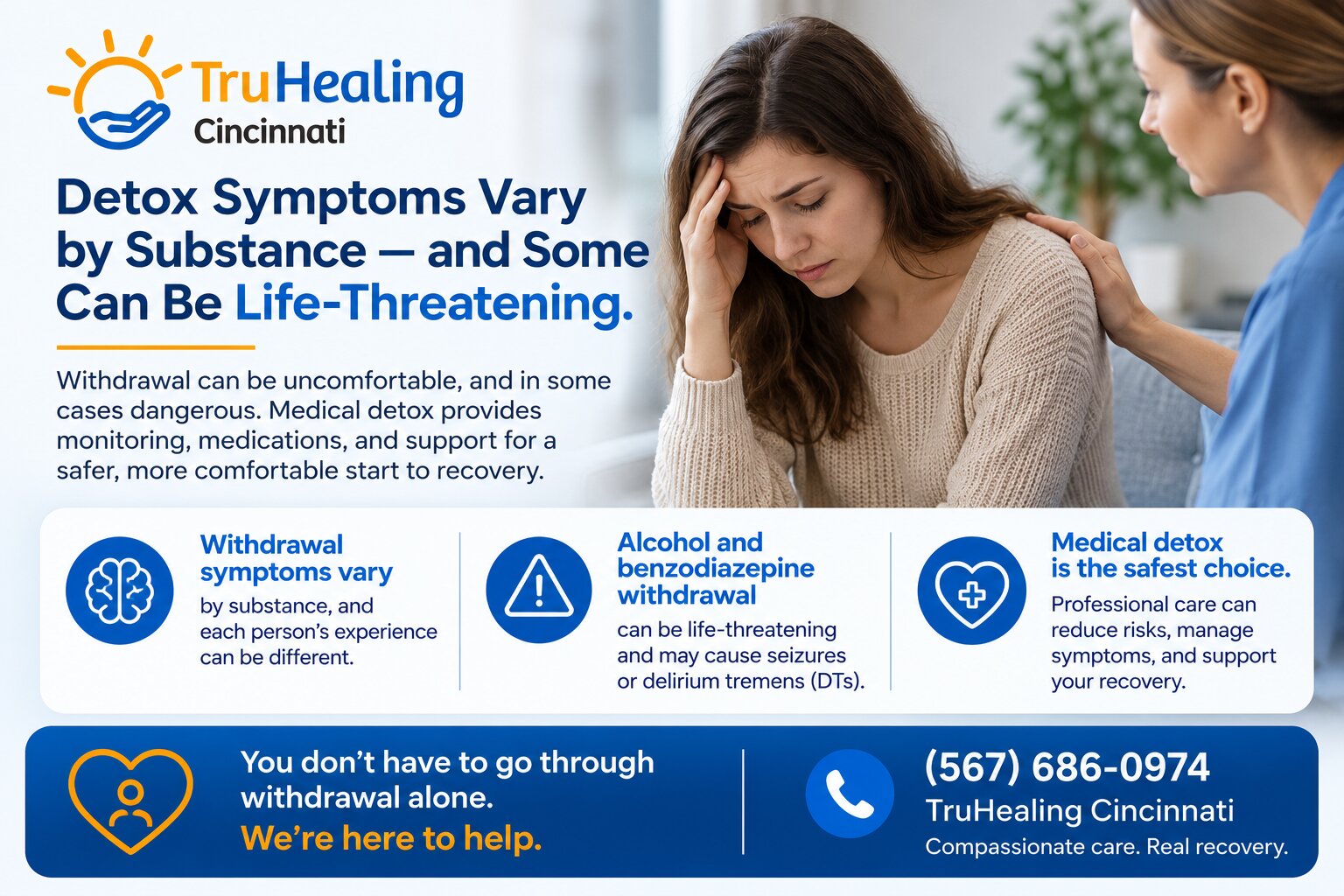
If you’re searching detox symptoms, it’s important to know that withdrawal looks very different depending on the substance involved. Some forms of withdrawal are mainly uncomfortable, while others can become life-threatening without medical supervision.
If you’re considering treatment, learning more about medical detox can help you understand how professional care improves comfort, monitors for complications, and supports a safer transition into recovery.
Common Withdrawal Symptoms
Withdrawal occurs because the brain and body have adapted to the regular presence of alcohol or drugs.
When use suddenly stops or is significantly reduced, the nervous system works to regain balance. During that adjustment period, symptoms can affect both physical and mental health.
Common withdrawal symptoms include:
- Anxiety
- Restlessness
- Irritability
- Sweating
- Shaking or tremors
- Muscle aches
- Nausea or vomiting
- Headaches
- Difficulty sleeping
- Fatigue
- Increased heart rate
- Cravings
The intensity of withdrawal depends on several factors, including:
- The substance used
- How long it was used
- The amount typically used
- Overall physical health
- Previous withdrawal experiences
- Whether multiple substances were used together
No two people experience withdrawal exactly the same way.
Withdrawal Symptoms by Substance
Different substances affect the brain in different ways, so withdrawal symptoms vary considerably.
Substance |
Common Symptoms |
Potential Serious Complications |
|---|---|---|
| Alcohol | Tremors, sweating, anxiety, nausea, insomnia | Delirium tremens (DTs), seizures, hallucinations, dangerous blood pressure changes |
| Opioids | Muscle aches, chills, diarrhea, nausea, vomiting, cravings, insomnia | Severe dehydration is possible, but withdrawal itself is rarely life-threatening in otherwise healthy adults; however, relapse after detox greatly increases overdose risk |
| Benzodiazepines | Anxiety, tremors, insomnia, panic, irritability | Seizures, delirium, severe confusion, life-threatening complications |
| Stimulants | Fatigue, depression, increased appetite, vivid dreams, slowed thinking | Severe depression, suicidal thoughts in some individuals, cardiovascular concerns related to recent stimulant use |
Although opioid withdrawal is often described as extremely uncomfortable, alcohol and benzodiazepine withdrawal are generally considered the most medically dangerous because of their risk of seizures and other serious complications.
Which Withdrawal Symptoms Are Dangerous?
Some symptoms require immediate medical evaluation rather than attempting to detox alone.
Delirium Tremens (DTs)
Delirium tremens is a severe form of alcohol withdrawal that can include:
- Severe confusion
- Hallucinations
- Agitation
- Fever
- High blood pressure
- Rapid heart rate
Without prompt medical treatment, DTs can be life-threatening.
Seizures
Withdrawal seizures may occur with:
- Alcohol
- Benzodiazepines
A seizure during withdrawal is always a medical emergency and requires immediate evaluation.
Hallucinations
Some people may:
- Hear voices
- See things that are not present
- Experience intense confusion
Hallucinations during withdrawal should never be ignored.
Heart and Circulation Problems
Withdrawal may place stress on the cardiovascular system, particularly in people with existing heart disease.
Emergency evaluation is needed for symptoms such as:
- Chest pain
- Severe shortness of breath
- Irregular heartbeat
- Fainting
Severe Dehydration
Persistent vomiting and diarrhea—especially during opioid withdrawal—can lead to dehydration that may require medical treatment.
Warning signs include:
- Inability to keep fluids down
- Confusion
- Dizziness
- Minimal urination
- Extreme weakness
The Withdrawal Timeline
Withdrawal follows different timelines depending on the substance involved, but symptoms generally occur in predictable stages.
Alcohol
- 6–12 hours: Early symptoms such as tremors, anxiety, nausea, sweating
- 12–48 hours: Increased withdrawal intensity; seizures may occur
- 48–72 hours: Highest risk period for delirium tremens
- Several days: Symptoms gradually improve for most people
Opioids
Short-acting opioids:
- 6–12 hours: Symptoms begin
- 24–72 hours: Symptoms often peak
- 5–10 days: Most acute symptoms improve
Long-acting opioids such as methadone typically produce a later onset and longer withdrawal period.
Benzodiazepines
The timeline varies depending on whether the medication is short- or long-acting.
Withdrawal may last:
- Several days
- Several weeks
- Occasionally longer in some individuals
Because abrupt discontinuation can be dangerous, benzodiazepines should never be stopped suddenly without medical guidance.
Stimulants
Symptoms often begin within:
- 24 hours after stopping
Many people experience:
- Fatigue
- Depression
- Increased sleep
- Cravings
These symptoms often improve over several days, though mood changes and cravings may persist for weeks.
Why Medical Detox Is the Safe Choice
Many people wonder whether they can safely detox at home.
The answer depends on the substance involved, overall health, and withdrawal history.
Medical detox offers several important advantages.
Continuous Monitoring
Healthcare professionals monitor:
- Blood pressure
- Heart rate
- Oxygen levels
- Hydration
- Mental status
- Withdrawal progression
This allows complications to be identified and treated early.
Medications That Improve Comfort
Depending on the substance involved, medications may be used to:
- Reduce withdrawal symptoms
- Lower seizure risk
- Control nausea
- Improve sleep
- Reduce cravings
- Support hydration and nutrition
Medication decisions are individualized based on each person’s needs.
Immediate Response to Emergencies
If serious complications develop, trained medical professionals can intervene quickly.
This level of care is particularly important for alcohol and benzodiazepine withdrawal.
A Bridge to Ongoing Recovery
Detox is an important first step—but it is not complete addiction treatment.
Following detox, many people continue into:
- Residential treatment
- Partial hospitalization (PHP)
- Intensive outpatient programs (IOP)
- Individual counseling
- Medication-assisted treatment when appropriate
- Peer support and relapse prevention planning
Continuing treatment after detox helps address the underlying causes of substance use and supports long-term recovery.
Frequently Asked Questions
How long does detox last?
The length of detox depends on the substance used, the amount and duration of use, and individual health factors. Many people complete the most intense phase of withdrawal within several days, although some symptoms—particularly sleep disturbances, mood changes, or cravings—may continue longer.
What are the worst withdrawal symptoms?
The most serious withdrawal complications include seizures, delirium tremens (DTs), hallucinations, severe dehydration, and significant cardiovascular problems. Alcohol and benzodiazepine withdrawal carry the highest risk of life-threatening complications and should be medically supervised.
Is detox dangerous?
It can be. While some forms of withdrawal are primarily uncomfortable, others can become life-threatening without proper medical care. Alcohol and benzodiazepine withdrawal, in particular, should never be underestimated. A professional medical assessment can help determine the safest setting for detox.
Start Recovery with Safe, Compassionate Care
Beginning detox can feel intimidating, but you don’t have to go through it alone. Medical supervision can help manage withdrawal symptoms, reduce the risk of serious complications, and provide a safer, more comfortable start to recovery.
If you or someone you love is ready to take the first step, TruHealing Cincinnati offers medically supervised detox with compassionate, evidence-based care tailored to each individual’s needs. Whether you’re near Lawrenceburg, Lexington, Springfield, or Louisville, you’ll find TruHealing programs built on that same caring approach.
Call (513) 429-7900 today to speak with our team or learn more about our Medical Detox Program. Recovery starts with safe care and the right support from day one.