

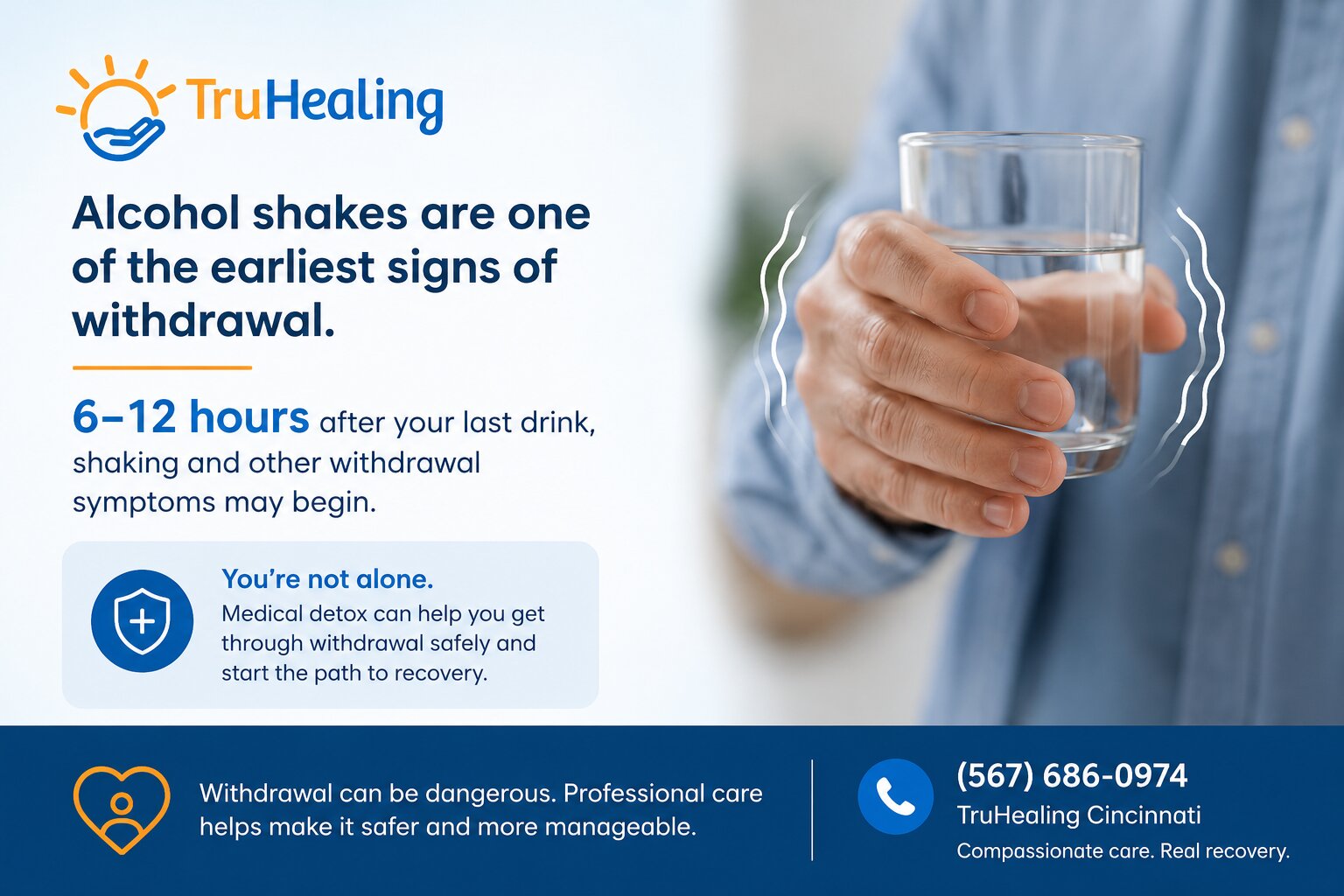
If your hands won’t stop shaking after cutting back or stopping alcohol, it’s understandable to feel frightened. Many people worry that something is seriously wrong, while others hope the shaking will simply pass if they wait long enough.
If you’ve been searching alcohol shakes, you’re not alone. Tremors are one of the earliest and most recognizable signs of alcohol withdrawal. For some people, they remain relatively mild. For others, they can signal the beginning of a withdrawal process that requires immediate medical attention.
If you’re preparing to stop drinking, learning more about alcohol withdrawal treatment can help you understand why professional medical detox is often the safest way to begin recovery.
The most important thing to know is this: shaking after stopping alcohol should never be ignored. While tremors alone do not always indicate a medical emergency, they can be an early warning sign that withdrawal is progressing.
What These Tremors Are
Tremors are involuntary muscle movements that most commonly affect the:
- Hands
- Fingers
- Arms
- Occasionally the head or other parts of the body
Many people notice that simple tasks suddenly become difficult, such as:
- Holding a cup of coffee
- Writing
- Buttoning a shirt
- Using utensils
- Typing on a keyboard
These tremors are one of the earliest physical signs that the nervous system is reacting to the sudden absence of alcohol.
Although shaking is common during withdrawal, it should not be dismissed as “just nerves.” It reflects real changes occurring in the brain and body.
Why They Happen
Alcohol slows activity within the central nervous system (CNS).
Over time, the brain adapts by increasing excitatory activity to compensate for alcohol’s ongoing depressant effects.
When alcohol use suddenly stops, that balancing effect disappears.
The result is a rebound of nervous system activity, which can cause symptoms such as:
- Tremors
- Anxiety
- Sweating
- Increased heart rate
- High blood pressure
- Restlessness
- Difficulty sleeping
This state of overactivity is why withdrawal symptoms often begin soon after alcohol leaves the bloodstream.
The more heavily and consistently a person has been drinking, the greater the chance that withdrawal symptoms may become more severe.
The Withdrawal Timeline
Alcohol withdrawal often follows a predictable pattern, although every person’s experience is different.
6 to 12 Hours After the Last Drink
Many people first notice:
- Tremors
- Anxiety
- Sweating
- Nausea
- Headache
- Difficulty sleeping
- Increased heart rate
For some individuals, shaking is the first noticeable symptom.
12 to 24 Hours
Withdrawal symptoms may become more intense.
Some people also experience:
- Increased blood pressure
- Greater restlessness
- Heightened anxiety
- Sensitivity to light or sound
24 to 48 Hours
The risk of withdrawal seizures is highest during this period for susceptible individuals.
A seizure during alcohol withdrawal is a medical emergency.
48 to 72 Hours
Some people develop delirium tremens (DTs), the most severe form of alcohol withdrawal.
DTs may include:
- Severe confusion
- Hallucinations
- Agitation
- Fever
- Rapid heart rate
- Dangerous blood pressure changes
Without prompt medical treatment, delirium tremens can be life-threatening.
After Several Days
For many people, acute withdrawal symptoms gradually begin to improve over the following days.
Some symptoms—such as sleep disturbances, anxiety, or mood changes—may continue longer as the brain adjusts to functioning without alcohol.
When Tremors Become Dangerous
Shaking alone does not always mean someone will develop severe withdrawal, but it should be taken seriously—especially if it occurs after heavy or long-term alcohol use.
Seek emergency medical care immediately if tremors are accompanied by:
- Seizures
- Hallucinations
- Severe confusion
- Difficulty staying awake
- Chest pain
- Trouble breathing
- High fever
- Repeated vomiting
- Loss of consciousness
These symptoms may indicate a life-threatening medical emergency.
Certain people are at higher risk for severe withdrawal, including those who:
- Have experienced withdrawal before
- Have had withdrawal seizures
- Have previously developed delirium tremens
- Drink heavily every day
- Have other serious medical conditions
Because it is impossible to predict exactly who will develop severe complications, a medical evaluation before detox is strongly recommended.
Why Medical Detox Is the Safe Option
Many people consider stopping alcohol at home because they want privacy or believe withdrawal will simply be uncomfortable.
Unfortunately, alcohol withdrawal can become dangerous with little warning.
Medical detox provides several important benefits.
Continuous Medical Monitoring
Healthcare professionals monitor:
- Blood pressure
- Heart rate
- Oxygen levels
- Temperature
- Hydration
- Mental status
This allows serious complications to be identified and treated early.
Medications to Reduce Withdrawal Severity
Clinicians may prescribe medications to:
- Lower the risk of seizures
- Reduce severe anxiety
- Improve comfort
- Help stabilize the nervous system
Medication decisions are based on each person’s symptoms and medical history.
Treatment for Complications
If withdrawal becomes more severe than expected, medical staff can respond immediately.
This level of care is especially important during the first several days after stopping alcohol, when the risk of serious complications is highest.
A Transition Into Ongoing Recovery
Detox addresses the physical effects of withdrawal, but it is only the beginning of treatment.
After detox, many people continue with:
- Residential treatment
- Outpatient care
- Individual counseling
- Group therapy
- Relapse prevention planning
- Recovery support services
Continuing care helps address the underlying causes of alcohol use disorder and supports long-term recovery.
Frequently Asked Questions
How long do alcohol shakes last?
For many people, tremors begin within 6 to 12 hours after the last drink and improve over several days as withdrawal progresses. The exact timeline depends on factors such as drinking history, overall health, and whether medical treatment is provided.
Are they dangerous?
They can be. Tremors themselves are a common symptom of alcohol withdrawal, but they may also be an early warning sign of more severe complications such as seizures or delirium tremens. Anyone experiencing withdrawal symptoms should be evaluated by a healthcare professional, particularly after heavy or long-term alcohol use.
Can you detox at home safely?
Home detox is not recommended for everyone. Because alcohol withdrawal can become unpredictable and, in some cases, life-threatening, many people benefit from medically supervised detox. A healthcare provider can assess your individual risk and recommend the safest level of care.
You Don’t Have to Go Through Withdrawal Alone
Experiencing shaking after stopping alcohol can be frightening, but you don’t have to face it by yourself. Medical detox provides monitoring, medications when appropriate, and compassionate care to help make withdrawal safer and more manageable.
At TruHealing Cincinnati, our team provides evidence-based alcohol withdrawal treatment in a supportive medical setting. We work with each individual to manage withdrawal symptoms safely and help them take the next step toward lasting recovery. From Lawrenceburg to Lexington, Springfield to Louisville, TruHealing is proud to offer programs that carry forward that same supportive approach.
Call (513) 429-7900 today to speak with our team or learn more about our Alcohol Withdrawal Treatment program. Recovery begins with safe, compassionate care when you need it most.