

Beginning medication-assisted treatment (MAT) is one of the most important steps many people take toward recovery from opioid addiction. It is also completely normal to feel nervous about starting medication—especially if you’ve heard stories about people feeling dramatically worse after taking their first dose of Suboxone.
If you’ve been searching precipitated withdrawal, you’re likely trying to understand whether this complication is common, why it happens, and how it can be prevented.
The reassuring news is that this reaction is usually preventable. With careful planning and medical guidance, most people can begin treatment safely and comfortably.
If you’re considering treatment, learning more about Medication-Assisted Treatment (MAT) can help you understand how medications, medical supervision, and counseling work together to support long-term recovery.
The most important message is simple: the timing of your first Suboxone dose matters.
What This Rapid Withdrawal Reaction Is
This type of withdrawal occurs when buprenorphine—the primary medication in Suboxone—displaces other opioids from opioid receptors before the body is ready.
Instead of gradually easing withdrawal symptoms, the medication can cause a sudden worsening of symptoms.
People may experience:
- Severe body aches
- Sweating
- Chills
- Nausea
- Vomiting
- Diarrhea
- Anxiety
- Restlessness
- Intense cravings
- Rapid worsening of withdrawal symptoms
Although these symptoms can feel overwhelming, they are not the same as an allergic reaction, and they generally are not life-threatening when properly managed. However, they can be extremely distressing and may discourage someone from continuing treatment if they are unprepared.
Why It Happens
Understanding why this reaction occurs starts with understanding how buprenorphine works.
Buprenorphine is a partial opioid agonist. It binds very strongly to opioid receptors but activates them less than full opioid agonists such as:
- Fentanyl
- Heroin
- Oxycodone
- Hydrocodone
- Morphine
If these opioids are still actively occupying the receptors when buprenorphine is taken, buprenorphine can quickly displace them.
Because buprenorphine provides a lower level of opioid activity than the opioids it replaces, this sudden change can trigger an abrupt onset of withdrawal symptoms.
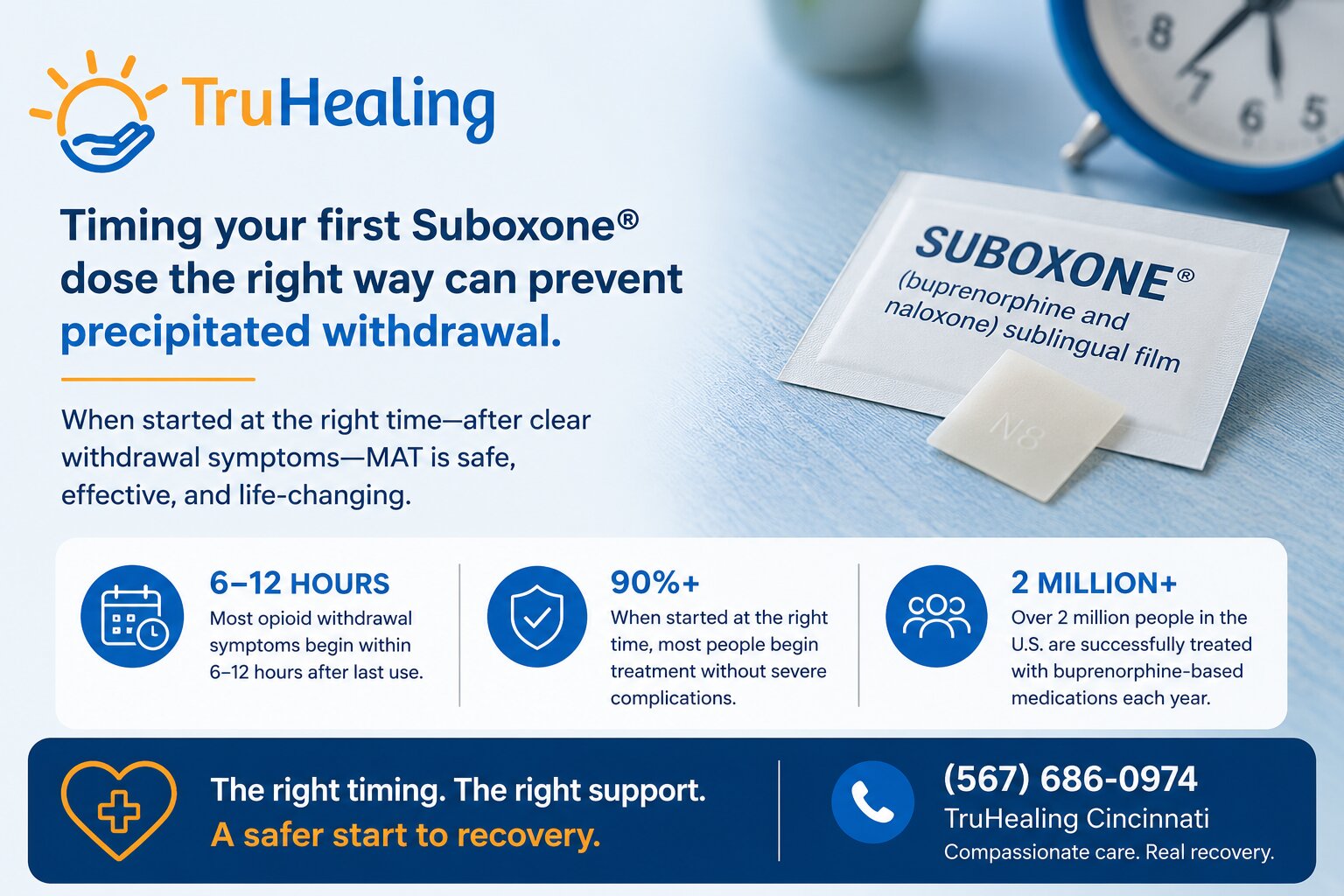
In most cases, this happens because Suboxone is started too soon after the last opioid use.
The Induction Window
One of the most important parts of starting MAT is determining when to take the first dose.
Rather than relying only on the clock, healthcare providers typically look for objective signs that withdrawal has already begun.
These may include:
- Dilated pupils
- Sweating
- Yawning
- Runny nose
- Goosebumps
- Tremors
- Increased heart rate
- Muscle aches
- Nausea
- Restlessness
The COWS Assessment
Many treatment providers use the Clinical Opiate Withdrawal Scale (COWS) to measure withdrawal severity.
The COWS score evaluates several symptoms, including:
- Pulse
- Sweating
- Restlessness
- Pupil size
- Bone or joint aches
- Runny nose or tearing
- Gastrointestinal symptoms
- Tremor
- Anxiety
- Goosebumps
Rather than starting medication based solely on the number of hours since the last opioid use, clinicians often use the COWS score together with a person’s history and symptoms to determine when it is appropriate to begin buprenorphine.
This approach helps reduce the likelihood of triggering severe withdrawal.
Timing Can Vary
The appropriate waiting period depends on several factors, including:
- Which opioid was used
- Whether it was short-acting or long-acting
- The amount used
- How frequently it was used
- Whether fentanyl or other synthetic opioids are involved
For example, fentanyl can behave differently than many other opioids, making the timing of induction more complex. This is one reason why medical guidance is especially important.
How to Reduce the Risk
Most cases can be avoided by following a medically supervised induction plan.
Helpful strategies include:
Wait Until Withdrawal Has Clearly Begun
The first dose should generally be taken after objective withdrawal symptoms have developed, not simply because a certain number of hours has passed.
Follow Your Provider’s Instructions
Your treatment team will recommend when to begin medication based on:
- Your opioid use history
- Your current symptoms
- Physical examination
- Withdrawal assessment
Do not adjust the timing or dose on your own.
Be Honest About Recent Drug Use
Let your provider know:
- Which opioids you used
- Approximately when you last used them
- Whether fentanyl may have been involved
- Any other medications or substances you have taken
Accurate information helps clinicians develop the safest induction plan.
Begin Treatment Under Medical Supervision When Possible
Medical supervision allows healthcare providers to:
- Monitor symptoms
- Adjust dosing if needed
- Provide supportive medications
- Answer questions
- Respond quickly if complications arise
For many people, supervised induction provides reassurance during the first day of treatment.
What to Do If It Happens
Even with careful planning, this reaction can occasionally occur.
If your withdrawal symptoms suddenly become much worse after taking buprenorphine:
- Contact your prescribing provider immediately.
- Follow the treatment plan your medical team provides.
- Do not take additional opioids in an attempt to “reverse” the reaction unless specifically instructed by a healthcare professional.
- Seek emergency medical care if you develop severe breathing problems, chest pain, loss of consciousness, or other emergency symptoms.
Healthcare providers may recommend supportive care, adjustments to your treatment plan, or additional medications depending on your individual situation.
Although symptoms can feel intense, they generally improve as buprenorphine continues occupying the opioid receptors and treatment progresses.
Most importantly, experiencing this complication does not mean MAT has failed or that recovery is no longer possible.
Frequently Asked Questions
What causes precipitated withdrawal?
It occurs when buprenorphine is taken before enough opioids have naturally left the opioid receptors. Because buprenorphine binds very strongly but activates the receptors less than full opioids, it can rapidly displace those opioids and trigger a sudden worsening of withdrawal symptoms.
How long does it last?
The duration varies depending on the opioid involved, the individual’s metabolism, and the treatment plan. Many people begin to improve within several hours as buprenorphine stabilizes the opioid receptors, although some symptoms may last longer. Your healthcare provider can help manage symptoms and guide treatment if this occurs.
How do you avoid it?
The best way to reduce the risk is to begin buprenorphine only after clear withdrawal symptoms have started and under the guidance of a qualified healthcare provider. Clinicians often use tools such as the Clinical Opiate Withdrawal Scale (COWS), along with your symptoms and opioid use history, to determine the safest time for the first dose.
Start MAT with Confidence
Many people delay treatment because they are afraid of severe withdrawal. The reality is that medication-assisted treatment is carefully designed to reduce withdrawal symptoms—not make them worse. When the first dose is timed appropriately and guided by experienced clinicians, the risk of complications is significantly lower.
At TruHealing Cincinnati, our team provides compassionate, evidence-based medication-assisted treatment tailored to each person’s needs. We guide patients through the induction process, monitor symptoms closely, and help make the transition into recovery as safe and comfortable as possible. From Lawrenceburg to Lexington, Springfield to Louisville, TruHealing is proud to offer programs that carry forward that same supportive approach.
Call (513) 429-7900 today to speak with our team or learn more about our Medication-Assisted Treatment program. Recovery begins with the right support—and the right timing.