

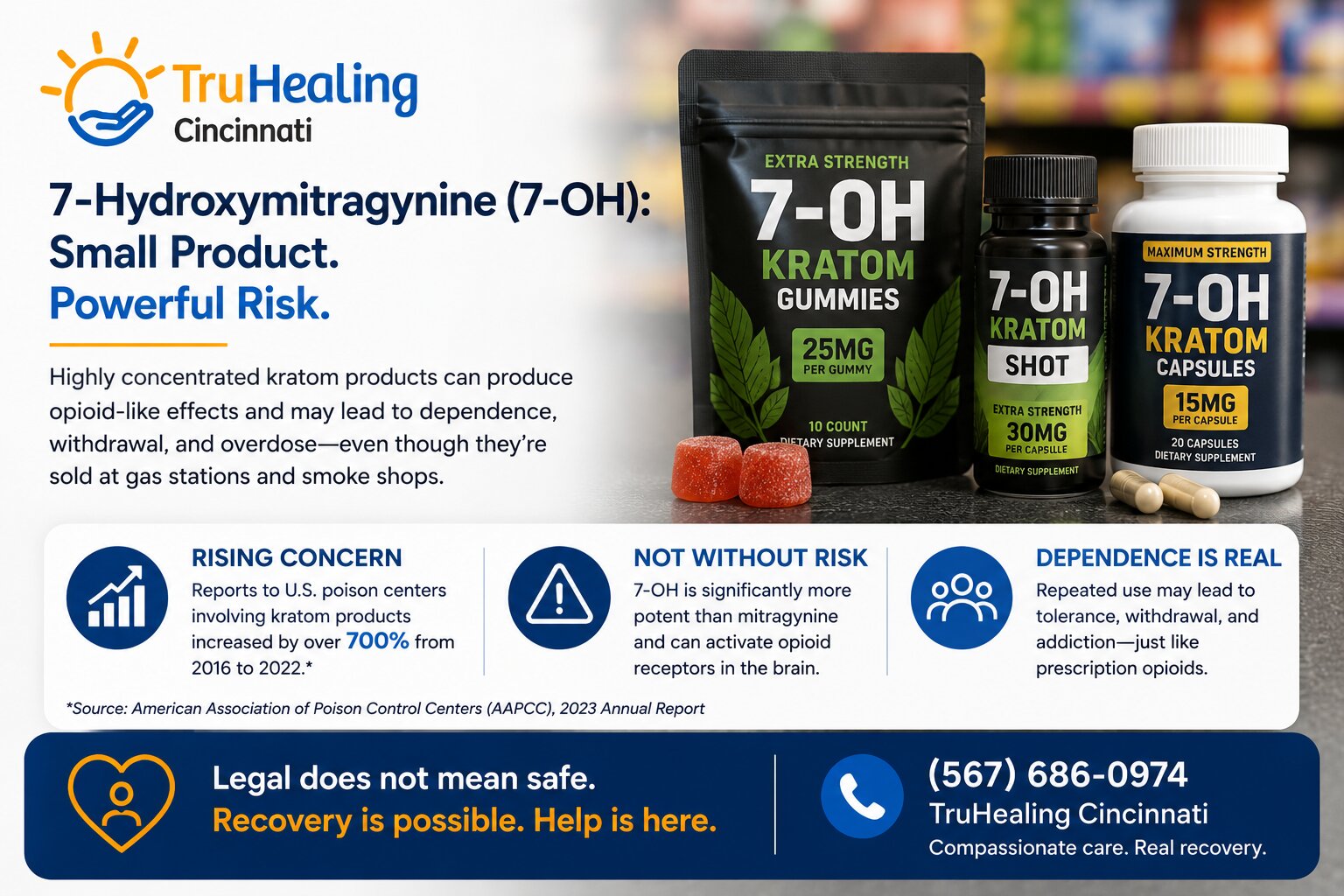
You may have noticed small tablets, gummies, capsules, or drink shots advertised as “legal,” “natural,” or “extra-strength” kratom products at gas stations, smoke shops, or convenience stores. The marketing often makes these products seem harmless, but many contain a highly concentrated compound that has raised concerns among medical professionals and public health agencies.
If you’ve been searching 7-hydroxymitragynine, you’re probably trying to understand what this substance is, why it’s suddenly appearing in retail stores, and whether it’s actually safer than opioids.
If you or someone you love has begun relying on these products, learning more about 7-OH addiction treatment can help you understand your treatment options before dependence becomes more severe.
The most important thing to know is this: although many of these products are marketed as legal wellness supplements, they can produce powerful opioid-like effects and may lead to dependence, withdrawal, and addiction.
What This Concentrated Kratom Compound Is
Kratom comes from the leaves of the Mitragyna speciosa tree, which grows naturally in parts of Southeast Asia.
The plant contains dozens of naturally occurring alkaloids, but two receive the most attention:
- Mitragynine
- 7-hydroxymitragynine
While mitragynine is present in larger amounts in natural kratom leaves, the second compound is considerably more potent at activating opioid receptors.
Many newer commercial products contain concentrated amounts of this compound or are manufactured to increase its levels far beyond what is naturally found in raw kratom leaves.
Because these products are highly concentrated, they can produce much stronger effects than traditional powdered kratom.
Why It Is Sold at Gas Stations
Many people are surprised to find products containing potent kratom compounds next to energy drinks or nicotine products.
This largely stems from differences in how kratom products are regulated.
In many states, certain kratom-derived products have remained available because regulations have not kept pace with the rapidly changing marketplace. Manufacturers have introduced increasingly concentrated extracts, tablets, gummies, and drink shots that are often sold through:
- Gas stations
- Convenience stores
- Smoke shops
- Vape stores
- Online retailers
Availability does not necessarily mean a product has been evaluated for safety, effectiveness, purity, or appropriate dosing.
Unlike FDA-approved medications, many commercially available kratom products are not subject to the same manufacturing standards or quality controls. Independent testing has found that some products contain inconsistent concentrations, contaminants, or ingredients not listed on the label.
Effects and Potential Dangers
This concentrated kratom compound affects many of the same opioid receptors targeted by prescription opioids and heroin.
Depending on the amount used, people may experience:
- Pain relief
- Relaxation
- Euphoria
- Drowsiness
- Reduced anxiety
- Sedation
Some users report taking increasingly larger doses over time because the desired effects become less noticeable, a sign that tolerance may be developing.
Potency Compared With Opioids
Laboratory research suggests that 7-hydroxymitragynine is significantly more potent than mitragynine at the mu-opioid receptor. Because of this strong receptor activity, researchers and regulators have expressed concern that concentrated products may carry a greater risk of misuse and dependence than traditional kratom leaf preparations.
Potency measured in laboratory settings does not directly translate into how a person will experience a commercial product, as effects depend on formulation, dose, individual physiology, and other ingredients. However, concentrated products can produce substantially stronger opioid-like effects than many people expect.
Possible Side Effects
Common side effects may include:
- Nausea
- Constipation
- Dry mouth
- Dizziness
- Sleepiness
- Sweating
- Vomiting
- Itching
Higher doses or combining these products with alcohol, opioids, benzodiazepines, or other sedating drugs may increase the risk of serious breathing problems and overdose.
Addiction and Withdrawal Risk
One of the biggest misconceptions is that a product marketed as “natural” cannot be addictive.
In reality, repeated use of concentrated kratom alkaloids can lead to physical dependence.
Over time, the brain adapts to the regular presence of the substance. When use is reduced or stopped suddenly, withdrawal symptoms may occur.
Common withdrawal symptoms include:
- Anxiety
- Restlessness
- Muscle aches
- Sweating
- Runny nose
- Insomnia
- Irritability
- Nausea
- Cravings
Some people initially begin using these products for pain, stress, or energy but later find themselves taking them simply to avoid feeling sick.
If this pattern develops, professional treatment may help make withdrawal safer and support long-term recovery.
FDA Concerns and Where to Get Help
The U.S. Food and Drug Administration (FDA) has repeatedly warned consumers that kratom products have not been approved to treat pain, opioid withdrawal, anxiety, or any other medical condition. The agency has also raised concerns about contamination, inconsistent manufacturing practices, misleading marketing claims, and the growing availability of highly concentrated kratom-derived products.
While research into kratom and its individual compounds continues, health experts remain concerned that concentrated formulations may increase the risk of dependence, misuse, and other serious health complications.
If you have noticed any of the following, it may be time to seek professional help:
- You need larger amounts to get the same effect.
- You experience withdrawal symptoms when you stop.
- You have tried to quit but cannot.
- Your use is affecting work, school, or relationships.
- You continue using despite negative consequences.
Treatment may include:
- Medical assessment
- Withdrawal management
- Individual counseling
- Group therapy
- Medication when clinically appropriate
- Relapse prevention planning
- Ongoing recovery support
Seeking help early often makes recovery easier than waiting until dependence becomes more severe.
Frequently Asked Questions
What is 7-OH?
“7-OH” is a common shorthand for 7-hydroxymitragynine, one of the naturally occurring alkaloids found in the kratom plant. Although present in relatively small amounts in raw leaves, it is much more active at opioid receptors than mitragynine and is increasingly found in concentrated commercial products.
Is it legal?
Its legal status varies depending on federal, state, and local laws. While some products remain available in certain areas, regulations continue to evolve. Being legally sold does not mean a product has been approved by the FDA as safe or effective.
Is it addictive?
Yes. Repeated use can lead to tolerance, physical dependence, and addiction in some individuals, particularly with concentrated extracts or products containing higher amounts of the active compound.
Can you withdraw from it?
Yes. People who stop using after regular or heavy use may experience withdrawal symptoms such as anxiety, muscle aches, insomnia, sweating, nausea, irritability, and cravings. The severity of withdrawal varies based on the amount used, frequency of use, and individual health factors.
Help Is Available
If you or someone you love has become dependent on concentrated kratom products, you’re not alone. What may begin as a legal product purchased at a gas station can develop into a pattern that is difficult to stop without support.
TruHealing Cincinnati provides compassionate, evidence-based care for individuals struggling with opioid-related substances and emerging products such as concentrated kratom alkaloids.
Call (513) 429-7900 today to speak with our team or learn more about 7-OH addiction treatment. Recovery starts with understanding the risks—and knowing that effective help is available.