

Prescription pain medications can be confusing. You may have been prescribed one after surgery, seen both names on medication bottles, or heard someone say one is “safer” or “stronger” than the other.
If you’re researching hydrocodone vs oxycodone, you’re probably trying to understand whether these medications are truly different—or whether the differences matter when it comes to pain relief and addiction.
If concerns about prescription opioid use have begun affecting your health or daily life, learning more about painkiller addiction treatment can help you understand the support available for recovery.
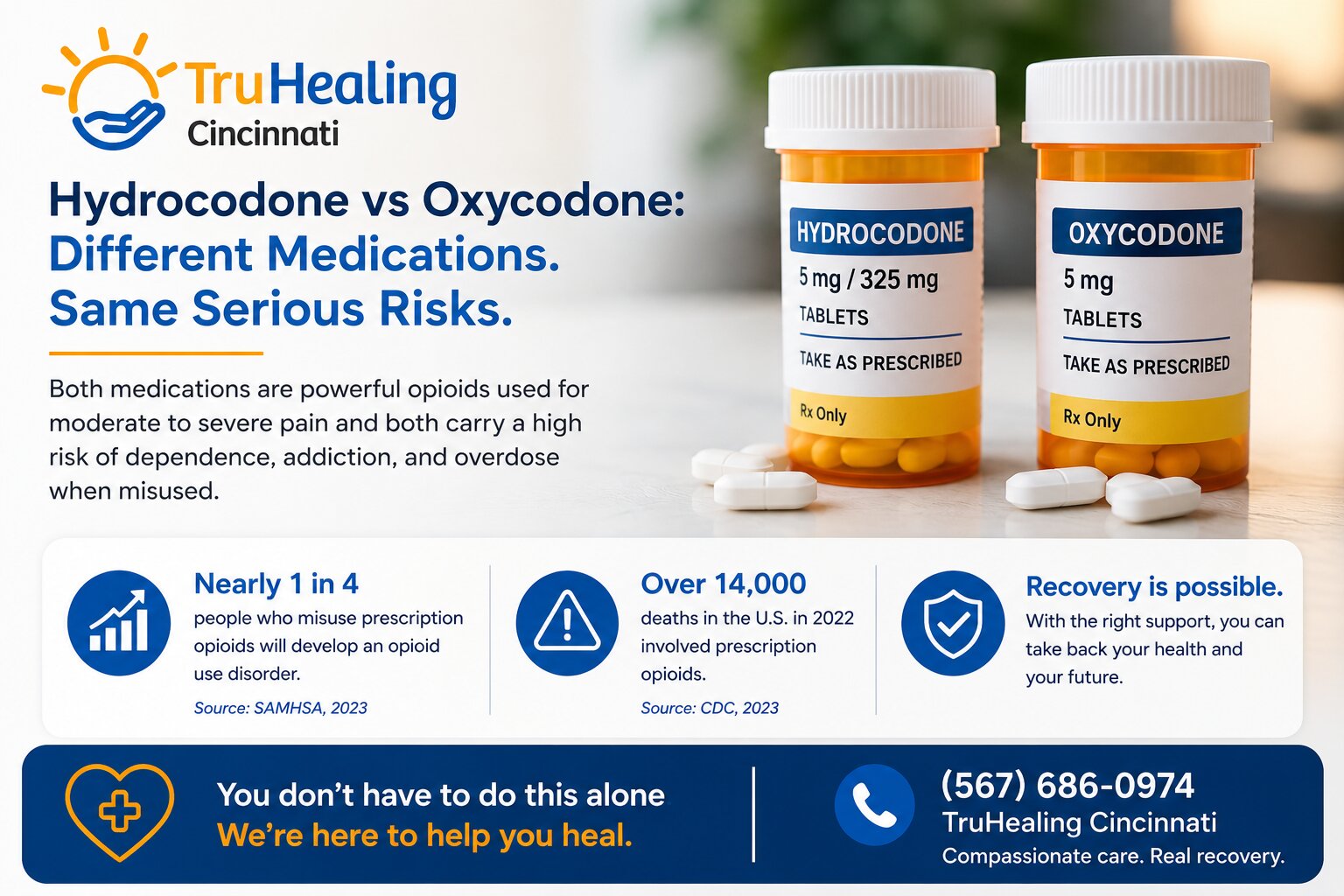
The most important takeaway is this: while these medications have some differences, both are powerful opioid pain relievers with a significant potential for dependence, addiction, and overdose when misused. Focusing only on which one is “stronger” can sometimes distract from the fact that both deserve the same level of caution.
What These Medications Are
Hydrocodone and oxycodone are both prescription opioid medications used to treat moderate to severe pain.
They work by attaching to opioid receptors in the brain and spinal cord, changing how the body perceives pain.
Both medications may be prescribed after:
- Surgery
- Serious injuries
- Certain dental procedures
- Cancer-related pain
- Other conditions involving significant pain
Although they belong to the same drug class, they are different medications with distinct chemical structures and dosing guidelines.
Common brand names include:
Hydrocodone
- Vicodin® (combined with acetaminophen)
- Norco®
- Lortab®
Oxycodone
- OxyContin® (extended-release)
- Roxicodone®
- Percocet® (combined with acetaminophen)
Regardless of the brand name, both medications should only be taken exactly as prescribed.
Quick Comparison
Feature |
Hydrocodone |
Oxycodone |
|---|---|---|
| Drug class | Prescription opioid | Prescription opioid |
| Common uses | Moderate to moderately severe pain | Moderate to severe pain |
| Available forms | Often combined with acetaminophen; some extended-release formulations | Immediate-release, extended-release, and combination products |
| Relative potency | Potent opioid analgesic | Generally considered somewhat more potent on a milligram-to-milligram basis, though dosing is individualized |
| Dependence risk | High | High |
| Overdose risk | High when misused | High when misused |
| Prescription status | Schedule II controlled substance (U.S.) | Schedule II controlled substance (U.S.) |
Both medications should be used only under the supervision of a licensed healthcare provider.
Key Differences
Although these medications are similar, several differences influence how they are prescribed.
Potency
One of the most common questions is which medication is stronger.
In general, oxycodone is considered more potent on a milligram-to-milligram basis than hydrocodone. However, this does not mean one medication is universally “better” or “more effective.”
Healthcare providers determine dosing based on factors such as:
- The type of pain
- Previous opioid exposure
- Age
- Kidney and liver function
- Other medical conditions
- Additional medications being taken
Taking more than the prescribed amount of either medication can be dangerous.
Available Formulations
Hydrocodone is frequently prescribed in combination with acetaminophen, although extended-release formulations are also available for certain patients.
Oxycodone is available as:
- Immediate-release tablets
- Extended-release tablets
- Combination products containing acetaminophen
Extended-release medications are designed to provide longer-lasting pain relief and should never be crushed, broken, or chewed.
Duration of Pain Relief
Immediate-release versions of both medications typically provide pain relief for several hours, while extended-release formulations are designed to last significantly longer.
Your healthcare provider determines which formulation is appropriate based on your medical needs.
Side Effects
Because both medications are opioids, they share many of the same side effects.
Common side effects include:
- Drowsiness
- Constipation
- Nausea
- Dizziness
- Dry mouth
- Itching
- Vomiting
Serious side effects may include slowed or difficult breathing, especially if opioids are taken in higher doses or combined with alcohol, benzodiazepines, or other sedating medications.
Addiction Risk
When comparing hydrocodone vs oxycodone, it’s easy to focus on which medication may be slightly more potent. In reality, the differences are smaller than many people assume when it comes to addiction risk.
Both medications:
- Activate opioid receptors in the brain
- Can produce feelings of euphoria in some people
- May lead to tolerance over time
- Can cause physical dependence with ongoing use
- Carry a risk of opioid use disorder
A person does not need to misuse a prescription intentionally to develop physical dependence. Even individuals who take opioids exactly as directed for an extended period may experience withdrawal symptoms if the medication is stopped suddenly.
The risk of addiction increases with factors such as:
- Higher doses
- Longer duration of use
- Taking medication more often than prescribed
- Using opioids without a prescription
- Personal or family history of substance use disorders
- Co-occurring mental health conditions
If you find yourself thinking about your next dose, taking extra medication to manage pain, or continuing to use opioids despite negative consequences, it’s important to speak with a healthcare professional.
Seeking help early can prevent more serious complications.
Getting Help for Painkiller Addiction
Prescription opioid addiction is a medical condition—not a personal failure.
Many people who develop opioid use disorder first received these medications for legitimate pain management. Over time, the body adapts to their effects, making it increasingly difficult to stop without support.
Evidence-based treatment may include:
- Medical detox when appropriate
- Medication-assisted treatment (MAT)
- Individual counseling
- Group therapy
- Relapse prevention planning
- Family support
- Continuing recovery services
Treatment plans are individualized based on each person’s medical history, substance use, and recovery goals.
Recovery is possible, and effective treatment is available.
Frequently Asked Questions
Which is stronger?
Oxycodone is generally considered more potent than hydrocodone on a milligram-to-milligram basis. However, the difference does not mean hydrocodone is “safe” or that oxycodone is always the better choice. Healthcare providers prescribe each medication based on individual medical needs, and both can be effective when used appropriately.
Which is more addictive?
Both medications carry a high risk of dependence and addiction because they act on the same opioid receptors in the brain. While there may be pharmacologic differences between them, neither should be considered a low-risk alternative. Misusing either medication can lead to opioid use disorder.
Are they the same thing?
No. Hydrocodone and oxycodone are different opioid medications with different chemical structures and formulations. However, they belong to the same class of drugs, are prescribed for similar types of pain, and share many of the same risks, including overdose, physical dependence, and addiction.
Recovery Is Possible
Whether opioid use began with a prescription or progressed beyond medical use, help is available. Comparing medications is often the first step toward understanding the risks—and recognizing when additional support may be needed.
At TruHealing Cincinnati, our team provides compassionate, evidence-based care for individuals living with prescription opioid addiction. Treatment focuses on helping people safely manage withdrawal, address the underlying causes of addiction, and build a foundation for long-term recovery.
Call (513) 429-7900 today to speak with our team or learn more about our Painkiller Addiction Treatment program. Taking the first step toward recovery can begin with a single conversation.