
Relapse can feel like heartbreak and déjà vu rolled into one.
You may have already been through the panic of getting your child into treatment. Watched them stabilize, maybe even smile again. You started to hope—tentatively, maybe quietly. And now? You’re watching them spiral again. Relapse doesn’t just bring back the fear. It brings back the exhaustion, the second-guessing, and a new layer of grief.
But relapse is not the end. It’s a turning point. And a residential treatment program can be the steady ground your child—and your family—needs to rebuild stability and hope.
At TruHealing Cincinnati, we specialize in supporting young adults after relapse, helping them reconnect with themselves and their future while offering families space to breathe again.
Relapse Feels Like Starting Over, But It’s Not
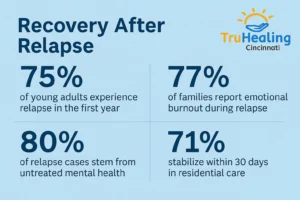
When a young adult relapses, it’s natural to feel like all the progress has disappeared. But that’s rarely true.
Even when things look chaotic on the surface, your child is not back at square one. They’ve had exposure to tools. They’ve likely experienced periods of clarity. And they’ve seen at least one version of life without substances. That matters.
The second time around, treatment often goes deeper—because the person knows what didn’t work last time. They may come in guarded or ashamed, but with the right care, they often become more honest and open than before.
And that’s where real change begins.
Why Residential Treatment Matters After Relapse
Outpatient support is valuable—but after relapse, it often isn’t enough.
Young adults need a fully immersive environment where they can stabilize emotionally, rebuild self-trust, and address what’s actually fueling the relapse. For many, that includes:
- Untreated depression or anxiety
- Disconnection from peers or family
- Identity confusion in early adulthood
- Academic or career-related stress
- The shame of “failing” recovery
A residential treatment program provides what the outside world can’t: structure without pressure, accountability without judgment, and time—real time—to process, rest, and try again.
At TruHealing Cincinnati, we blend clinical support with real-world planning. That means your child doesn’t just get therapy—they get tools for real life, and the support to practice them.
How Structure Helps Young Adults Regain Control
Relapse often happens in chaos: unpredictable schedules, emotional overwhelm, unhealthy environments.
Residential treatment gives your child the opposite.
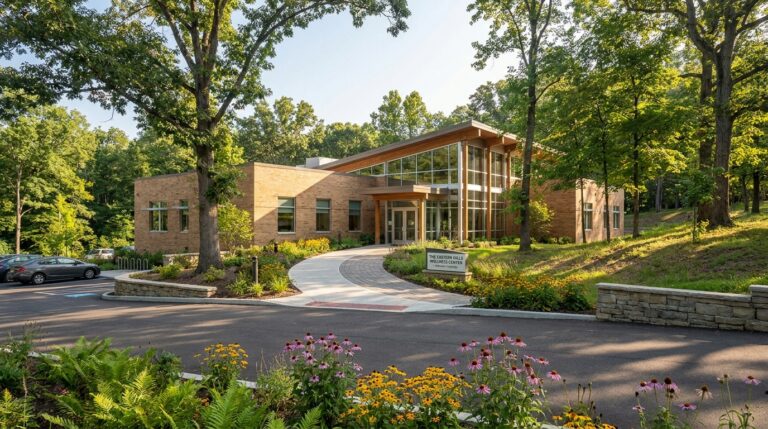
At our Cincinnati campus, each day follows a calming rhythm:
- Morning routines help anchor the nervous system
- Group therapy builds connection and insight
- Individual sessions offer space for deeper reflection
- Mindfulness, fitness, and holistic modalities bring the body into healing too
- Evenings focus on winding down, integrating the day’s work, and creating emotional safety
Structure is not about control. It’s about creating a stable rhythm where self-regulation can actually begin to grow.
And for young adults especially, this rhythm becomes the scaffolding for self-trust.
Community Makes the Difference
Many young adults relapse not just from substances—but from hope. They feel like no one understands them. Like they’re the only ones struggling with this level of chaos or shame.
In a residential treatment program, they find proof they’re not alone.
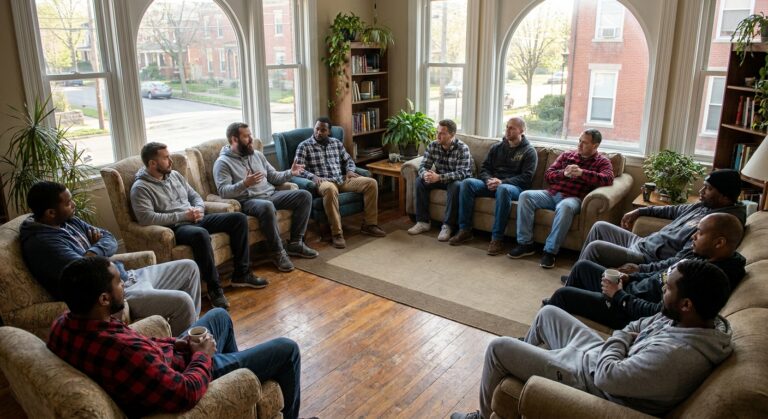
They’re surrounded by peers—some their age, some further along—who get it. People who’ve relapsed and returned. Who’ve sat in family sessions and said things they never thought they’d say. Who’ve made it out of the dark.
This shared experience can be the first step toward healing for young people who feel lost in isolation.
It also relieves you, as the parent, from being the only one trying to carry them emotionally. You’re not alone either.
What “Success” Looks Like After Relapse
We know you want to hear that your child will be okay. That they’ll stay sober. That they’ll come back to themselves.
And while no one can promise a straight path, here’s what we can say:
When young adults go through residential treatment after relapse, they often emerge more self-aware, emotionally grounded, and willing to participate in their own healing.
They’ve learned something about consequences—not from being punished, but from feeling what it’s like to lose ground and decide they want it back.
At TruHealing Cincinnati, we’ve seen young people:
- Return to school or work with a clearer sense of purpose
- Rebuild communication with parents and siblings
- Understand their triggers—and build plans to manage them
- Set boundaries for the first time
- Connect with joy, not just survival
Success is not just about abstinence. It’s about alignment—between what they want, what they need, and how they treat themselves.
Support for Families, Too
As a parent, you’ve likely walked on eggshells. You’ve gone from research mode to crisis mode and back again. You’ve tried tough love and gentle encouragement. You’ve wondered what you missed.
We want you to know: relapse is not your fault.
And while your child is in residential treatment, you deserve support, too.
At TruHealing Cincinnati, we involve families through:
- Regular clinical updates
- Family therapy (when appropriate and safe)
- Psychoeducation to help you understand addiction, relapse, and recovery
- Rebuilding communication without blame
Whether you’re nearby or looking for residential treatment in Lexington or Lawrenceburg, Kentucky, we serve families across the region with compassion and clarity.
You don’t have to figure this out alone.
FAQs: What Parents Ask After a Relapse
Does relapse mean my child didn’t take treatment seriously?
Not necessarily. Many relapses stem from unprocessed pain, mental health issues, or missing support systems—not a lack of effort. Recovery isn’t linear, and your child’s return to treatment is an act of courage.
Why is residential treatment better than outpatient right now?
After relapse, outpatient care can feel too unstructured. Residential treatment offers round-the-clock support, accountability, and time away from triggers—so your child can stabilize and reflect without the distractions of everyday life.
What’s different about treatment the second time?
Your child comes in with lived experience. That means they may engage more quickly, ask better questions, and show more openness to learning. Clinicians can also tailor care around what didn’t work last time.
How involved will I be as a parent?
We tailor involvement to your child’s treatment plan and comfort level. Most families participate in family therapy, receive updates, and engage in recovery planning. Our goal is to help you rebuild trust and communication.
What if my child doesn’t want to go back to treatment?
It’s common for young adults to resist after relapse—often out of shame or fear of judgment. We can help facilitate conversations, offer assessments, and provide referrals if our program isn’t the right fit. We’re here to support you, not pressure them.
This isn’t the end of the story. It’s a new chapter.
Call (513) 429-7900 or visit our Residential Treatment Program to learn how TruHealing Cincinnati helps young adults—and the families who love them—rebuild after relapse with care, dignity, and hope.