
Expertise provided by Jess Danner, Alumni Program Director
Finding Addiction Rehab in Ohio: How to Choose the Right Level of Care and Clinical Team
Every rehab website in Ohio says “individualized care” and “evidence-based treatment,” but no one tells you how to figure out which one actually has the clinical depth to catch what may be driving your son’s addiction, whether that is untreated depression, unprocessed trauma, or something else he has never put words to. So here is the honest truth about finding addiction rehab in Ohio: the brochures all read the same, right, and the words start to blur until they stop meaning anything, which leaves you making one of the biggest decisions of your life off nothing but marketing. The good news is there are three things you can actually check, and none of them live in a brochure. They live in how a facility runs its intake, whether the clinical team is trained to spot what may be underneath the substance use, and whether they screen for trauma and mental health on day one or wait until detox is over. That is what we at TruHealing Cincinnati walk you through here, in plain terms, so you know what you are looking at when you start making the calls.
Finding Addiction Rehab in Ohio: What the First Assessment Really Decides
The first assessment is where the whole treatment path gets decided, so it is one of the most important things to ask about before you commit to any program. At TruHealing Cincinnati, that intake is not a form on a clipboard, right, it is a full biopsychosocial assessment, a trauma screen, a mental health screen, and a full substance use screen, all run in one session so the clinical team can build a treatment plan that same session instead of weeks down the road.
Here is why that matters for your son. When someone walks in, the question is not just “how much is he using,” it is “what is his withdrawal risk, what medical complications are in play, how stable is he emotionally, and what has he been carrying that he has never told anyone.” Detox may come first, because you have to address the physical symptoms of addiction and get a real baseline before any deeper work can start, right, and you cannot do meaningful trauma work while a man is still white-knuckling withdrawal. So the medical side handles the body first, the withdrawal symptoms get managed, and the clinical picture gets clearer from there. Whether a man lands in the mental health level of care or the substance abuse level of care at TruHealing Cincinnati depends on his own use patterns and what insurance approves.
The Clinical Director at TruHealing Cincinnati, Savannah Cain, oversees this process, and that is the piece a lot of families never think to ask about: who is actually looking at the whole picture, and when. A facility that runs a shallow intake and drops your son straight into a track without really seeing him may be the same facility that misses the thing driving everything. If you want to see what treatment options exist across the state before you narrow down, the federal FindTreatment.gov tool lets you search by location and level of care, which is a decent starting map. But a directory listing only tells you a facility exists. It does not tell you how deep their assessment goes, and that depth is the whole game.
How Co-Occurring Conditions Change the Whole Treatment Plan
If depression or anxiety is sitting underneath the substance use and nobody catches it early, your son may finish detox and still face challenges within weeks, because the real driver was never touched. That is the difference co-occurring conditions can make, and it is why the first 72 hours matter so much.
One family arrived at TruHealing Cincinnati sure their son just needed detox, right, get the drugs out, get him home, done. But the psych assessment during intake surfaced depression sitting underneath the substance use, something he had never really named out loud. So the TruHealing Cincinnati team did not run him through a detox-only track and send him on his way. They shifted to integrated dual-diagnosis care, pairing a licensed therapist using Dialectical Behavior Therapy with the medical detox protocol so both conditions were addressed together, at the same time, instead of one after the other, though results vary by individual. Because you cannot detox the depression out of somebody, right, and if you address only the substance and ignore the thing feeding it, you may be setting a man up to be back at square one.
This is the gap most articles about finding addiction rehab in Ohio skip right past. They treat every facility like it is interchangeable, right, like the only variable is the amenities. But a program that screens for co-occurring conditions on day one is a different animal than one that waits until detox is finished to even ask the question. The National Institute on Drug Abuse notes that people with substance use disorders very often have co-occurring mental health conditions, and that treating them together can work differently than treating them in sequence (NIDA). That is not a nice-to-have. For many men, it may be an important part of why the last program did not stick.
Does the Clinical Team Have the Tools to Get His Medication Right?
A facility that guesses at psychiatric medication and a facility that uses genetic data to prescribe it are two different levels of care, and you deserve to know which one you are calling. At TruHealing Cincinnati, the clinical team runs GeneSight testing alongside the in-depth psych assessment, using your son’s own genetic data to inform medication decisions rather than relying solely on trial-and-error that can take weeks, though individual response to medication always varies.
Think about what that means if your son has tried antidepressants before and they did nothing, or they made him feel worse. That story is common, right, and a lot of the time it may not be that medication cannot help him, it may be that nobody ever matched the right one to how his body actually processes it. GeneSight testing reads how his genes handle different psychiatric medications, so the prescriber is working from real information instead of throwing darts and waiting a month to see what happens. When a man is in crisis, you do not have a month to burn on a medication that was never going to fit him.
This is also how you vet a clinical team without a medical degree. You do not have to understand pharmacology, you just have to ask the questions. Who is the clinical director, and what is their background. Is the medical staff current on newer procedures for managing withdrawal symptoms. Do they use genetic testing to guide psychiatric medication, or are they guessing. At TruHealing Cincinnati the medical staff stay up to date on newer procedures to help mitigate withdrawal symptoms, and the psych assessments feed directly into the treatment plan alongside the GeneSight results. A program that can answer those questions plainly is a program that has actually thought about this. People need to be heard, valued, and appreciated, and that starts with a team that treats your son’s history like real information instead of a checkbox.
Why an All-Male Program May Matter for Trauma and Emotional Work
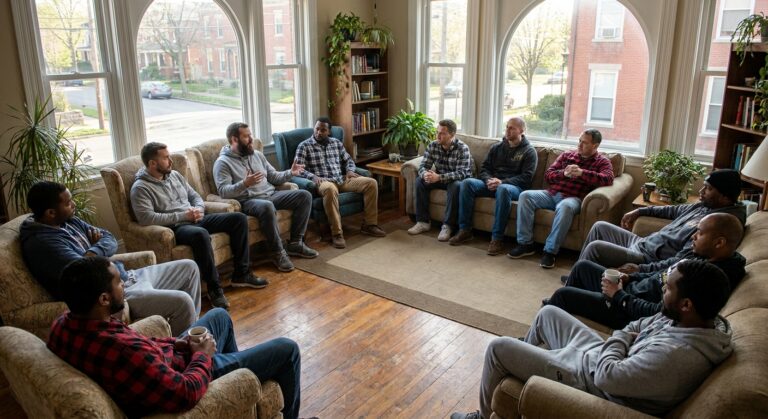
Men may process trauma and emotional regulation differently, and an all-male program is built around that possibility so your son can do the hard work without feeling like he has to keep his guard up. TruHealing Cincinnati is an all-male facility built to serve men, particularly in a working-class city like Cincinnati where many men carry themselves as the provider and the protector of their family, and that identity does not just disappear when a man walks through a treatment door.
Here is the thing about that. Many men have never had a safe place to set that armor down. They have spent years being the one who holds it together, right, so the guilt and shame that can come with addiction hit them in a specific way, and asking for help can feel like failing the people who depend on them. Everything at TruHealing Cincinnati is male-centric for that reason, from emotional recognition therapies to trauma therapies, all delivered from the male perspective, so a man can work on the issues he may experience as a provider and protector and learn to explore his emotions in a healthy way without the fear of judgment that shuts him down. You don’t remove communication to help a man heal. You build a room where he can finally shed that armor and say the thing he has been carrying.
That design choice at TruHealing Cincinnati changes what emotional regulation work actually looks like. It is the heart behind the conversations, right, not a curriculum you run through. When a man is around other men who have been where he is, who carry similar weight and shame, the rapport may build faster and the honesty may get deeper, and that honesty is where the trauma work can start to move. Treatment is work. It is not a spa week. But it is work a man may be more likely to actually do when the room is built for who he is.
How Will You Stay Involved While He Is in Treatment?
You stay involved from the first few days, not just at the end, because family involvement during treatment is one element that may point toward whether your son stays connected to recovery after he comes home, though outcomes vary by individual. At TruHealing Cincinnati, a therapist reaches out to a family member within the first couple days of treatment to get a better understanding of what your son is going through, right, and that collaboration can strengthen his plan and pulls you into the process instead of leaving you in the dark. What we see over and over is that people who go into treatment and do everything on their own may have a harder road than the men whose families were part of the work, though this is not always the case.
From there, it keeps going. Several of the therapists inside the TruHealing Cincinnati facility build a family piece into treatment, whether that is a weekly call or guiding the harder conversations that need to happen while he is still in the building. Because what we have learned is simple: when a man does all of this on his own and then goes home to people who were never part of it, the odds may be tougher, and when families are included in the process of growth and change, the support waiting for him at home can be stronger. So anytime we can bring a family into the recovery process, we do, right, because you are the environment he is coming back to.
It does not stop at discharge either. Jessica Danner of TruHealing Cincinnati works with families and clients after they leave, keeping communication open so a real relationship and rapport are already built before someone hits a hard patch. If she cannot reach a client directly, she reaches out to the emergency contact on file, often a family member, to make sure that man is safe and to see what more can be done post-discharge. Many of those conversations end up being about repair, right, a man saying “I need to fix things with my mother, my significant other, my child,” and asking Jess to speak to them from her perspective and help them understand what he is going through, free of charge, long after he walks out the door. That is how a support system can be built, so everybody feels like they have somebody to reach out to for support, care, and hope.
How Does Your Son Move From Detox to Residential to PHP?
Movement between levels of care is not a fixed calendar, so do not let anyone hand you a “he will be done in 30 days” promise. At TruHealing Cincinnati, transitions from detox to residential to a partial hospitalization program are driven by documented clinical progress, insurance authorization, and whether the team identifies a condition like depression or anxiety that may require shifting from a substance use level of care to integrated dual-diagnosis care.
Detox placement itself at TruHealing Cincinnati is decided by use patterns and withdrawal risk, right, not on what fits neatly into a week. From there, a man moves up or down a level as the clinical picture and his progress warrant it. So if the psych assessment surfaces something underneath the substance use, his path may change, and that can be a good thing even though it may mean more time, because rushing him out on a schedule that ignores the real driver is how people sometimes end up back at the beginning. You’re at a fork in the road with this decision, and the honest facility is the one that tells you the timeline depends on the work, not on the number that fits a brochure.
Understanding this before you commit saves you a lot of heartbreak later. When you know that insurance authorization and real clinical progress set the pace, you can set expectations at home instead of counting down days that were never guaranteed. Ohio facilities vary widely on how they handle these transitions, right, and the state has a real need for this kind of care, which you can see reflected in Ohio’s own behavioral health treatment data (HHS/ASPE). The program worth choosing is the one that treats each step as a clinical decision, not a billing cycle.
Questions Families Ask Before They Call
What happens during the intake assessment at an Ohio rehab facility?
Intake at TruHealing Cincinnati is a full biopsychosocial assessment, a trauma screen, a mental health screen, and a substance use screen, all run in one session. That is where the clinical team, led by Clinical Director Savannah Cain, builds a treatment plan and decides the right starting level of care, often detox first to manage withdrawal symptoms and set a baseline.
How do I know if my son needs detox only or dual-diagnosis care?
You do not have to guess, and honestly you should not try to. The psych assessment during intake at TruHealing Cincinnati, along with GeneSight testing, is what may identify co-occurring conditions like depression or anxiety sitting under the substance use. If the team finds one, they may shift from a detox-only track to integrated dual-diagnosis care so both are addressed together, which can be an important factor in recovery outcomes, though results vary by person.
What insurance plans does TruHealing Cincinnati accept?
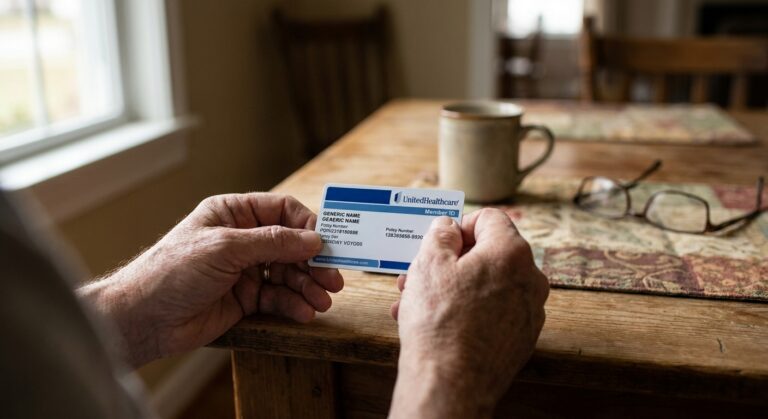
TruHealing Cincinnati accepts Aetna, Cigna, UnitedHealthcare, Anthem Blue Cross Blue Shield, Optum, and UMR, and also works with private pay. Coverage details vary by plan, so the fastest way to know what your son’s specific plan covers is to call and let admissions verify it for you before you make any decision.
Why might an all-male rehab environment matter for men in recovery?
Men may process trauma and emotional regulation differently, and many carry addiction through the lens of being a provider and protector. An all-male program like TruHealing Cincinnati can give your son space to work on those issues without fear of judgment, using emotional recognition therapies and trauma therapies delivered from the male perspective, though not every person responds the same way.
How long will my son be in treatment at a Cincinnati rehab facility?
There is no fixed number. Length of stay at TruHealing Cincinnati depends on documented clinical progress, insurance authorization, and whether the team identifies a co-occurring condition that needs integrated care. A program that promises an exact timeline before assessing him is guessing, and you deserve more information than a guess.
How will I stay involved in my son’s treatment while he is at TruHealing Cincinnati?
A therapist from TruHealing Cincinnati reaches out to a family member within the first couple days to understand what your son is experiencing. From there, the team incorporates families through weekly calls and guided conversations during treatment, and Jessica Danner continues supporting families and clients after discharge, free of charge, because a man who comes home to people who were part of the work may have a stronger support system waiting for him, though outcomes vary.
Finding addiction rehab in Ohio comes down to matching your son’s real clinical needs to a facility that may be able to meet them, and now you know the three things to check: how deep the intake assessment goes, whether the team is trained to catch co-occurring conditions on day one, and whether they bring you into the process instead of leaving you outside it. Call TruHealing Cincinnati at 502-830-3523 to schedule a confidential intake assessment and verify your insurance coverage with Aetna, Cigna, UnitedHealthcare, Anthem Blue Cross Blue Shield, Optum, or UMR. One phone call gets you real answers about his specific plan and possible starting level of care, so you can stop guessing and take the next step.
Ready to Find the Right Care in Cincinnati?
Choosing addiction treatment is a deeply personal decision, and you deserve a clinical team that understands the unique challenges you or your loved one are facing. TruHealing Cincinnati offers multiple levels of care tailored to meet you where you are in your recovery journey. A brief conversation with our team can help you understand which treatment approach aligns with your needs and circumstances.
Individual experiences with treatment vary significantly based on personal circumstances, co-occurring conditions, engagement level, and many other factors. The stories and outcomes described here reflect individual cases and should not be understood as typical results or as a prediction of what any other person might experience.