
Gabapentin is a prescription medication that helps many people manage nerve pain, certain seizure disorders, and other medical conditions. When taken as prescribed, it can be an effective treatment that improves quality of life.
However, in recent years, healthcare providers have become increasingly concerned about gabapentin misuse—particularly when it is taken in higher-than-prescribed doses or combined with opioids and other substances.
If you’ve been searching gabapentin high, you may be wondering whether the medication can produce euphoric effects, why some people misuse it, or whether it carries a risk of addiction.
If concerns about prescription medication use have started affecting your life or someone you love, learning more about prescription drug addiction treatment can help you understand your treatment options.
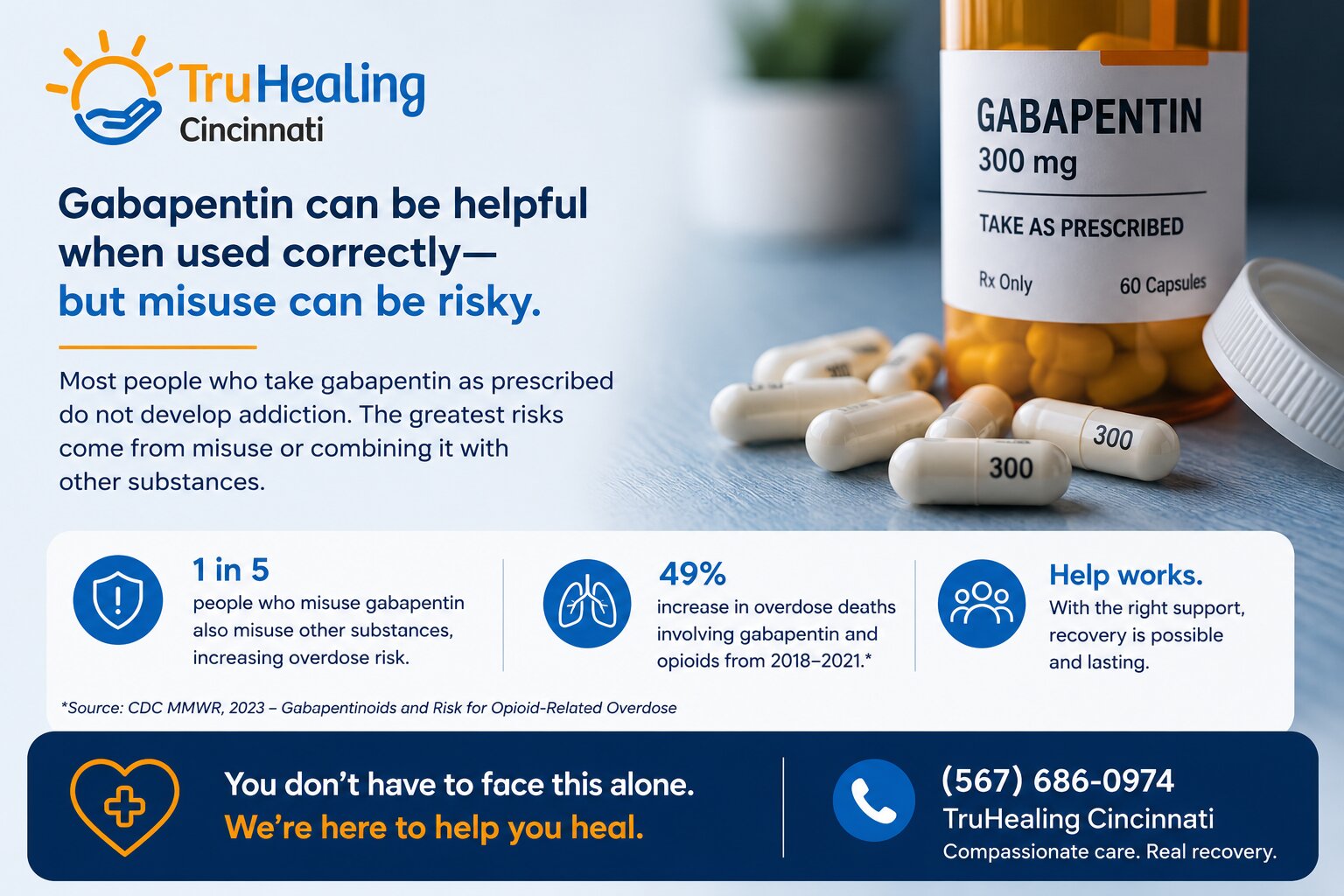
The key point is this: most people who take gabapentin exactly as prescribed do not develop addiction. The greatest risks arise when the medication is misused, taken in high doses, or combined with opioids or other sedating drugs.
Can You Get High on Gabapentin?
Gabapentin is not an opioid, stimulant, or benzodiazepine.
Its primary medical purpose is to affect certain nerve signals in the brain and spinal cord to help reduce seizures and relieve specific types of nerve pain.
When taken exactly as prescribed, many people do not experience feelings of euphoria.
However, some individuals who take very large doses or misuse the medication report effects such as:
- Relaxation
- Calmness
- Euphoria
- Drowsiness
- A sense of detachment
- Mild intoxication
These effects are unpredictable and vary from person to person.
As tolerance develops, some individuals may begin taking larger amounts in an attempt to recreate those effects, increasing the risk of harmful side effects and dependence.
Why People Misuse It
There are several reasons gabapentin may be misused.
It May Produce Euphoric Effects at High Doses
Some individuals misuse gabapentin because higher-than-prescribed doses may produce pleasurable sensations or increase sedation.
Not everyone experiences these effects, and taking more than prescribed significantly increases the risk of adverse reactions.
It Has Historically Been Viewed as Lower Risk
Because gabapentin is prescribed for common medical conditions and is not a traditional opioid, some people mistakenly assume it is harmless.
In reality, any prescription medication can become dangerous when it is used differently than intended.
It May Be Combined With Other Substances
One of the greatest concerns is that gabapentin is sometimes used alongside:
- Opioids
- Alcohol
- Benzodiazepines
- Other medications that slow the central nervous system
These combinations can greatly increase the risk of serious complications.
The Dangers of Misuse
Misusing gabapentin can lead to a variety of health risks, particularly when it is combined with opioids.
Increased Risk of Respiratory Depression
Both opioids and gabapentin can depress the central nervous system.
When taken together, they may increase the risk of:
- Excessive drowsiness
- Slowed breathing
- Difficulty waking
- Respiratory depression
- Overdose
Because of this risk, healthcare providers carefully evaluate whether these medications should be prescribed together and may adjust doses or recommend close monitoring.
Impaired Thinking and Coordination
Higher doses may affect:
- Judgment
- Balance
- Coordination
- Memory
- Reaction time
These effects increase the risk of falls, motor vehicle crashes, and other accidents.
Tolerance
Repeated misuse can lead to tolerance, meaning larger amounts may be needed to produce the same effects.
Increasing the dose without medical supervision raises the likelihood of harmful side effects.
Dependence
Physical dependence may develop after prolonged use, particularly at higher doses.
Dependence is not the same as addiction, but stopping gabapentin suddenly after regular use may trigger withdrawal symptoms.
For this reason, gabapentin should never be discontinued abruptly without guidance from a healthcare provider.
Signs of Gabapentin Addiction
Not everyone who takes gabapentin develops an addiction. However, misuse can increase the risk of developing a substance use disorder.
Warning signs may include:
- Taking larger amounts than prescribed
- Running out of medication early
- Taking extra doses for reasons other than medical treatment
- Visiting multiple providers to obtain prescriptions
- Craving the medication
- Continuing use despite negative consequences
- Spending significant time obtaining or using the medication
- Difficulty cutting back despite wanting to stop
If these behaviors sound familiar, professional treatment can help address both physical dependence and the underlying reasons for misuse.
Getting Help for Prescription Drug Misuse
Prescription medication misuse can happen for many reasons.
Some people begin taking gabapentin for legitimate medical conditions and later notice they are relying on it differently than intended. Others misuse it recreationally or in combination with opioids.
Effective treatment may include:
- Comprehensive medical evaluation
- Medication management
- Supervised withdrawal when appropriate
- Individual counseling
- Group therapy
- Treatment for co-occurring mental health conditions
- Relapse prevention planning
- Ongoing recovery support
Treatment is individualized based on each person’s medical history, current health, and recovery goals.
Seeking help early often makes recovery safer and more manageable.
Frequently Asked Questions
Is gabapentin addictive?
Gabapentin has the potential to be misused, and some individuals can develop dependence or addiction, particularly when taking higher-than-prescribed doses or using it recreationally. Most people who take gabapentin exactly as prescribed do not develop addiction, but any concerns about misuse should be discussed with a healthcare provider.
Is it dangerous with opioids?
Yes. Combining gabapentin with opioids can increase the risk of excessive sedation, respiratory depression, overdose, and death. These medications should only be taken together under the supervision of a healthcare provider who can assess the benefits, risks, and need for monitoring.
What does withdrawal look like?
People who stop gabapentin suddenly after prolonged or high-dose use may experience withdrawal symptoms such as anxiety, insomnia, nausea, sweating, restlessness, irritability, rapid heart rate, and, in some cases, seizures. Because withdrawal can be serious, gabapentin should not be discontinued abruptly without medical guidance.
Help Is Available
Misusing prescription medications can feel isolating, but effective treatment is available. Whether gabapentin use began with a legitimate prescription or developed into something more concerning over time, recovery is possible with the right support.
At TruHealing Cincinnati, we provide compassionate, evidence-based care for individuals struggling with prescription drug misuse. Our team works with each person to develop a treatment plan that addresses both physical dependence and long-term recovery.
Call (513) 429-7900 today to speak with our team or learn more about our Prescription Drug Addiction Treatment program. Taking the first step toward recovery can begin with a confidential conversation.