
Watching someone suddenly become difficult to wake, stop responding, or struggle to breathe is frightening. In those moments, knowing what to look for—and what to do next—can save a life.
If you’re searching what does an overdose look like, you may be worried about someone you love, or you may be trying to prepare yourself for an emergency. Learning the warning signs before they happen can make it easier to act quickly when every minute matters.
If opioid use has become a concern, learning more about opioid addiction treatment can help you understand the treatment options available after the immediate crisis has passed.
The most important thing to remember is this: if you suspect an overdose, call 911 immediately. Emergency medical care should never be delayed because you’re unsure what substance was involved.
What an Overdose Is
An overdose occurs when a drug overwhelms the body’s normal functions.
Depending on the substance, an overdose may affect:
- Breathing
- Heart rate
- Blood pressure
- Brain function
- Body temperature
- Consciousness
Some overdoses happen quickly, while others develop over several minutes or hours.
Although any drug can potentially cause an overdose, opioids and stimulants often produce very different warning signs.
An Overdose Is Different From Being Very High
Someone who is intoxicated may:
- Be sleepy but wake when spoken to
- Talk slowly
- Appear confused
- Have poor coordination
Someone experiencing an overdose may:
- Be impossible to wake
- Stop breathing normally
- Have blue or gray lips
- Collapse
- Have seizures
- Become unconscious
If you’re unsure whether someone is simply intoxicated or overdosing, treat it as an overdose and call 911 immediately.
Opioid Overdose Signs
Opioid overdoses are medical emergencies because opioids can slow or completely stop breathing.
Common opioids include:
- Fentanyl
- Heroin
- Oxycodone
- Hydrocodone
- Morphine
- Methadone
Common warning signs include:
Very Slow or Stopped Breathing
Breathing may become:
- Slow
- Shallow
- Irregular
- Completely absent
This is often the most dangerous sign because the brain and other organs begin losing oxygen.
Unresponsiveness
The person may:
- Not wake up
- Not answer questions
- Not respond to shouting
- Not respond to a firm rub of the breastbone (sternum)
Tiny (Pinpoint) Pupils
Many opioid overdoses cause very small pupils that remain constricted even in dim light.
Blue or Gray Lips and Fingernails
As oxygen levels fall, lips, fingertips, and skin may appear:
- Blue
- Purple
- Gray
- Pale
This may be easier or harder to recognize depending on a person’s skin tone.
Gurgling or Choking Sounds
Sometimes called the “death rattle,” these sounds occur because the person cannot protect their airway.
Never assume they are sleeping.
Limp Body
The person may appear:
- Extremely floppy
- Difficult to move
- Completely unconscious
Even if breathing is still present, emergency care is needed immediately.
Stimulant Overdose Signs
Stimulant overdoses affect the body differently because stimulants speed up the nervous system instead of slowing it down.
Common stimulants include:
- Cocaine
- Methamphetamine
- Prescription amphetamines
- MDMA
Symptoms may include:
Chest Pain
Severe chest pain may indicate:
- Heart attack
- Dangerous heart rhythm
- Cardiac strain
Extremely High Body Temperature
The person may become:
- Very hot
- Profusely sweaty
- Confused
- Agitated
Hyperthermia is a life-threatening emergency.
Seizures
Overdoses involving stimulants can trigger seizures that require immediate medical treatment.
Severe Agitation or Hallucinations
Someone may:
- Become extremely paranoid
- Experience hallucinations
- Behave unpredictably
- Become violent because of confusion
Rapid Heart Rate
An extremely fast heartbeat can increase the risk of:
- Stroke
- Heart attack
- Cardiac arrest
Collapse or Loss of Consciousness
Although stimulants often make people appear highly energized, severe overdoses can progress to unconsciousness.
Any loss of consciousness requires emergency medical care.
What to Do Immediately
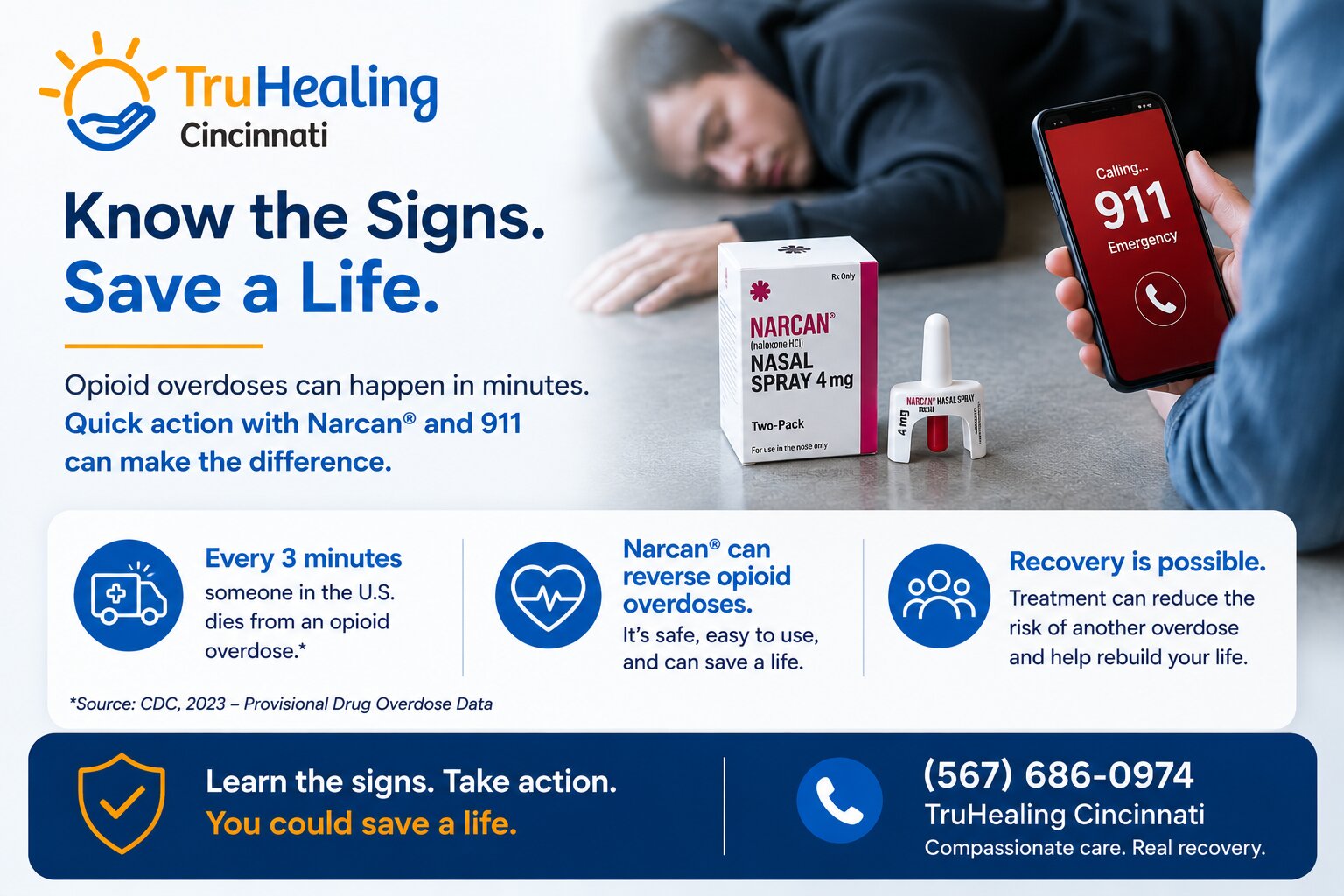
If you believe someone may be overdosing, act right away.
1. Call 911 Immediately
Do not wait to see if the person “sleeps it off.”
Tell the dispatcher:
- The person is unresponsive or having trouble breathing.
- You suspect a drug overdose (if known).
- Your exact location.
- Whether Narcan has been given.
Even if the person wakes up after receiving Narcan, they still need medical evaluation because the medication can wear off before the opioid does.
2. Give Narcan if You Suspect an Opioid Overdose
Narcan® (naloxone) is a medication that can temporarily reverse the effects of an opioid overdose.
It works by quickly blocking opioids from attaching to opioid receptors, helping restore breathing in many cases.
General steps include:
- Lay the person on their back.
- Administer Narcan according to the product instructions (such as a nasal spray).
- If there is no response after 2–3 minutes and another dose is available, give an additional dose.
- Continue to monitor breathing until emergency responders arrive.
Narcan is unlikely to harm someone if opioids are not involved, but it does not replace emergency medical care.
3. Provide Rescue Breathing if Needed
If the person is not breathing or is breathing only occasionally:
- Follow the 911 dispatcher’s instructions.
- Provide rescue breathing if you know how.
- If trained and appropriate, begin CPR if the person has no pulse or is not breathing normally, following dispatcher guidance.
4. Place Them in the Recovery Position
If the person is breathing but unconscious:
- Roll them onto their side.
- Bend the upper leg for stability.
- Tilt the head slightly back to help keep the airway open.
This reduces the risk of choking if vomiting occurs.
5. Stay With Them
Do not leave the person alone.
Continue watching for changes in:
- Breathing
- Responsiveness
- Pulse
- Skin color
Be prepared to give another dose of Narcan if instructed and available.
After an Overdose: Getting Help
Surviving an overdose is often a turning point.
An overdose may signal that opioid use disorder or another substance use disorder has become severe enough to require professional treatment.
Evidence-based care may include:
- Medical detox
- Medication-assisted treatment (MAT)
- Individual counseling
- Group therapy
- Relapse prevention planning
- Family support
- Ongoing recovery services
Treatment addresses more than the overdose itself—it helps reduce the risk of another life-threatening emergency.
No one should have to experience repeated overdoses before receiving help.
Frequently Asked Questions
How do you know someone is overdosing?
Warning signs depend on the substance involved but may include difficulty waking the person, slowed or stopped breathing, blue or gray lips, seizures, chest pain, extreme confusion, loss of consciousness, or collapse. If you suspect an overdose, call 911 immediately and follow the dispatcher’s instructions.
How is an overdose different from being very high?
Someone who is very intoxicated may still respond when spoken to or touched. A person experiencing an overdose may be difficult or impossible to wake, have dangerously slow or absent breathing, lose consciousness, or develop other life-threatening symptoms. When in doubt, treat the situation as an overdose and call 911.
Can Narcan reverse all overdoses?
No. Narcan (naloxone) is designed to reverse opioid overdoses by temporarily blocking the effects of opioids. It does not reverse overdoses caused solely by stimulants, alcohol, benzodiazepines, or other non-opioid substances. However, because it is often difficult to know exactly what someone has taken—and opioids are frequently mixed into illicit drugs—administering Narcan when an opioid overdose is suspected is recommended while calling 911 and awaiting emergency medical care.
Recovery Can Begin After an Overdose
An overdose can be terrifying, but it can also become the moment that leads someone toward recovery. Prompt medical care saves lives, and ongoing treatment helps address the underlying causes of opioid use disorder to reduce the risk of future overdoses.
If you or someone you love is struggling with opioid use, TruHealing Cincinnati offers compassionate, evidence-based treatment tailored to each person’s needs. If you’re in Lawrenceburg, Springfield, or Louisville, TruHealing offers programs with that same trusted approach.
Call (513) 429-7900 today to speak with our team or learn more about our Opioid Addiction Treatment program. Recovery is possible, and help is available when you’re ready to take the next step.