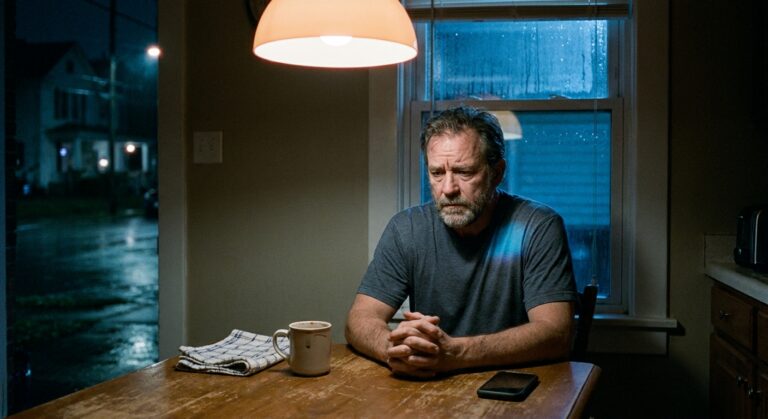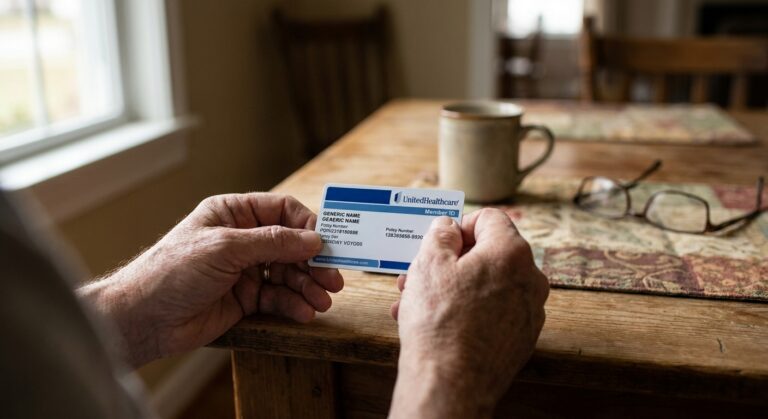

The choice in front of you is between a standalone psychiatrist who happens to have an opening and a program that treats his mental health and his substance use together, and the two are easy to confuse when you’re searching for a first available appointment. A psychiatrist with room on the schedule can evaluate his mood, anxiety, or sleep, but that visit may never address the drinking or using that’s tangled up with all of it. This guide walks through how to weigh a new-patient slot in Cincinnati against care built for both problems, so the option you choose is the one that fits what he’s facing.
That bigger question is whether someone will address the depression or anxiety and the substance use at the same time, as connected concerns. The alternative is that he gets handed from one office to another. At TruHealing Cincinnati, an all-male treatment center for adult men 18 and older, that question is addressed at intake. A full biopsychosocial assessment, a trauma screen, a mental health screen and a full substance use screen all happen in one intake session, and the clinical team builds his individualized treatment plan in that same session.
This guide is written for the parent who is making the calls, the one who is tired and scared and still holding it all together. It covers what to do if he is in danger right now, how to judge any psychiatric provider, what to ask on the first call, and which red flags should make you keep looking. It also lays out plainly what TruHealing Cincinnati does and does not offer, so you can make this decision with clear eyes.
What should you do first if your loved one is in crisis right now?
If your son may be in danger right now, call or text 988 for a mental health crisis, and call 911 for a possible overdose or any immediate threat to his life. Finding a psychiatrist can wait until he is safe.
The 988 line connects you with a trained crisis counselor by call or text. You can use it whether you are the one in crisis or you are scared for him. Once the immediate danger has passed and you need help sorting out options, the SAMHSA National Helpline at 1-800-662-4357 is a free, confidential treatment referral line that answers around the clock. It is a referral and information service, not an emergency line, so it belongs after 911 or 988, not in place of them. For local mobile crisis options, check the current information on Hamilton County’s public mental health and recovery services board website. Local numbers and hours change, and you want what is accurate today, not something copied from an old page.
If you call TruHealing Cincinnati during a possible overdose, the person who answers will not start talking about admission. The rep asks whether he is breathing, what color he is turning, what color his nail beds are, and whether you have Narcan. If you do, the rep walks you through giving it. If you don’t, the rep has you start CPR. The rep gets the address so EMS can be sent and keeps your callback number, so the team can follow up once the paramedics have done their work. TruHealing Cincinnati’s admissions team calls this three-stage approach Stabilize-Locate-Follow. Treatment only comes up once he is safe, because, as the team puts it, “You can’t recover if you’re not alive.”
That order shows you how a provider thinks. A place that puts his safety ahead of a sales pitch on the hardest call of your life is showing you one of its priorities. Keep that in mind as you read the rest of this guide.
Is a psychiatrist visit enough when drinking or drug use is part of the problem?
Sometimes, but often not on its own. A psychiatrist visit is built to diagnose mental health conditions and manage medication. A dual-diagnosis program is built to address the mental health condition and the substance use together, with medical care for withdrawal when he needs it.
Here is the bind a lot of families run into. The drinking can make depression feel worse, and depression can make him want to drink. Anxiety can keep him up at night, and the pills or the alcohol may be how he tries to sleep. So one office may want the substance use handled before it will address the mental health side, and another may want his mood steadier before it will address the drinking. Meanwhile your son sits in the gap between the two, waiting on a referral that may take weeks. Treating things in sequence can leave each problem feeding the other while you wait for someone to call back.
TruHealing Cincinnati lists both Psychiatric Treatment and Dual Diagnosis Treatment among its services, and the team is direct about how it sees the overlap: “For us, substance abuse treatment is mental health treatment.” There is one practical caveat. When substance use is severe, a period of detox has to come first so the physical symptoms are treated right away. That also gives the clinical team a clear baseline. If depression or anxiety shows up under the substance use, he moves from a detox-only track into integrated dual-diagnosis care. A licensed therapist uses Dialectical Behavior Therapy (DBT) alongside the medical detox protocol, so the two are addressed together, not one after the other.
This matters for men in particular. TruHealing Cincinnati’s team describes Cincinnati as a strong working-class city where men often struggle in silence, afraid to ask for help, because they feel they have to hold everything up as the providers and protectors of their families. A man like that may be willing to show up for one appointment about “stress” and never mention the bottle. Care built from the male perspective, where everything from emotional recognition work to trauma therapy is designed for men, may make it easier for him to set that armor down.
What decision criteria should you use to judge any psychiatric provider?
Judge any provider on four things: whether it screens for substance use, who manages his medications, how fast he can be seen, and what happens if withdrawal becomes a risk. These four questions help sort out whether a provider can address the whole picture or only part of it.
Does it screen for substance use? A mood questionnaire alone can miss the drinking entirely, especially if he is downplaying it. Ask whether the first visit includes a real substance use screen and a trauma screen. At TruHealing Cincinnati, both are part of the single intake session, along with the biopsychosocial assessment and the mental health screen. Therapists then run in-depth psych assessments plus GeneSight testing, a genetic test used to help guide medication choices. The team describes GeneSight as part of mental health treatment, not something tied to detox. The aim is to build a plan that can begin early in his stay.
Who manages medications, and how closely? A short medication check every month or two is very different from a team reviewing his symptoms every week. At TruHealing Cincinnati, the clinical staff meet with the medical provider every week to talk through medication concerns and symptom management. If something during detox looks like untreated mental illness, clinical staff bring it to the medical provider for medication review. The clinical side is staffed by master level clinicians with master level social work and counselor licensure, along with ART certified counselors. The center describes its staff-to-client ratio as high compared to typical programs.
How fast can he be seen? Ask for a real date, not a range, and ask about cancellation lists. With a program, ask how quickly the benefits check happens. At TruHealing Cincinnati, that check happens on the first call.
What if withdrawal is a risk? Stopping heavy drinking or certain drugs all at once can be medically dangerous, so he should not quit cold on his own without medical guidance. An office visit can’t watch him overnight. At TruHealing Cincinnati, the medical provider and nursing staff decide whether he needs detox, and leaving detox is a medical decision, not one based on his mood that day.
One more thing to look for is whether the care adapts to the person in front of it. TruHealing Cincinnati shared the story of one man who was carrying so much guilt and shame that he couldn’t focus on the group topics. The clinical team changed that week’s curriculum to meet his needs, after weighing what every man in the group needed too. That kind of adjustment can be hard to find in a 15-minute appointment.
Which questions should you ask psychiatrists in Cincinnati accepting new patients, and what red flags should you watch for?
Ask every provider how they screen for substance use, how they handle withdrawal, and what you will owe before the first visit. Then watch for vague answers, no withdrawal plan, or pressure to commit before anyone has checked your benefits.
Keep these questions next to the phone when you call:
- Do you screen for drinking and drug use at the first appointment, or only for mood symptoms?
- If you find a substance use problem, do you treat it here or send him somewhere else?
- Who manages his medications, and how often does someone check on how they are working?
- What is the actual date of the first available appointment, and do you keep a cancellation list?
- What happens if he starts withdrawing, or tries to stop drinking on his own?
- Will you check our benefits and explain what we will owe before he starts?
- If he agrees, how do you involve the family?
The red flags are mostly about what goes unsaid. Be wary of a provider that never asks about alcohol or drugs, has no plan if he goes into withdrawal, or gets vague the moment you ask about cost. Another warning sign is pressure to sign up or pay before anyone has looked at your benefits and explained them.
Here is how the first call works at TruHealing Cincinnati. Director of admissions Philip Wilson, who has been doing benefits verification for more than five years, checks benefits using only your son’s name, date of birth and member ID. He explains the out-of-network deductible and out-of-pocket amounts. Nothing is collected upfront, and then the family decides. Whether your son lands in the mental health level of care or the substance use level of care depends on his use patterns and on what his insurance company will authorize him to attend treatment for.
You may make all these calls and still hear him say “not yet.” That’s hard, and it’s common. TruHealing Cincinnati tells families that tough love does not always work for every person. A supportive, loving approach with healthy boundaries, without enabling continued use, is the approach the team encourages, and the team will walk you through setting those boundaries. Cutting off contact when he says “not yet” can leave him feeling like a number instead of a person. Keep checking in, listen so he feels heard, remove as many barriers as you can, and let him have a say in his own process. Sometimes he tries it his way first, like going to a meeting, and then withdrawal gets in the way and he calls back ready for detox. You want the door to still be open if that happens.
What does a single-session intake look like, and what happens in the first days?
At TruHealing Cincinnati, all the main screenings happen in one intake session, and the clinical team builds his individualized treatment plan before that session ends. After that, detox comes first if he needs it, and the mental health work starts early rather than waiting for detox to finish.
Here is the sequence the team describes, without a fixed clock schedule. At intake come the biopsychosocial assessment, the trauma screen, the mental health screen and the full substance use screen, and the plan is built in that same sitting. If the medical provider and nursing staff find he needs detox, it starts right away to treat the physical symptoms. Therapists run in-depth psych assessments and GeneSight testing so the plan can begin early. If depression or anxiety shows up, a licensed therapist begins DBT alongside the medical detox protocol. If he arrives scared or ready to bolt, he is connected with his therapist right away.
That fear is common, and TruHealing Cincinnati’s team says so plainly. Going to treatment for the first time, or even the third time, can be very scary, and most people aren’t big fans of change. You’re at a fork in the road when you come to treatment, and the team’s job is to connect him with someone who has the experience to walk him through those emotions. Many men expect a hospital where they lose control of their lives. Treatment is work, and at the end of a long day of looking inward a man can be tired and drained. So the center has a workout facility, an arcade, a movie theater, a hot tub, a cold plunge, a red light sauna and TVs in every room to help him recharge.
From there, every man checks in daily in group. He rates his cravings from 1 to 10, with 10 being the strongest, and how stable he feels from 1 to 10, with 10 being the best he has felt. Clinical, nursing and case management staff meet twice a week to review each man’s progress and any barriers. If his check-ins don’t match his behavior or physical signs, he stays at his current level until that mismatch is resolved. For a parent, that means a move to a lower level of care is based on what the team observes, not just on what he says.
Families can play a real part here too. The team often hears from men who want to leave early, and a common one goes like this: a married man says he has to get home because his wife needs him. The feeling is real, but his addiction has kept him from being that man for weeks or months. So the team reaches out to the family, explains its concerns, and asks for help encouraging him to stay. In some cases that has meant a man stays through a whole program, and in others a week or a single day. They take it one day at a time.
Which levels of care does TruHealing Cincinnati provide, and when should you look elsewhere?
TruHealing Cincinnati provides medical detox, residential (inpatient) treatment, a partial hospitalization program (PHP) and an intensive outpatient program (IOP) for adult men 18 and older. It does not provide standard outpatient care, medication-assisted treatment (MAT) or sober living. A man who needs a stand-alone outpatient psychiatrist or MAT will need to find that elsewhere.
| Level of care | What it is | Who it tends to fit | At TruHealing Cincinnati |
|---|---|---|---|
| Medical detox | Medical care while the body clears substances and withdrawal is managed | A man who may have dangerous or severe withdrawal | Yes, need is assessed by the medical provider and nursing staff |
| Residential (inpatient) | He lives on-site and has structured treatment every day | A man whose use and mental health symptoms have taken over daily life | Yes |
| Partial hospitalization (PHP) | Full-day treatment on most days without an overnight stay | A man who needs daily structure but not 24-hour care | Yes |
| Intensive outpatient (IOP) | Several sessions a week while he lives at home | A medically stable man with a steady home who needs real structure | Yes |
| Stand-alone outpatient psychiatry | Periodic office visits, mainly for diagnosis and medication | A man whose substance use is not driving the problem | No, look elsewhere |
Residential care may fit better when:
- He has tried to cut back or quit on his own and it hasn’t held, sometimes more than once.
- Home is where the using happens, or home isn’t steady right now.
- Depression, anxiety or trauma symptoms are making it hard to get through the day.
- He needs detox first and a structured place to go right after.
IOP may fit better when:
- He is medically stable and doesn’t need detox, or has already finished it.
- He has a safe, stable place to live and people supporting him.
- He needs to keep some of his work or family responsibilities while in treatment.
- He is stepping down from a higher level of care and still wants structure while he rebuilds.
The final placement comes from his assessment, his use patterns and what his insurance will authorize. There is no one size fits all here. TruHealing Cincinnati is also honest about cases it generally can’t take. For example, the team notes it usually cannot treat a man whose only issue is marijuana use with no mental health concerns, because insurance typically will not cover that.
Conditions and therapies on record at TruHealing Cincinnati include:
- Substance use disorders involving alcohol, cocaine, heroin, meth, opioids and opiates, painkillers and other prescription drugs
- Depression, trauma and PTSD, and anxiety that shows up alongside substance use
- Dual diagnosis care for co-occurring mental health and substance use conditions
- Cognitive Behavioral Therapy (CBT) and Dialectical Behavior Therapy (DBT)
- EMDR therapy and trauma therapy
- Individual counseling and group counseling
- Family programming
What does it cost, and how does out-of-network coverage work?
TruHealing Cincinnati is a fully out-of-network center, so what you pay depends on your plan’s out-of-network benefits, and a benefits check is the only way to know. It does not accept Medicaid or Medicare.
TruHealing Cincinnati bills out-of-network benefits for Aetna, Allied, Blue Cross Blue Shield, Cigna, Custom Design Benefits, Frontpath, GEHA, Harvard Pilgrim, Surest, UHSS, UMR and UnitedHealthcare. The center has no in-network contracts with any insurer. The list is not complete, and more carriers are being added, so call even if you don’t see your plan here. Philip Wilson is straightforward about something families need to hear: out-of-network deductibles and out-of-pocket maximums are usually larger than in-network ones. He also explains that because the center is out of network, it does not collect anything upfront. Ask him how payment timing would work under your son’s plan.
For a parent, one detail is worth checking right away. Philip Wilson says young men between about 20 and 26 are sometimes still on a parent’s insurance and don’t know it, or don’t know what that plan includes. Substance use benefits can also be hard to spot in a plan summary. The admissions team’s view is that insurance is designed to be confusing, and its job is to help families understand it. Federal law helps here too. The Mental Health Parity and Addiction Equity Act generally bars health plans from putting tighter limits on mental health and substance use benefits than on medical and surgical benefits. Plans sold on the marketplace must include mental health and substance use disorder services as essential health benefits. Parity rules don’t decide what any one out-of-network program will cost you, though, so the benefits check still matters.
When you compare costs, compare what each option includes. An in-network psychiatrist may cost a modest copay per visit, but he may not be seen for weeks, and the substance use may not be addressed at all. A program costs more but includes daily structure, detox when he needs it, and a team that meets every week about his care. Philip Wilson walks families through what the out-of-network setup pays for at TruHealing Cincinnati: private rooms, better food, a lower patient census and a high staff-to-client ratio. Then the family decides whether that is the right fit.
Questions families ask before they call
These are short answers to the questions parents raise most often when a man’s mental health and substance use are tangled together.
How do I find psychiatrists in Cincinnati accepting new patients?
Call offices directly, ask for the actual first available date, and ask to be put on a cancellation list. SAMHSA also runs a free treatment locator at FindTreatment.gov that lets you search by location and type of care. On every call, ask whether they screen for substance use.
Can a psychiatrist treat addiction and depression at the same time?
Some can, but many office-based practices are not set up to assess or treat substance use. Dual-diagnosis programs are designed to address both together. TruHealing Cincinnati, for example, pairs DBT with medical detox when depression or anxiety shows up under the substance use.
Does TruHealing Cincinnati take Medicaid or Medicare?
No. TruHealing Cincinnati bills out-of-network benefits for the commercial carriers listed above. Call to check your specific plan.
What do I need to check my insurance benefits?
Only his name, date of birth and member ID. The director of admissions explains the out-of-network deductible and out-of-pocket amounts, and nothing is collected upfront.
What if he says he is not ready for help?
Stay supportive and set healthy boundaries without enabling continued use. Keep checking in even when he says “not yet,” and let him have a say in his own process.
Who does TruHealing Cincinnati serve?
TruHealing Cincinnati is an all-male facility serving adult men 18 and older.
Where is TruHealing Cincinnati, and how do you start?
TruHealing Cincinnati is located in Cincinnati, OH 45249. It serves men from Cincinnati and surrounding areas, including Springfield, OH, Indianapolis, and Kentucky cities such as Lawrenceburg, Lexington and Louisville. Getting started takes one phone call and three pieces of information.
Recovery support continues after a man leaves treatment, and Cincinnati offers many choices. TruHealing Cincinnati’s team has watched the local options grow well beyond traditional Alcoholics Anonymous and Narcotics Anonymous meetings. The area now also has SMART Recovery, Dharma Recovery, Cocaine Anonymous and Celebrate Recovery. The team’s view is that there is no one size fits all, and what works for one man may not work for the next. Having several paths means your son can look for the one that fits him and take it one day at a time. Before discharge, every man is set up with aftercare and connected with the alumni director, who follows up with him.
If you want a broader look before you call, visit TruHealing Cincinnati to read more about how its care works. You can also compare other options through SAMHSA’s FindTreatment.gov locator. When you are ready, here is how to start:
- Gather his full name, date of birth and insurance member ID.
- Call TruHealing Cincinnati at 513-429-7900 and ask for a benefits check. The director of admissions reviews his out-of-network benefits and explains the deductible and out-of-pocket amounts.
- Talk it through as a family and decide. Nothing is collected upfront, and nobody should rush you.
- At intake, he completes the biopsychosocial, trauma, mental health and substance use screens in one session, and the clinical team builds his individualized plan before that session ends. Detox comes first if the medical provider and nursing staff find he needs it.
When you’re ready, call 513-429-7900 with his name, date of birth and member ID. You’ll have his benefits checked with nothing collected upfront, and you can talk through whether starting with detox, then residential, PHP or IOP dual-diagnosis care, may fit him. And if your son is somewhere between 20 and 26, check first whether he is still on your plan. That one detail can change the picture, and it takes about a minute to find out.
Ready to Talk With Someone in Cincinnati?
If you have been putting off finding a psychiatrist because you worry that substance use will make you feel judged or turned away, you are not alone in that hesitation. Mental health and substance use often show up together, and looking for care that treats both as one picture is a reasonable place to start. The team at TruHealing Cincinnati is ready to talk through where you are and what a next step could look like, so call the office when you feel ready.
Experiences and outcomes vary from person to person, and this article is for general information only, not medical advice. If someone is in immediate danger, call 911, or call or text 988 for a mental health crisis.