
You may feel torn. You love them, you fear for them, and part of you wonders: how do I keep them safe when everything feels fragile?
When someone you love is actively using, outpatient care or promises often aren’t enough. The risk is too high, the triggers too many. Sometimes the safest place for healing to begin is somewhere away from the patterns that are pushing them deeper.
A residential treatment program isn’t about giving up—it’s about creating real safety. It’s a place where your loved one can begin to breathe, to detox, to see themselves again, and to rebuild from a different foundation.
Below, as a clinician and someone who’s seen the world addiction pulls people into, I’ll walk you through why residential care often becomes the safest and most hopeful environment—and how that can help not just them, but both of you, eventually.
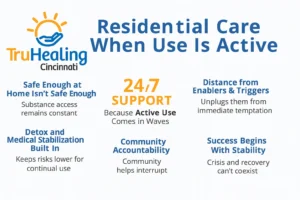
Why “Safe Enough at Home” Isn’t Enough When Using Is Active
When addiction is active, “safe enough” becomes a shifting target. What seems tolerable this morning might break by evening.
At home or in outpatient settings:
- Substance access remains constant.
- Emotional triggers—arguments, stress, family dynamics—still surround them.
- The person is too close to old patterns, old people, old pain.
- Cravings amplify in unstructured moments.
- Supervision is reactive, not preventative.
A residential treatment program removes them from that environment—temporarily shielding them from what’s most dangerous. When someone is in the thick of use, structure and distance act like a firewall, giving their mind and body space to begin recovery.
24/7 Support: Because Addiction Doesn’t Clock Out
One of the clearest advantages of residential care is that support never turns off. Staff, medical supervision, peer presence—everyone is on shift when longing, withdrawal, or urges strike.
When someone is actively using, there are nights when everything inside them screams to relapse. If there’s no one to interrupt the spiral, slips happen quickly. In a residential setting, there is someone there.
This constant support helps:
- Prevent dangerous lapses
- Monitor medical and psychiatric needs
- Intervene before crisis
- Provide emotional containment during intense emotional storms
Because addiction doesn’t pause after business hours.
Detox and Medical Stabilization Built In
Often, active use involves physical dependency. Interrupting use abruptly can trigger withdrawal symptoms or medical complications. Residential programs are generally better equipped to manage those risks.
They provide:
- Medical monitoring
- Medication-assisted care when appropriate
- Psychiatric assessment
- Stabilization protocols
Rather than sending someone home or asking them to detox on their own, residential treatment keeps medical care close while therapy begins.
Distance from Enablers, Chaos, and Triggers
Home life—even well-intended home life—often has patterns of enabling, emotional chaos, old conflicts, or substance access. A residential program gives a clean slate:
- No bringing in substances
- No secret stashes
- No emotional blow-ups mid-night
- No easy escapes into old habits
It’s like pulling someone out of a storm to rest in a shelter. They can’t heal fully while being battered by wind and rain.
Immersive, Multi-Modal Therapy That You Can’t Fit Into “An Hour a Week”
In outpatient settings, therapy is often boxed into 1–2 hours per session. That’s rarely enough when someone’s entrenched in addiction. In residential care, therapy is woven into daily life.
You get:
- Individual therapy
- Group work
- Psychoeducation
- Trauma-informed modalities
- Holistic supports (like wellness, mindfulness, exercise)
- Peer connection as therapy in itself
The person lives recovery, not just talks about it.
Community, Peer Accountability & Healthy Boundaries
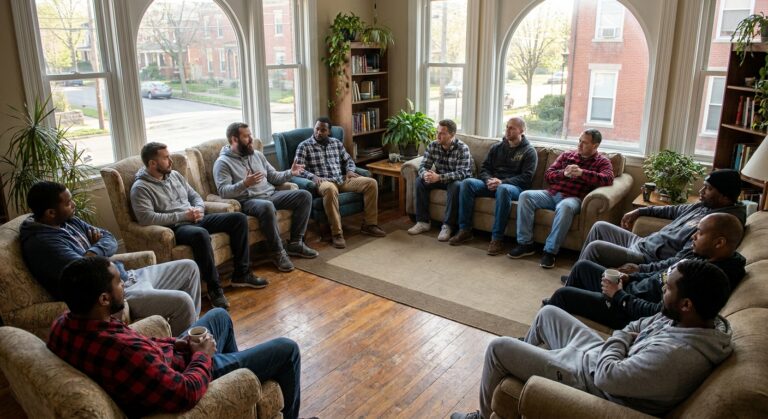
One of the hidden strengths of residential care is the social environment. When people live together in recovery, they become mirrors for one another—catching relapse signals, holding each other accountable, offering empathy that no one else can.
For someone actively using, that community is a lifeline. But it’s not just companionship. It’s exposure, accountability, and shared rebuilding. In that space, boundaries become practice, not punishment.
Success Doesn’t Begin at Completion—it Begins With Stability
I’ve seen partners say, “But what if they leave early?” Yes, some do. But many don’t—but they often don’t even get a chance if they never leave the chaos.
Research supports that residential or inpatient modalities often show stronger outcomes for those with severe substance use disorders compared to outpatient-only care. (PMC)
One study found that residential rehab was often significantly more effective at achieving abstinence over time, especially in severe cases. (ResearchGate)
The point is: residential treatment doesn’t guarantee perfection. But for someone deep in active use, it gives the best chance to begin change in a safer, more sustainable way.
A Shift in Dynamics: Healing Begins Where Power Stops
One reason residential care is so potent: it temporarily resets relational dynamics.
At home, power struggles, blame, ultimatums, emotional exhaustion all frame attempts to intervene. In residential care, those dynamics pause. The person doesn’t have to keep defending, fighting, blaming, or avoiding.
What emerges instead is possibility:
- You don’t have to beg them to change—they can show you
- You don’t have to operate under threat—they can begin from structure
- You don’t have to hold constant vigil—they are held
That shift can help both of you start to breathe again.
How It Helps You, Too (Yes, You)
You’re not just a bystander. You’re part of the story. And residential care can help you, too:
- Reduces your fear and anxiety about immediate relapse
- Gives you space to rest, to reflect, to learn boundaries
- Provides access to family therapy, support groups, education
- Helps rebuild your own emotional stability, which is essential to recovery for the relationship
- Lets you see the change when it begins—not in crisis
You don’t have to ride every wave with them.
FAQs: What Partners Often Ask About Residential Treatment
Isn’t residential extreme—like locking someone away?
It might feel that way. But it’s not punishment. It’s protection. The goal is not to confine—but to free them from the internal and external chaos long enough to begin rebuilding.
If they refuse, is treatment worth pursuing?
You can’t force someone. But models like CRAFT (Community Reinforcement and Family Training) teach how to engage a loved one into treatment without confrontation—and many couples begin residential treatment when refusal patterns shift. (Wikipedia)
How long should residential be?
There’s no one-size-fits-all. Some programs are 30 days, others longer. What matters is giving enough time to stabilize, process, integrate therapy, and plan transition. Short stays often return people to risk.
What happens after residential?
Aftercare is critical. Transition to outpatient care, sober living, therapy, peer support, and commute plans must be mapped out. The bridge back matters as much as the stay. (SCIRP)
Will this fix our relationship?
Not instantly. But it creates a healthier environment for repair. The person returns with more capacity, less defensiveness, and possibly renewed hope. You can begin to rebuild from steadier ground.
We live near Lawrenceburg or Louisville—are there residential options there?
Yes. At TruHealing Cincinnati, we serve clients in Cincinnati and collaborate with networks across our region. We can help you explore residential options close to your location and support logistics and transition.
There’s no guarantee in this work. Recovery is messy, imperfect, non-linear.
But when someone is actively using, the “stay and hope for change” approach often leaves both of you wounded, discouraged, and hollowed out.
Residential treatment gives a different option: a controlled, supportive space where change can begin—not under pressure, but within boundaries. It’s a chance to step away from danger long enough to look at the path forward.
If you love someone fighting addiction, what feels safe isn’t a compromise—it’s insistence. Insist they get into a place built for healing, not just survival.
Call (513) 429-7900 or visit our residential programming page to explore how residential treatment in Cincinnati or nearby areas can offer real safety—and give both of you a shot at reclaiming something worth fighting for.