
The truth about opioid addiction treatment is that it rarely looks the way people imagine.
When you’re young and entering recovery, it can feel like you’ve accidentally taken a wrong turn in life. Your friends might still be going out, chasing careers, or figuring things out in their own chaotic way—while you’re sitting in group therapy talking about coping skills.
But here’s the part people don’t say enough: choosing treatment young doesn’t make you the “weird one.” It often makes you the bravest person in the room.
If you’re considering treatment or already starting the process, it helps to know what the experience really looks like. Programs like the one offered through support people at many different stages of recovery.
And if you’re coming from nearby areas like Louisville, Kentucky, you might discover that your story is far less unusual than you think.
Here are seven things people rarely say out loud about opioid addiction treatment—but probably should.
1. Opioid Addiction Treatment Doesn’t Instantly Make Life Feel Normal
Many people enter treatment secretly hoping something dramatic will happen.
Maybe a sudden moment of clarity. Maybe a burst of motivation that makes everything easier.
The reality is more gradual.
Your brain has been rewired by opioids over time. Dopamine systems shift. Stress responses change. Emotional regulation gets distorted.
Treatment works by slowly helping those systems recover.
Some days feel hopeful.
Some days feel dull.
Some days feel unexpectedly emotional.
And that’s not a sign something is wrong. It’s a sign your brain is learning how to function without chemical shortcuts.
Recovery isn’t a miracle cure.
It’s more like rebuilding a house one room at a time.
2. Feeling Like the Youngest Person in Recovery Is Extremely Common
Walking into your first recovery meeting or therapy group can feel intimidating.
You might notice people who are older, with longer histories of addiction. You might wonder if you somehow arrived here “too early.”
But addiction doesn’t follow age rules.
Plenty of young adults enter treatment after only a few years of opioid use. Others come after a decade. Some are still teenagers.
Once conversations begin, age usually fades into the background.
Because the emotional experiences behind addiction—shame, secrecy, exhaustion, fear—tend to sound surprisingly similar across generations.
And sometimes the younger voice in the room brings something valuable: honesty, urgency, and a willingness to change early.
3. Early Recovery Can Feel Socially Awkward
This might be the most relatable part of early sobriety.
Recovery changes your routine. It changes where you spend your evenings. It changes the conversations you’re willing to have.
At first, that shift can feel isolating.
Friends may not understand why you’re stepping away from certain environments. Social media might make it look like everyone else is living a carefree life.
Meanwhile you’re attending therapy sessions and learning about emotional regulation.
It’s easy to feel like the odd one out.
But something interesting happens over time.
The awkwardness fades.
And in its place, many people discover deeper friendships, healthier boundaries, and conversations that actually mean something.
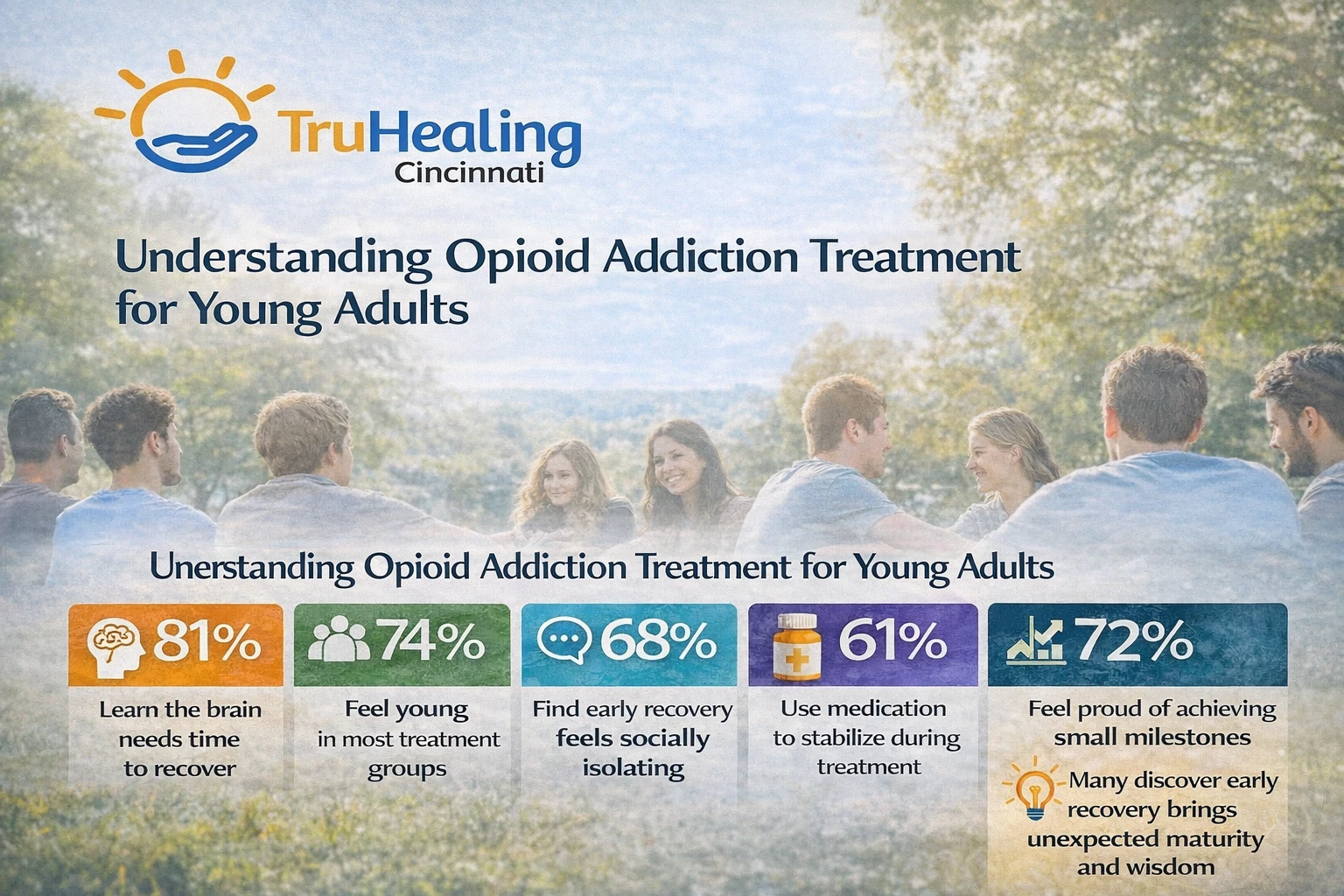
4. Medication in Opioid Addiction Treatment Is Not What People Think
Medication-assisted treatment can be a confusing topic, especially for younger people.
Some worry it means they aren’t truly sober. Others worry about stigma or judgment.
In reality, medications used in opioid addiction treatment are carefully designed to stabilize the brain and reduce cravings.
They allow people to focus on recovery instead of constantly fighting withdrawal or obsessive thoughts about opioids.
For some individuals, medication becomes an important part of long-term stability. For others, it may be temporary.
The goal isn’t dependence.
The goal is stability while deeper healing happens.
And decisions about medication are always made with medical guidance and patient input.
5. You’ll Start Feeling Proud of Small Wins
One of the most unexpected parts of treatment is how meaningful small victories become.
Showing up to therapy on a hard day.
Sleeping through the night.
Having a conversation without feeling defensive.
These moments might sound simple, but they represent real change.
Addiction narrows your focus to survival.
Recovery expands it again.
Suddenly, progress shows up in everyday actions that once felt impossible.
Those small wins become the building blocks of a completely new life.
6. Opioid Addiction Treatment Teaches Real-Life Skills
Most people assume treatment is just therapy sessions and recovery meetings.
But effective programs go far deeper than that.
Treatment often helps people develop skills many of us were never taught growing up.
These may include:
- Understanding emotional triggers
- Managing anxiety without substances
- Rebuilding trust with family members
- Creating daily routines that support mental health
- Setting boundaries with people or environments that trigger relapse
These lessons aren’t just about avoiding opioids.
They’re about building a life where substances no longer feel like the only escape.
And for someone entering recovery young, those skills can shape the rest of adulthood.
7. Feeling “Different” Can Eventually Become Your Strength
Early sobriety sometimes feels like stepping off the path everyone else seems to be following.
Friends might still be experimenting. Parties might still be happening. Social circles may still revolve around substances.
Meanwhile, you’re learning things like self-awareness, emotional resilience, and long-term decision-making.
At first, that difference can feel uncomfortable.
But many people later realize it becomes one of their greatest advantages.
Recovery builds maturity faster than most life experiences.
People who enter opioid addiction treatment young often develop insight, empathy, and emotional intelligence years earlier than their peers.
Those qualities shape careers, relationships, and personal goals in powerful ways.
The path might look different.
But different doesn’t mean worse.
Sometimes it means wiser.
And people seeking treatment from surrounding areas like Springfield, Ohio often discover that recovery communities are larger and more supportive than they ever expected.
FAQ About Opioid Addiction Treatment for Young Adults
How do I know if opioid addiction treatment is necessary?
If opioid use is affecting your health, relationships, work, or emotional wellbeing, treatment may help. You don’t have to wait for a crisis to seek support.
Early intervention often leads to stronger long-term recovery.
Can young adults succeed in recovery?
Absolutely.
In fact, people who begin recovery earlier in life often build stronger coping skills and support systems that last for decades.
Recovery is not defined by age. It’s defined by willingness and support.
What types of therapy are used in opioid addiction treatment?
Treatment programs often include several evidence-based approaches, such as cognitive behavioral therapy, group therapy, relapse prevention planning, and trauma-informed care.
These therapies help people understand the patterns behind addiction and build healthier coping strategies.
What if I’m afraid treatment will change who I am?
This fear is very common.
But effective treatment doesn’t erase your personality. Instead, it helps remove the chaos that addiction creates so your real personality can re-emerge.
Many people report feeling more like themselves again after recovery begins.
Do I have to commit to treatment forever?
Recovery is a long-term process, but treatment programs themselves vary in length.
Some people begin with residential care and transition into outpatient programs. Others start with outpatient support right away.
A treatment team helps create a plan that fits your needs.
What happens after treatment ends?
Recovery continues through aftercare support such as therapy, peer support groups, and relapse prevention planning.
Many people build ongoing recovery communities that help them stay connected and accountable long after formal treatment ends.
Choosing treatment at a young age can feel like stepping outside the life everyone else seems to be living.
But sometimes stepping outside that path is exactly what creates a better one.
Call (888) 643-9118 to learn more about our opioid addiction treatment in Cincinnati, Ohio.