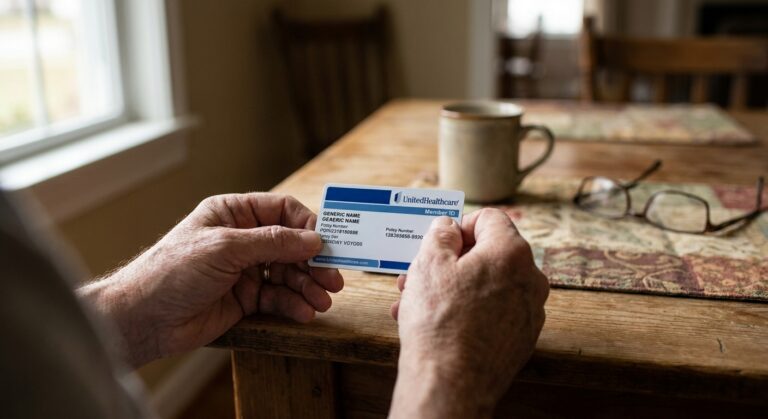

Early recovery can feel like you’ve stepped into a quiet, unfamiliar room. You’ve put down the drink, the drugs—but the noise in your head hasn’t stopped. You feel raw, uncertain, maybe even lonelier than before.
That’s exactly where I was when I walked into TruHealing Cincinnati for men’s addiction treatment. I wasn’t sure if I belonged, or if it would work. But it was nothing like what I feared—and more than I expected.
If you’re asking yourself, “What is a men’s treatment program really like?”, this is for you. Here’s a real-world look at what you’ll actually experience, from someone who’s been in your shoes.
What Happens on My First Day?
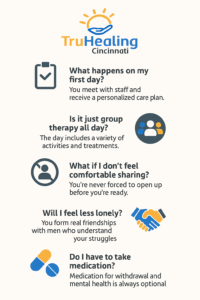
Your first day isn’t about fixing everything. It’s about landing somewhere safe. You’ll meet a staff member who walks you through the intake process. They’ll explain everything clearly—where you’ll sleep, when you’ll eat, what your schedule looks like.
You’ll have a private intake session with medical staff and counselors to understand your unique history. Not just your substance use, but also your physical health, mental health, and life circumstances.
Expect things to feel structured but not overwhelming. You won’t be asked to share deeply in group therapy on Day One. The priority is making you comfortable and medically stable.
Meals are provided, living spaces are comfortable, and people check in on you. After that first night, most guys feel the first flicker of relief: you’re not in crisis anymore, you’re in care.
Is It Just Group Therapy All Day?
Group therapy is part of the process—but it’s far from the whole story. A typical day in men’s addiction treatment at TruHealing Cincinnati includes a variety of therapeutic activities designed to help you physically, mentally, and emotionally.
You’ll have a mix of:
- Group sessions where you connect with peers, discuss recovery topics, and practice open communication.
- Individual counseling tailored to your specific struggles, including underlying mental health issues.
- Life skills and relapse prevention workshops that teach you tools for long-term success.
- Mindfulness, meditation, or fitness activities to reconnect with your body and nervous system.
- Quiet time for reflection, journaling, or rest.
Treatment is about building a life—not just stopping a substance. You’ll move, talk, listen, rest, and grow in ways you probably haven’t experienced before.
What If I Don’t Feel Comfortable Sharing?
This was one of my biggest fears: being forced to spill my guts in a room of strangers. That’s not how it works.
TruHealing Cincinnati uses a pace that respects your comfort level. No one forces you to speak on Day One. You’ll listen, observe, and ease into sharing when you’re ready.
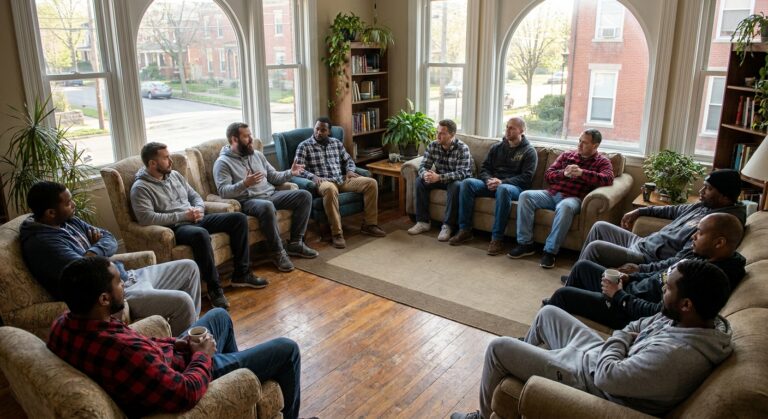
And when you do speak, you’ll be surprised how many heads in the room nod in recognition. Guys from all walks of life come through those doors—blue-collar workers, professionals, dads, sons, veterans—and you realize you’re not the only one feeling this way.
It’s okay to be quiet at first. Connection will come, naturally.
Will I Feel Less Lonely?
Yes. Absolutely yes.
Early sobriety is brutal because it feels like you’ve lost your old crowd but haven’t found your new people. Men’s addiction treatment helps fill that gap. You spend your days with people who understand what it feels like to quit, to miss your old life, to fear starting over.
Friendships happen. Real ones. Not just drinking buddies. People you can text when you’re struggling, who won’t tell you to “just have one.”
And if you’re looking for men’s addiction treatment in Lexington, Kentucky or Louisville, Kentucky, TruHealing Cincinnati helps men from these nearby areas too. Connection doesn’t end when you leave treatment—it follows you home.
Do I Have to Take Medication?
Not if you don’t want to. TruHealing Cincinnati focuses on personalized care. You’ll talk with the medical team about what feels right for you.
Medication may be recommended to manage withdrawal, mental health symptoms, or cravings, but it’s always your choice. Many men feel wary of medication at first—it’s normal. The point is to help you feel stable enough to engage in the program, not to medicate you into submission.
You’re part of every decision about your care. Medication can be a bridge, not a life sentence.
What’s the Living Situation Like?
Comfortable, communal, and structured. You’ll have a shared or private living space depending on availability and level of care. Common areas for meals, group sessions, and recreational activities help you stay connected throughout the day.
You won’t be stuck in a sterile hospital room or locked down. It’s an environment designed for healing—clean, calm, and supportive.
Daily structure brings surprising comfort when your internal world feels chaotic. Mealtimes, group times, and downtime are all clearly outlined.
Will I Have Free Time?
Yes—but it’s structured to help you stay focused. There’s downtime between sessions and activities. You’ll have access to reading materials, journals, recreational areas, and sometimes fitness facilities.
Free time isn’t a free-for-all; it’s built into your day to rest, reflect, or build new habits like exercise or mindfulness practice. You’ll get used to relaxing without numbing, which is a huge part of recovery.
Will I Still Be Supported After I Leave?
Leaving treatment isn’t the end—it’s the next phase. Before you leave, you’ll work with a case manager to set up:
- Outpatient programs or therapy sessions
- Sober living options if needed
- Recovery support groups or 12-step meetings
- Community-based recovery resources, especially if you live in Springfield, Ohio or nearby regions
You’ll have a plan. You’ll know where to go next. And you’ll have contacts—people to call when it gets hard.
What’s the Hardest Part About Men’s Addiction Treatment?
Honestly? Sitting with yourself.
You’ve probably numbed out feelings for a long time. In treatment, you’ll feel things again: sadness, frustration, boredom. It can feel like a flood at first.
But this time, you’ll have people around you who show you how to ride it out instead of run from it. You’ll build endurance for real life—the good, the bad, and everything in between.
What’s the Best Part?
For me, it was realizing I wasn’t broken. I was just lost. Treatment didn’t “fix” me—it helped me remember who I was before addiction took over.
I found a quieter mind. I found people I could laugh with sober. I found mornings without hangovers. I found myself.
Frequently Asked Questions About Men’s Addiction Treatment
What happens on the first day of treatment?
Your first day focuses on helping you get settled and feel safe. You’ll meet with staff members who guide you through intake, explain your schedule, and make sure your immediate needs are met. Medical staff will assess your health, and counselors will start building your personalized care plan. You won’t be pressured to share deeply—your first day is about slowing down and starting the process of recovery.
Will I be sitting in group therapy all day?
Not at all. Men’s addiction treatment at TruHealing Cincinnati is structured with a healthy balance of group sessions, individual therapy, activities, and rest. You’ll experience a mix of therapeutic approaches, including life skills workshops, mindfulness, exercise, and sometimes creative therapies. Each day is designed to help you heal in multiple ways, not just talk about your addiction.
What if I don’t feel ready to open up?
That’s completely normal. Many men feel hesitant about sharing their personal struggles at first. There’s no pressure to talk right away. You can observe and ease into the process at your own pace. Most people find that, over time, listening to others opens the door to sharing their own experiences naturally.
Will treatment help me feel less lonely?
Yes. Early recovery often feels isolating, but men’s addiction treatment is specifically structured to help you reconnect—with yourself and with others. You’ll be part of a community of men facing similar struggles, and you’ll build connections through shared activities, group sessions, and support systems that continue after treatment.
Will I be forced to take medication?
No. Medication is available if it can help stabilize you or ease withdrawal symptoms, but it is never forced. Medical professionals will discuss your options, answer your questions, and respect your decision. The focus is on what helps you feel grounded, not on pushing medication.
What happens after I leave treatment?
Before you leave, your care team will work with you to create an aftercare plan. This can include outpatient programs, therapy, support groups, and resources in your local area. You’ll leave with a clear next step and connections to ongoing support, so you aren’t left to figure things out on your own.
What’s the hardest part of treatment?
The hardest part is learning to sit with your emotions without numbing them. Early recovery brings up feelings you may have avoided for years. The good news is, you’ll have tools and support to manage these feelings in a healthy way instead of reverting to old patterns.
What’s the best part of treatment?
The best part is rediscovering who you are without substances. You’ll start to feel more grounded, less chaotic, and more connected to life. Many men leave treatment with a sense of calm and clarity they haven’t felt in years—along with real friendships and support networks.
Take the First Step Towards Reconnection
If you feel raw, lonely, and unsure—know this: it’s normal, and it doesn’t have to stay this way. TruHealing Cincinnati offers men’s addiction treatment that helps you rediscover connection and rebuild a life you actually want to wake up to.
Call (513) 429-7900 or visit TruHealing Cincinnati’s men’s addiction treatment page to get started. You’re not meant to do this alone—and you don’t have to.