
I didn’t think I’d ever see the inside of a medical detox unit again.
The first time I entered a medical detox program, I was wrecked and desperate. The second time, I had over 90 days sober, people cheering for me, and a version of myself I was proud of. That’s what made walking back in so brutal.
This is for the person sitting in their car right now, wondering if going back means they ruined everything.
It doesn’t.
I Thought Relapse Would Look Louder
I always imagined relapse as something dramatic. A total crash. Burned bridges. Public disaster.
Mine was quiet.
It started with not calling my sponsor back. Then skipping one meeting. Then telling myself I was just “handling stress differently.” I didn’t wake up one day and decide to throw it all away. It was more like erosion—slow, subtle, almost polite.
By the time I used again, I already felt disconnected. The drug just caught up to where I was internally.
That’s the part no one warns you about. You can look stable and still be slipping.
Walking Back In Felt Like Admitting I Wasn’t Special
I’d made it past 90 days. That number meant something to me. I’d survived detox once. I’d done therapy. I’d cried in groups and meant it. I had people who said they were proud of me.
So when I relapsed, it felt like I had fallen from a pedestal I built in my own head.
I didn’t want to be “that person” who comes back.
But here’s what I learned: recovery doesn’t care about your pride. It cares about your survival.
When I walked back into the medical detox program, no one rolled their eyes. No one sighed. A nurse looked at me and said, “We’re glad you came in.”
That sentence cracked something open.
The Second Detox Hit Differently
Physically, my body still needed stabilization. The shakes, the sweating, the nausea—it was all familiar.
Emotionally? It was heavier.
The first time, I was fighting for my life. The second time, I was grieving a version of myself I thought I’d secured.
There’s a specific ache that comes with knowing what sobriety feels like—and then losing it. You’re not just detoxing from a substance. You’re detoxing from disappointment.
But here’s the strange gift: I wasn’t clueless anymore.
I knew how to ask for help sooner. I didn’t try to “tough it out.” I talked honestly about what led up to the relapse instead of pretending it was random.
The second time in a medical detox program, I wasn’t just surviving withdrawal. I was studying myself.
Shame Is Loud. But It’s Not Permanent.
The first 24 hours, shame was screaming.
“You blew it.”
“They won’t take you seriously anymore.”
“You should’ve known better.”
But detox has a way of quieting noise. When your body is being monitored, when nurses check your vitals, when someone hands you medication to keep you safe—your brain starts to settle.
And when your brain settles, the shame softens.
A guy down the hall was in for his first detox. He was terrified. I remember sitting across from him in the common area, telling him what day three usually feels like. Telling him the fear peaks and then dips. Watching his shoulders drop a little.
That moment changed everything for me.
Relapse didn’t erase my experience. It didn’t delete my growth. I still had something to offer.
And so do you.
I Wasn’t Starting From Zero
This is important.
When you relapse after 90 days—or 6 months, or a year—it can feel like you’re back at day one in every possible way.
You’re not.
I still knew how to journal when my head got loud.
I still knew grounding techniques.
I still knew who to text instead of isolating.
Yes, I used again. But I also came back faster than I would have years ago. That matters.
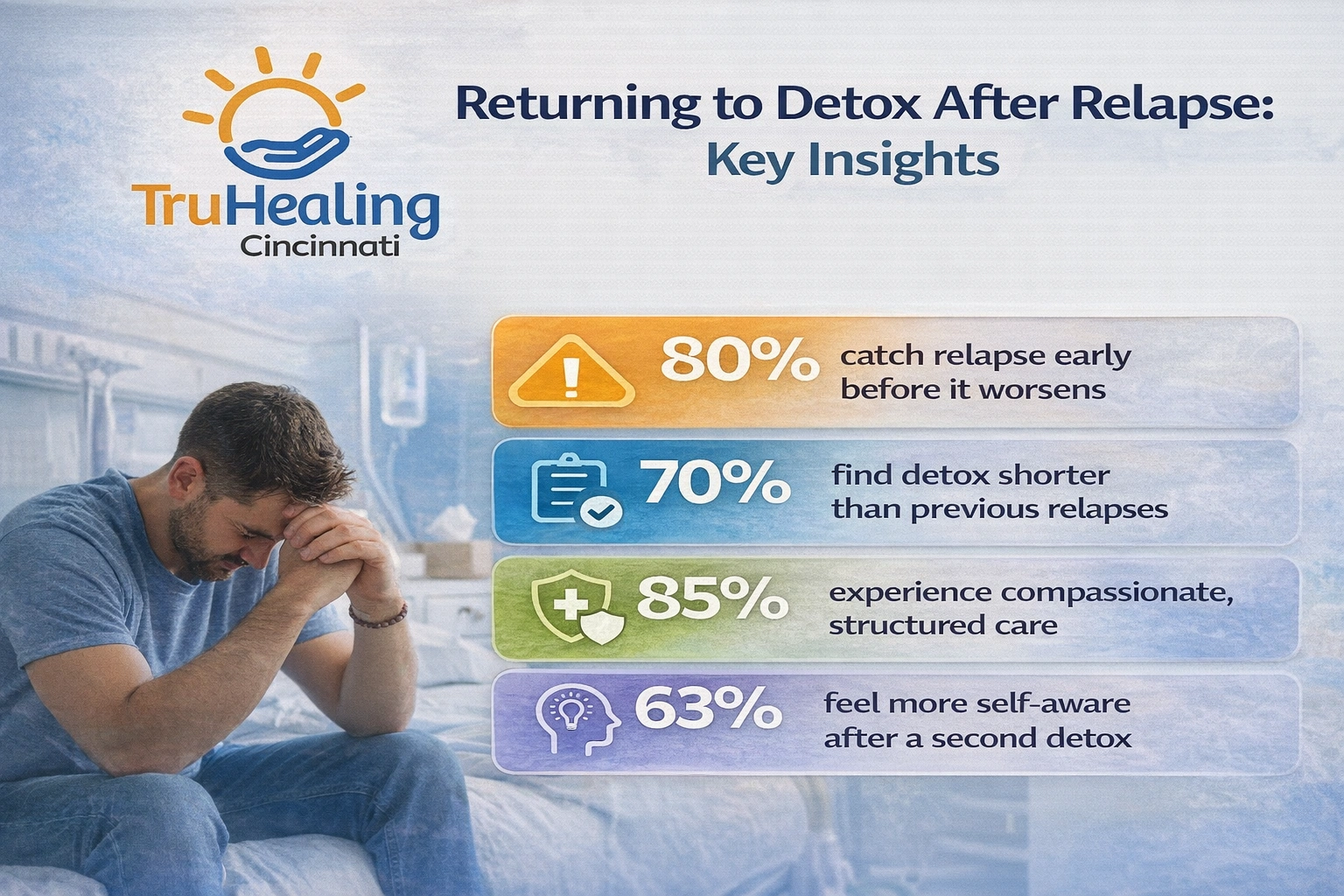
Relapse used to last for months for me. This time, it was shorter. That’s progress, even if it doesn’t feel shiny.
Walking back into detox wasn’t erasing my sobriety—it was protecting it from turning into something worse.
The Staff Treated Me Like Someone Worth Saving
I expected subtle disappointment. Maybe even frustration.
Instead, I got consistency.
Vitals checked. Meds adjusted. Therapy conversations that weren’t scolding but curious. “What changed?” instead of “Why would you do this?”
That tone matters.
A good medical detox program understands that relapse is part of many recovery stories. It’s not a scandal. It’s a signal.
The team didn’t treat me like I had failed treatment. They treated me like someone who needed support again.
That difference kept me from spiraling further.
I Stopped Trying To Recreate My Old Sobriety
This was the biggest shift.
The first time I got sober, I tried to do everything “right.” I became the dependable one. The encouraging one. The guy who hit every meeting.
But underneath that, I was still scared to admit when I felt lonely. Or resentful. Or bored.
After returning to detox, I decided I wasn’t going to chase the same version of sobriety. I was going to build something more honest.
More sustainable.
More flexible.
Recovery isn’t about becoming untouchable. It’s about becoming real.
If You’re Reading This In Secret
Maybe you haven’t told anyone yet.
Maybe you relapsed two weeks ago and you’re pretending everything is fine. Maybe you’re googling detox options at 2 a.m., hoping no one finds your search history.
I’ve been there.
You are not weak for needing help again. You are not dramatic. You are not “too much.”
If anything, going back to detox is one of the bravest decisions you can make. It’s walking toward the fire alarm instead of pretending you don’t smell smoke.
I’ve met people who drove in from Springfield, Ohio because they didn’t feel safe detoxing alone.
I’ve sat in group with someone who traveled from Indianapolis, Indiana because they needed distance from old triggers.
People come back for all kinds of reasons. The common thread? They didn’t want to lose themselves completely.
What Returning To A Medical Detox Program Really Means
It doesn’t mean you failed.
It means you caught it before it got worse.
It means you’re willing to be uncomfortable again for the sake of your future.
It means you care.
The truth is, long-term recovery isn’t built on never slipping. It’s built on how quickly you course-correct.
The second time I walked into detox, I wasn’t the same person as the first time. I was more self-aware. More humble. More willing to drop the act.
That version of me had a better shot.
Frequently Asked Questions
Does going back to a medical detox program mean my recovery didn’t work?
No. Recovery is not a straight line. Many people experience relapse. What matters is how you respond. Returning to detox can be a proactive step—not proof that treatment failed.
Will staff treat me differently if I’ve relapsed before?
In a quality program, no. Relapse is clinically understood as part of substance use disorders. You should be met with compassion and structure, not judgment.
Is detox harder the second time?
It can be different. Your body chemistry, length of use, and emotional state all play a role. Some people find it physically similar but emotionally heavier. Others feel more prepared because they know what to expect.
How long does a medical detox program usually last?
For opioids and similar substances, detox often lasts several days, depending on your medical needs. The team will monitor your vitals and adjust care accordingly.
What should I do after detox if I’ve already tried outpatient or residential treatment before?
Consider what didn’t work before. Was it support? Structure? Aftercare? This is an opportunity to build a different plan. Detox is stabilization—but the real work continues afterward with therapy, group work, and relapse prevention planning.
How do I tell people I relapsed?
You don’t owe everyone your story. Start with someone safe. A sponsor. A counselor. A trusted friend. The right people will see your return to treatment as strength, not weakness.
You’re Not Disqualified
If I could sit across from my past self in that parking lot, I’d say this:
“You’re not starting over. You’re starting wiser.”
Relapse didn’t erase my growth. It exposed where I still needed support.
Walking back into a medical detox program felt like swallowing my pride. But it also felt like choosing myself.
If you’re considering taking that step again, you deserve medical care, structure, and compassion.
Call (513) 429-7900 to learn more about our medical detox program in Cincinnati, Ohio.