
There’s a version of sobriety no one talks about enough.
It’s not dramatic. It’s not filled with relapse or danger. It’s quiet. Safe on the outside. Stale on the inside.
I was years into my recovery. I had the job, the place, the calendar full of service work. From the outside, it looked like I’d made it.
But I felt numb. Not in crisis—just flat.
And that’s what made it so hard to name. When you’re not actively falling apart, it’s easy to convince yourself you’re fine. That what you’re feeling is just “life.” That asking for help again would somehow undo all the progress you’ve made.
But one morning, after weeks of ignoring the number saved in my phone, I finally called back.
And what I found waiting for me at alcohol addiction treatment the second time around didn’t look like a crisis center or a reset button. It looked like relief.
I Was Still Sober—But Something Was Missing
The hardest part of that season was how invisible it was.
I wasn’t drinking. I wasn’t lying. I wasn’t blowing up relationships. But I also wasn’t laughing much. I wasn’t crying either. I wasn’t excited or moved or angry. I was… blank.
And that blankness scared me more than the chaos ever had.
I used to feel everything so intensely. Early sobriety was raw and loud. It hurt—but it was alive. Now, things were predictable. Numb. Controlled. Stagnant.
It took me a long time to realize I wasn’t broken. I was disconnected.
From others. From purpose. From myself.
I Thought I Should Be Past Needing Help
I knew all the right phrases.
“Gratitude is a daily practice.”
“Service keeps you sane.”
“Get out of your head and into action.”
I said those things to newcomers at meetings. I believed them, too. But when I started to feel like recovery wasn’t working for me anymore, I didn’t know how to say it out loud.
I told myself I should be grateful. That I had nothing to complain about. That maybe I just needed a new hobby or to shake up my routine.
But no matter what I tried—more exercise, more journaling, more structure—I still felt stuck.
That’s when I saw TruHealing’s number pop up on my phone. Not a voicemail. Just a soft reminder that I still had a place to land.
I Expected Guilt—But I Got Grace
I nearly didn’t answer the call. I was so sure I’d have to explain myself. Why I hadn’t stayed connected. Why I hadn’t followed through. Why I was still struggling, after all this time.
But none of that happened.
The voice on the other end said, simply:
“We’re glad you reached out. What’s going on?”
That was it. No lectures. No checklist. No judgment.
It felt like someone had opened a door without asking me to justify why I’d left in the first place.
I Realized Treatment Isn’t Just About Stopping
Back then, I thought treatment was for people in crisis. People relapsing. People out of control.
But I wasn’t out of control. I just wasn’t thriving. And somewhere along the way, I’d decided that “stable” meant “no longer in need.”
What I learned in my second round of treatment was this:
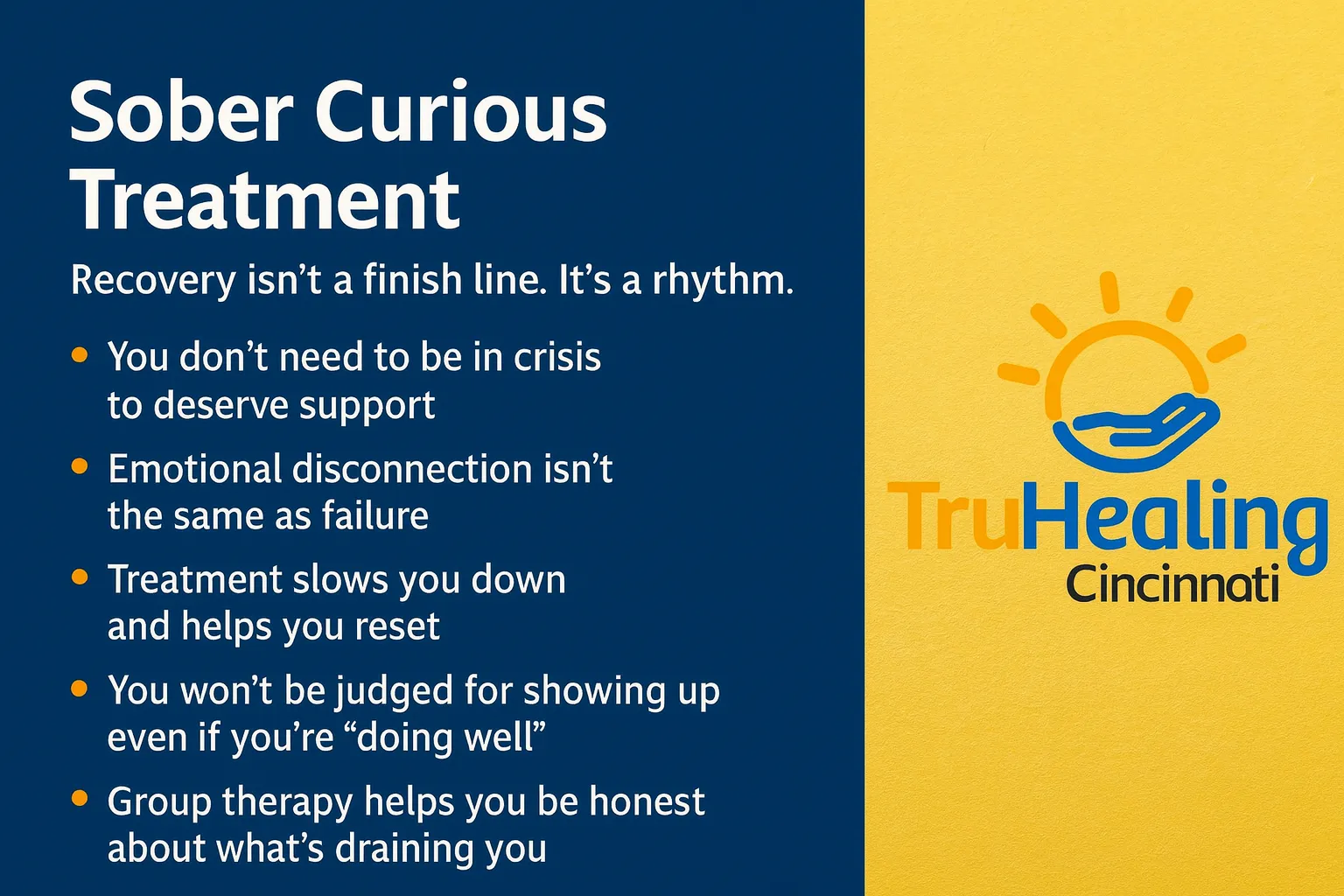
Alcohol addiction treatment isn’t only about stopping drinking. It’s about learning to live fully, over and over again.
Because sobriety isn’t a finish line. It’s a rhythm. And when that rhythm gets off-beat, it’s okay to ask for help resetting it.
The Second Time Was Different—In a Good Way
The first time I went to treatment, everything was urgent. I was in pain. I was afraid. I was ready to surrender to whatever structure could hold me together.
This time, the pace was different. Softer. Deeper.
I didn’t need someone to teach me what a craving felt like. I needed someone to help me explore why I felt like I was sleepwalking through my own life.
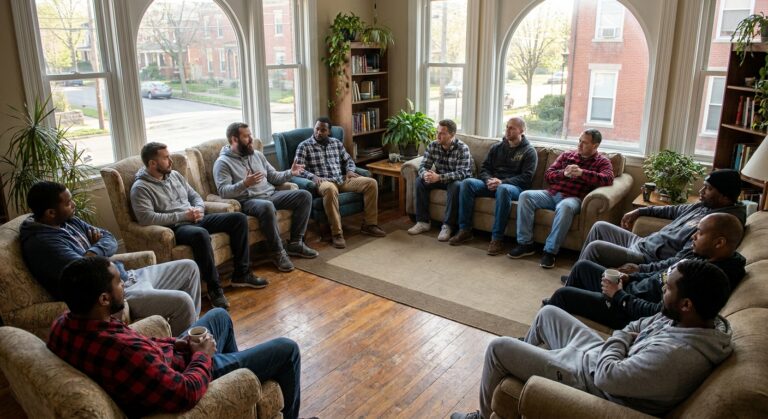
In group, I met others in similar places—long-term alumni, quietly struggling, showing up anyway. We didn’t need each other’s advice. We just needed someone to look us in the eye and say, “Yeah. Me too.”
We Talked About the Stuff That Doesn’t Make Instagram
Things like:
- Emotional dryness
- Recovery fatigue
- Post-sobriety grief
- The weird guilt that comes with “doing well” but not feeling good
There were no slogans. No sparkle. Just honesty.
I said things I hadn’t said in years. About how hard it is to ask for help when your life looks fine. About how lonely success can feel when no one sees what you’re carrying.
And slowly, I remembered what it felt like to be held by a community—not just perform for one.
I Started to Feel Again
Not all at once. And not in dramatic waves. But little by little, the fog lifted.
A joke landed. A memory stirred something. A hard conversation left me clearer, not depleted.
I didn’t need a full treatment stay. I didn’t need to “start over.” I just needed a space that honored where I was: not broken, but blocked.
And with the right support, even that began to shift.
I Learned That Recovery Isn’t a Straight Line—It’s a Loop
Recovery doesn’t always mean starting over. Sometimes, it means coming home to the parts of you that got buried under routine.
That’s what TruHealing gave me.
If you’re in Cincinnati or surrounding areas like Indianapolis, Indiana or Springfield, Ohio, and you’re a long-time alumni feeling stuck—you don’t have to wait until you fall apart.
The door is still open. And someone’s still on the other side.
Frequently Asked Questions
Is it normal to feel disconnected even after years sober?
Yes. Very normal. Emotional and spiritual plateaus are part of long-term recovery. Feeling flat doesn’t mean you’re failing—it just means you’re due for reconnection.
What kind of treatment is available for alumni?
TruHealing offers various re-engagement options—therapy, outpatient support, alumni-specific groups, and check-ins. You don’t need to restart your entire program to receive care.
Will people judge me for coming back?
No. If anything, people respect it. Returning to treatment isn’t weakness—it’s strength. It shows you’re still committed to your growth.
Do I need to relapse to qualify for help?
Absolutely not. You can seek support at any stage, including emotional burnout, isolation, or just feeling stuck. Prevention matters.
What if I moved or live outside Cincinnati?
TruHealing supports clients across the region, including those looking for alcohol addiction treatment in Louisville, Kentucky. Telehealth and flexible care options are available, too.
If You’re Feeling Stuck—You’re Not Alone
Sobriety isn’t a guarantee against emotional fog. It’s a foundation. But even the strongest foundations need upkeep.
If something in you feels quiet, heavy, or off—listen to it. You don’t have to wait for a relapse to ask for support.
You can start today.
Call (513) 429-7900 to learn more about our alcohol addiction treatment services in Cincinnati, Ohio.
It’s not about going backward. It’s about returning to yourself.