When your child is spiraling—emotionally, mentally, or physically—nothing feels safe. Not sleep. Not silence. Not the next phone call. You’re watching someone you love slip through your hands, and all the tools you thought would work… just don’t.
So when someone suggests a residential treatment program, it might land like a gut punch. Is it really that bad? Will they hate me if I send them? Does this mean I’ve failed?
Let’s start here: no, you haven’t failed. And no, this isn’t too extreme.
A residential treatment program is not punishment—it’s protection. It’s not the end of the road—it’s a structured path back to stability, safety, and healing. For your child. And for you.
It’s Not Lockdown—It’s a Therapeutic Reset
One of the biggest misconceptions we hear from parents is that residential treatment is some kind of confinement. But this isn’t about locking your child away—it’s about giving them space.
A residential treatment program offers 24/7 care in a supportive, clinical setting where trained professionals manage everything from medication to emotional crises. It’s a space where your child can pause the chaos and finally start breathing again—without substances, without constant threats, and without the pressure to perform.
They’re not being hidden away. They’re being held up by people who understand how to meet them where they are and begin untangling what hurts.
You’re Not Sending Them Away—You’re Letting Them Come Back
It’s counterintuitive, but sometimes stepping back is how we truly show up for our kids.
We know the fear. Will they feel abandoned? Will they blame me? Will they shut down even more?
Most of the time, the opposite happens. Because in the stillness of treatment, they feel something they haven’t in a long time: safety. Predictability. Support that doesn’t burn out or give in.
In Indianapolis, Indiana, we’ve seen young adults enter treatment resistant, even hostile—and leave with gratitude they couldn’t have imagined on day one. Because once they felt safe enough to be honest, the healing could begin.
You Stay Involved (Even If It Looks Different)
As a parent, it’s excruciating to watch your child suffer. It’s even harder to let go of control when you feel like control is all you’ve got left.
But letting go doesn’t mean disappearing.
Most residential programs include structured family therapy, scheduled check-ins, and regular updates. There’s room for repair. Space for reconnection. And a clinical team supporting both your child’s healing and your own.
You’re still part of their story—you’re just not carrying all of it alone anymore.
It’s Not Just for Substance Use—It’s for Behavioral and Emotional Crises, Too
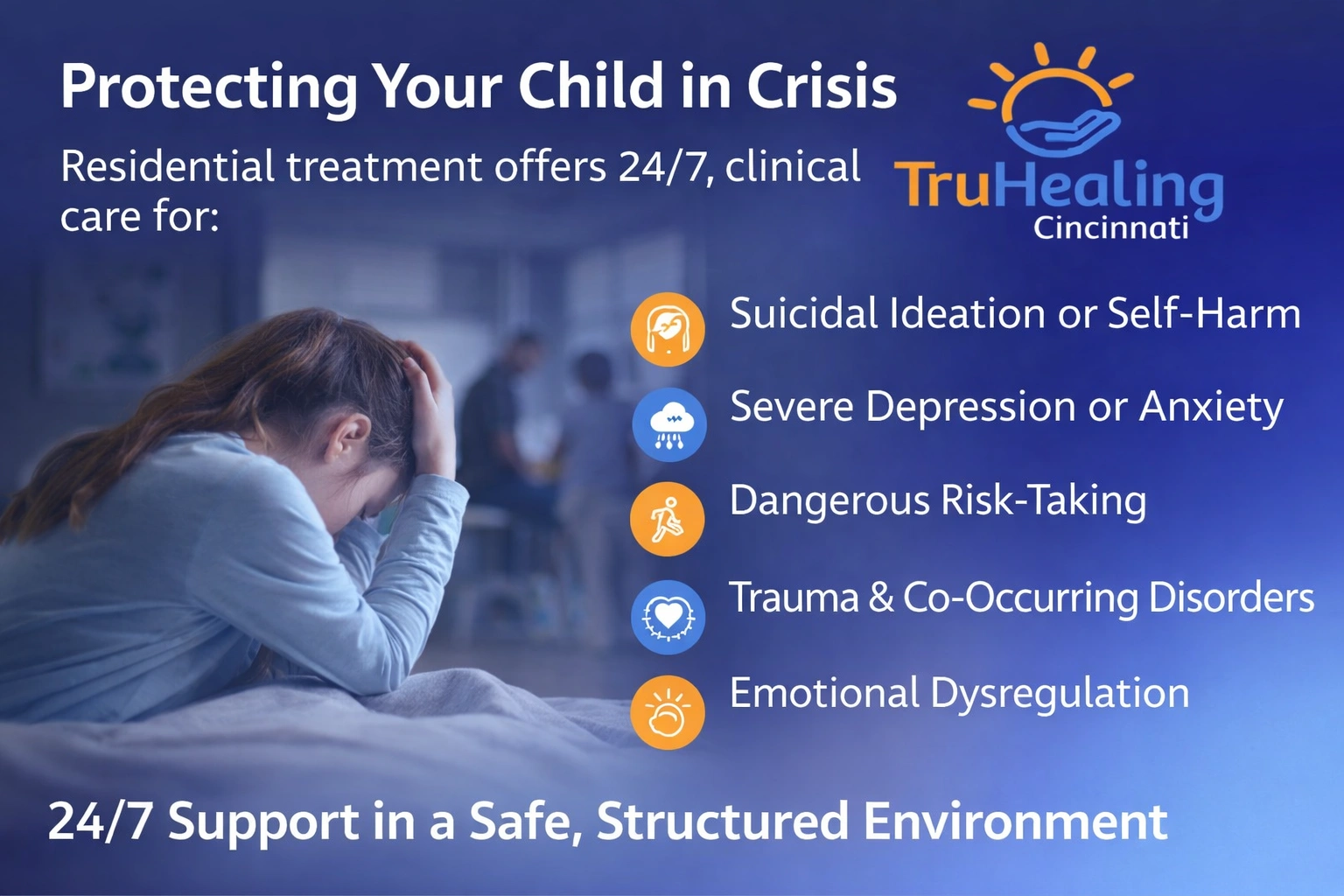
Many parents think residential care is only for addiction. But the truth is, it supports a wide range of crises, including:
- Suicidal ideation or self-harm
- Severe depression or anxiety
- Dangerous risk-taking behaviors
- Trauma responses
- Emotional dysregulation or psychosis
- Co-occurring mental health and substance issues
If your child’s life has become unsafe, unmanageable, or frightening for them—or for you—a residential treatment program may be the most appropriate level of care.
In Lawrenceburg, Kentucky, we’ve worked with families facing all of these challenges. Some kids came in with a diagnosis. Some didn’t. What mattered wasn’t the label—it was the urgency to interrupt the crisis.
Your Child Is Not Broken
They’re not broken. They’re overwhelmed.
Whether it’s addiction, trauma, or a mental health disorder, your child is still in there. And a good residential program doesn’t try to fix them—it helps them feel safe enough to come out of hiding.
The treatment isn’t about erasing who they are. It’s about helping them find their way back to who they are—underneath the fear, the symptoms, and the pain.
If you’re holding guilt, anger, exhaustion—you’re not alone. We see parents grieving the child they used to know while standing terrified in front of the version they see now.
That grief is valid. But it’s not the end. In treatment, we work to bring families through that grief—not around it.
Time Away Can Be a Gift
It’s hard to imagine being apart from your child for 30, 60, or even 90 days. But when a home environment is charged with conflict, stress, or reactivity, stepping away can be essential. Not just for them—but for you.
In residential care, your child can focus entirely on their health. No school pressure. No social media swirl. No expectations to “keep it together.”
And at the same time, you get room to breathe. To focus on your own healing. To connect with support. To rebuild the version of you that hasn’t slept properly in months—or years.
A Treatment Team That Thinks About the Future
Good residential care doesn’t just treat the crisis—it plans for what comes next.
When your child is ready to step down, we work with you to build a discharge plan that includes outpatient therapy, school support (if appropriate), medication management, and family communication strategies.
This isn’t a quick fix. It’s a long game. But you won’t be playing it alone.
Frequently Asked Questions
What exactly happens in a residential treatment program?
A residential program provides round-the-clock care, therapy, and support in a live-in setting. This includes daily individual and group therapy, psychiatric evaluations, medication management (if needed), wellness activities, and structured routines.
Is this the same as rehab?
Not exactly. While some residential programs treat substance use, many also address broader behavioral health needs like depression, trauma, or emotional dysregulation. It’s a more holistic model of care than traditional rehab.
Will I be able to talk to my child?
Yes. Most programs include scheduled phone calls, video check-ins, and therapeutic family sessions. There may be a short adjustment period (often called a blackout period) at the beginning, but this is temporary and designed to help your child settle in.
How long does it last?
Treatment length varies based on clinical need. A typical stay ranges from 30 to 90 days, but this is always assessed by a multidisciplinary team and adjusted based on progress and stability.
What does aftercare look like?
Aftercare might include outpatient therapy, intensive outpatient programming (IOP), family therapy, sober living (if relevant), and continued psychiatric support. Discharge planning starts early in treatment to ensure a stable transition.
How do I know if my child really needs this?
If outpatient therapy isn’t working, if your home feels unsafe, or if your child is cycling through crisis after crisis, residential care may be the next step. Our clinical team can help assess whether this level of care is appropriate.
Will they hate me for sending them?
They might be angry at first. That’s okay. Anger is part of the process. But we’ve seen time and time again that, given safety and space, most young adults begin to understand that this was an act of deep love and courage.
We know this isn’t easy. Making the call is often the hardest part. But you wouldn’t be reading this if you weren’t brave enough to face what’s happening.
You love your child. You want them to be safe. And it’s okay to admit that you’re scared too.
Call (513) 429-7900 to learn more about our residential treatment program in Cincinnati, Ohio.
You’re not giving up on your child. You’re giving them a chance. And we’ll be here—every step of the way.