
There’s a season in recovery that almost no one talks about. It doesn’t show up in day-one speeches or welcome packets. You probably didn’t hear about it at your first meeting. But many of us hit it.
It happens after the big milestones. After the chaos calms. After you’ve been clean long enough that people stop checking in all the time. And suddenly… it feels hard again.
Not in the way it was at the beginning. This is different. It’s not about cravings. It’s about disconnection. A spiritual dryness. A quiet sense of, “Is this it?”
If you’re here—if you’re feeling stuck in sobriety even though you’ve worked hard to get here—this blog is for you.
And if you’ve completed Opioid Addiction Treatment in Cincinnati and still feel off? That doesn’t mean you failed. It means you’re human.
This Part Isn’t a Crisis—But It Is Real
By the time you reach one, two, or even five years sober, the acute urgency fades. That’s a good thing. But for many alumni, this can quietly become a crisis of its own.
No one’s panicking over your sobriety anymore. But inside? You might be wrestling with something heavier than before:
- A loss of purpose
- Boredom that feels like grief
- Emotional distance from the things that once gave you hope
You might even feel ashamed to admit it out loud. After everything you’ve survived—shouldn’t you just be grateful?
But recovery is more than abstinence. It’s a relationship with life. And relationships evolve.
Why the Middle Seasons of Recovery Feel So Strange
Early recovery runs on adrenaline. You’re learning how to live without the substance that once shaped every part of your day. Your brain, your body, your emotions—all in motion.
But after a while, you adjust. Routines settle in. Triggers fade. The fire cools. And then? It’s just you. Waking up. Doing the thing. Living your life.
That’s what you fought for—but it can feel weirdly…flat.
This is the middle. It’s not the end. It’s not relapse. It’s where real life begins again. But if you haven’t updated your recovery toolkit for this phase, it’s easy to start drifting.
“I didn’t want to use. But I didn’t feel much of anything.” – Alumni, 3 years sober
Emotional Flatness Isn’t Failure—It’s a Signal
Let’s be clear: emotional flatness isn’t failure. It’s a common part of recovery. It’s the absence of the emotional highs and lows that once defined your world. And it’s often a sign you’re ready for deeper healing.
You’ve done the urgent work. Now it might be time for the spiritual, relational, or creative work that builds real satisfaction.
This phase might ask:
- Who am I now that I’m not fighting for my life every day?
- What brings me joy, not just stability?
- What parts of me are still healing—even if I’m sober?
These are not beginner questions. They’re advanced recovery questions. They deserve respect, not shame.
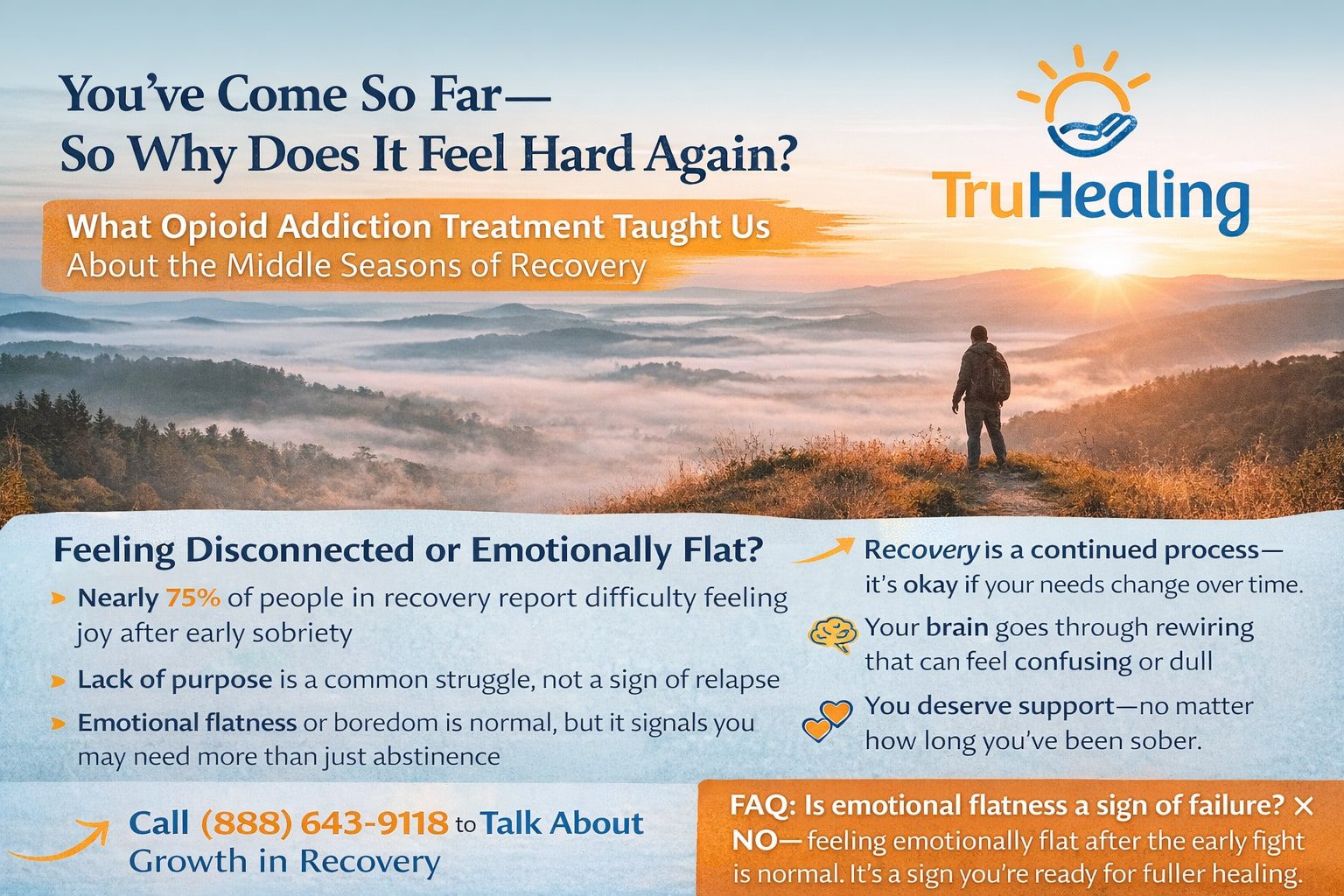
Recovery Isn’t Linear. Your Needs Will Change.
What worked at 30 days may not work at 3 years. The morning routine that once anchored you might feel stale. The meetings that saved your life might feel less connected.
That doesn’t mean you’re “over” recovery. It means you’ve outgrown your current version of it.
This might be the time to:
- Try new kinds of meetings or support groups
- Explore therapy with a trauma-informed lens
- Reconnect with creative practices you set down
- Dig deeper into spiritual or community work
- Revisit treatment—not because you’re using, but because you want to grow
At TruHealing Cincinnati, we believe recovery is a lifelong evolution—not a one-time fix. Even if you’re not using, it’s okay to reach out for help.
You Deserve Support—Even Now
Too many alumni feel like they’ve lost the right to ask for help. Like once you “graduate,” you should know how to keep it all together.
That’s not how this works.
Whether you’re feeling off for a week or a year, support is still for you. We’ve walked this part of the road with hundreds of people, and we know it doesn’t mean you’re broken. It often means you’re ready to go deeper.
If you’re near the area and seeking a refresh in your support, we also serve neighboring regions like those looking for opioid addiction treatment in Lexington, Kentucky or opioid addiction treatment in Louisville, Kentucky.
You’re Still Growing—Even If It Feels Quiet
Recovery isn’t a single event. It’s a relationship with yourself, your body, your people, and your purpose. That relationship deepens in silence, not just in storms.
So if things feel quiet right now, don’t mistake it for failure. It might be the fertile ground before the next season of growth.
And if you’re feeling lost in the middle—call us. Not because you’re in danger. But because you’re worth investing in, even now.
FAQ: Opioid Addiction Treatment & Long-Term Recovery
What is long-term recovery from opioid addiction?
Long-term recovery means more than staying sober. It’s about building a full life—emotionally, spiritually, socially—without relying on opioids. This stage includes maintaining sobriety, but also addressing deeper layers of healing that emerge after the early phase of treatment.
Is it normal to feel emotionally flat years into recovery?
Yes. Many people experience emotional flatness, disconnection, or even boredom after the first year or two. These feelings are normal and can be a signal that it’s time to evolve your recovery plan—not abandon it.
Should I go back to treatment even if I haven’t relapsed?
You don’t need to hit bottom to seek support. Many people revisit treatment centers like TruHealing Cincinnati to focus on trauma, spiritual reconnection, or renewed community—especially during the quieter, harder middle stretch of recovery.
How do I know if I need more support?
Ask yourself:
- Do I feel emotionally disconnected?
- Am I avoiding things that used to help me?
- Do I feel like I’m “just getting through the day”?
- Have I lost interest in the things that once gave me hope?
If the answer is yes to any of these, support can help—even if you haven’t relapsed.
What services does TruHealing Cincinnati offer for alumni?
We offer alumni support, re-engagement options, therapy, and continued care planning. Whether you’re newly sober or 10 years in, our team is here to help you grow—not just stay sober.
📞 Ready to reconnect with your recovery?
Call (513) 429-7900 or visit our Opioid Addiction Treatment page in Cincinnati to learn how TruHealing can support your next chapter.