

You might not be spiraling out. You’re not waking up in strange places. You might even be holding down work, relationships, and routines just fine. But there’s still a question hanging in the air: Would I feel better without this?
Maybe it’s drinking more nights than not, or using something to wind down that used to be occasional but now feels necessary. You’re not in crisis—but you’re curious. And when you start researching what change looks like, the words “medical detox” pop up again and again.
What does that actually mean?
At TruHealing Cincinnati, we meet a lot of people in your shoes. People who aren’t sure they “qualify” for help. People who wonder if detox is only for people with visible addiction or people who have hit rock bottom. But the truth is, medical detox is often the very beginning—not because you’ve failed—but because your body deserves a safe, clear break.
This blog exists to answer the real questions. Not the technical definitions. Not the textbook version. Just the human truth about what happens during a medical detox program—and why it might be the most gentle, honest first step you could take.
What Is a Medical Detox Program?
A medical detox program is a supervised, short-term stay designed to help your body safely withdraw from substances like alcohol, opioids, benzos, or other drugs. But more than that, it’s a place where your system is given a chance to reset—with medical guidance, emotional care, and round-the-clock monitoring.
You’re not left alone in a hospital bed. You’re not confined to a room with no voice. And you’re not treated like a diagnosis walking in the door.
At TruHealing Cincinnati, our detox program gives you access to experienced nurses, addiction-informed physicians, and recovery-focused staff who see you as a whole person. We manage the medical side—monitoring your vitals, easing physical symptoms—but we also check in on the emotional side. Your anxiety. Your questions. Your pacing.
This isn’t punishment. It’s protection.
Is It Just for “Addicts”?
Absolutely not. This may be the most important myth to break.
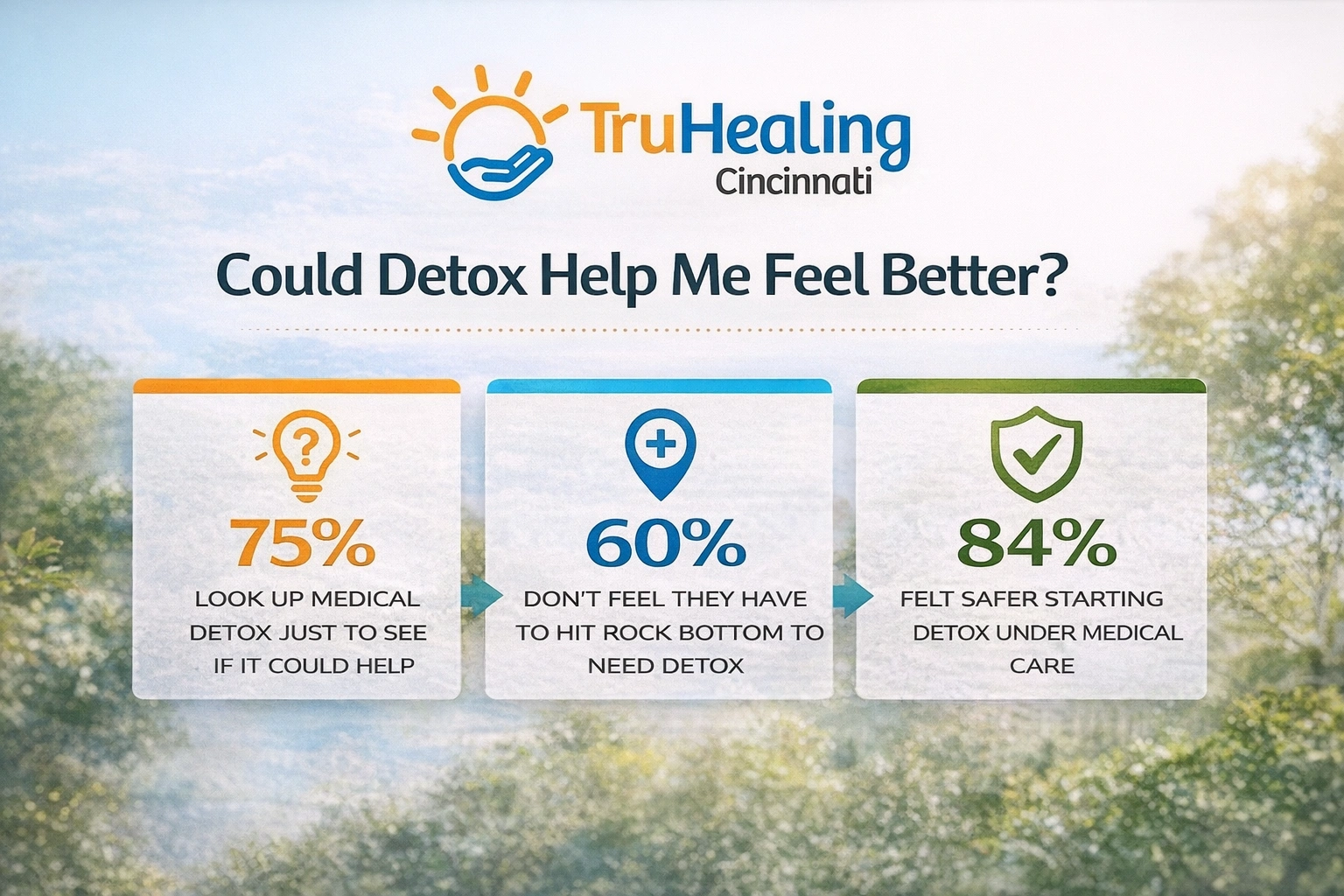
We work with people at every stage—those who know they want full recovery, those who just want to stop using for a while and see how they feel, and those who aren’t sure what they want yet. Detox doesn’t require a label. You don’t need to decide whether or not you’re “an addict” to be eligible.
If your substance use has become frequent enough that stopping on your own feels physically uncomfortable or emotionally intimidating, you deserve a supported space to do that safely.
No commitment to long-term treatment. No pressure to make promises. Just a beginning.
What Does Withdrawal Feel Like—And Can It Be Managed?
This part can feel scary to imagine. We’ve all heard the stories: the cold sweats, the vomiting, the shaking, the panic. And yes, depending on what your body has become dependent on, those symptoms are possible.
But medical detox exists so that you don’t have to endure them alone or unmanaged.
At TruHealing Cincinnati, we begin with a comprehensive medical intake—understanding what substances you’ve been using, how often, how recently, and what other physical or mental health factors might be in play. Then we create a customized plan to monitor and treat withdrawal symptoms.
That plan might include:
- Medications that reduce cravings, calm anxiety, or ease nausea
- Constant vital sign monitoring to watch for dangerous shifts
- Hydration, nutrition, and rest routines
- Emotional support from clinicians and support staff
We don’t aim to sedate or numb you into submission. We want you to feel stable. Awake. Capable. Most of all, we want you to feel safe enough to explore what healing could look like without being overwhelmed by the discomfort of withdrawal.
What Does a Day in Detox Look Like?
Detox doesn’t look like jail or a hospital ward. It looks like a calm, structured environment where your main job is to care for your body while support surrounds you.
Here’s what a typical day might include:
- Morning check-ins with medical staff to assess your progress and comfort
- Meals and snacks provided with attention to nutrition and hydration
- Light activities depending on your energy—maybe short walks, quiet time, or even gentle group discussions
- Rest. You are encouraged to rest. Most people in detox are sleep-deprived and physically depleted.
- Optional therapy or group support if and when you’re ready to engage
There’s no forced storytelling. No shaming circles. And no one is going to ask you to make a lifetime decision on Day 2.
The detox phase usually lasts between 3–7 days, depending on your substance use history and how your body responds. Some people feel clear-headed by Day 4. Some need longer. The goal isn’t to rush you out—it’s to make sure you leave stable and clear, with a plan you understand.
Do You Have to Stay the Whole Time?
Medical detox is voluntary. You can leave if you choose to. But here’s what many people discover: once they feel how different their body feels without substances—and how supported they feel while coming down—they actually want to stay.
We’ve had clients walk in unsure they even needed detox and leave saying it was the first time in years they slept without substances or anxiety.
This is not a locked-down environment. But it is a safe one. And once you’re here, you don’t have to keep fighting your body alone.
What Happens After Detox?
Detox is not the end. It’s the beginning.
Before you’re discharged, we work with you on next steps. That could be:
- Stepping into an intensive outpatient program
- Returning home with local therapist referrals and support suggestions
- Starting residential treatment if that feels aligned
- Taking time to rest and decide later
There’s no pressure to “go to rehab.” We believe in pacing, options, and listening. For many people, detox is the clarity window—the moment the fog lifts and a plan begins to make sense. Our job is to support that clarity with choices and next steps that feel realistic.
And if you’re not ready for more treatment after detox? That’s okay. We’ll make sure you leave with resources, referrals, and a door open to return.
What if I’m From Outside Cincinnati?
We welcome clients from all over Ohio and nearby Kentucky. If you’re searching for treatment options in areas like Lawrenceburg or Lexington, we’re here to help.
Many people travel short distances to access trusted care and medical detox that feels safe, nonjudgmental, and professional. If you’re looking for a medical detox program in Lawrenceburg, Kentucky or exploring medical detox options in Lexington, Kentucky, TruHealing Cincinnati is within reach.
You don’t need to navigate this alone—no matter your zip code.
Why Do People Say Detox Changed Their Life?
Not because detox cured them. Not because it answered every question. But because—for the first time in a long time—they remembered what it felt like to be clear.
To sleep through the night.
To wake up without dread.
To breathe without hiding.
To sit with their own thoughts and not flinch.
One client told us:
“I thought detox was going to be shame. But it felt like exhaling.”
That’s what we offer. A pause. A safe stop. A place to let go of the panic and remember that change doesn’t have to be a massive decision—it can be a series of small, brave steps.
If you’re reading this, chances are you’re already closer than you think.
Call (888) 643-9118 to learn more about our Medical Detox Program in Cincinnati, Ohio. You don’t have to wait for a crisis to start feeling better.