
The first week inside a residential treatment program is rarely what people imagine.
Some expect it to feel like punishment. Others expect instant transformation. In reality, the first week is something quieter and more human than that. It’s a slow exhale after a long period of holding your breath.
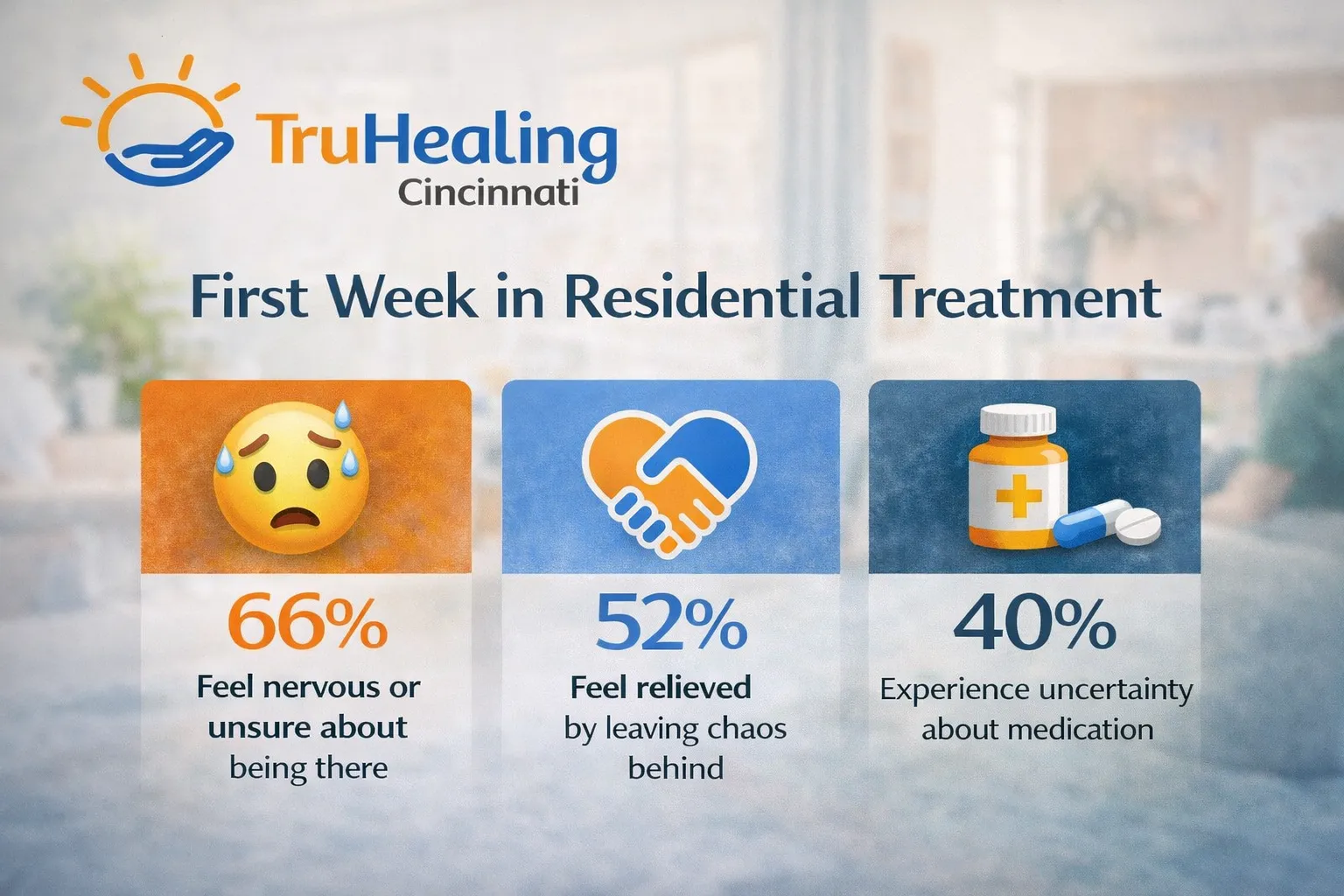
When someone arrives at treatment, they usually bring a complicated mix of fear, relief, and uncertainty. Many worry about whether they’ll fit in, whether medication will change them, or whether they’re “bad enough” to be there. At TruHealing Cincinnati, we see that emotional mix every day. And what we also see is how the first week gently begins to shift those fears.
For many people coming from nearby communities like Lawrenceburg, Kentucky, entering treatment is one of the bravest decisions they’ve ever made. The first week doesn’t solve everything—but it does something incredibly important. It shows that healing might actually be possible.
Below is what that first week in a residential treatment program often looks like.
The Moment You Arrive
Walking through the doors on the first day can feel surreal.
Many people arrive after weeks, months, or even years of internal debate. They may have promised themselves they’d never need treatment. They may have tried to stop on their own several times. Some arrive exhausted from trying to manage everything alone.
The first few hours are intentionally calm.
Staff help with intake, paperwork, and basic orientation. You’ll learn where meals happen, where group rooms are located, and what the daily schedule looks like. These details may seem small, but structure is one of the first healing tools in a residential setting.
Addiction thrives in chaos. Recovery often begins with simple routine.
Most people also meet their care team during this time. That team may include therapists, medical providers, recovery specialists, and support staff who guide you through the first days.
The goal of day one isn’t to force breakthroughs.
The goal is to help you feel safe enough to stay.
The Emotional Whirlwind of the First Few Days
The second and third days of a residential treatment program can feel emotionally intense.
Without substances numbing everything, feelings begin to return. Some people describe it as turning the volume back up on life. Others say it feels like their brain is finally catching up after running too fast for too long.
Common emotions during these early days include:
- Nervousness about opening up in therapy
- Worry about being judged by others in the program
- Relief from finally stepping out of the chaos of addiction
- Fear about what the future might look like
All of these reactions are normal.
Early recovery is not about having perfect clarity. It’s about giving yourself space to feel again without needing to escape those feelings immediately.
This stage is where many people begin to realize something surprising: everyone in treatment arrived with similar fears.
Meeting Others Who Understand
One of the most powerful parts of a residential treatment program is the community that forms inside it.
Before treatment, many people believe they are uniquely broken. They think no one else could understand the things they’ve done, the thoughts they’ve had, or the way addiction has shaped their lives.
Group therapy challenges that belief.
In the first few sessions, many people simply listen. They hear someone describe the same guilt, the same secrecy, or the same exhaustion they’ve been carrying for years.
Something shifts in that moment.
Shame begins to lose its power when it’s no longer hidden.
People often say that the first time they heard someone else tell a story that sounded like theirs was the moment they realized they weren’t alone.
Recovery begins to feel possible when you see it happening in real people sitting beside you.
Adjusting to Structure and Routine
Residential treatment programs follow a daily schedule designed to stabilize both mind and body.
For someone coming from the unpredictability of addiction, this structure can feel strange at first. But it quickly becomes grounding.
A typical day may include:
- Morning check-ins with peers and staff
- Individual therapy sessions
- Group therapy or educational workshops
- Time for reflection, journaling, or wellness activities
- Evening recovery meetings or support groups
These routines help rebuild habits that addiction often erodes. Sleep schedules normalize. Meals become regular again. The brain begins to operate in a steadier rhythm.
This kind of stability is especially important for people traveling from nearby communities like Lexington, Kentucky, where outside stressors may have made it difficult to maintain healthy routines before treatment.
Structure in residential care is not about strict control.
It’s about creating a safe rhythm where healing can begin.
Facing the Fear Around Medication
For many people entering treatment, medication can feel intimidating.
Some worry medication will change their personality. Others fear becoming dependent on something new. Many simply don’t know what to expect.
These concerns are valid and common.
Within a residential treatment program, medication discussions happen carefully and collaboratively. Medical providers explain options clearly and take time to answer questions.
Medication, when recommended, is meant to support stability—not erase identity.
For some individuals, medication helps regulate mood or reduce cravings so therapy can be more effective. For others, medication may not be necessary at all.
The important part is that treatment decisions happen together, not without you.
You remain part of the conversation.
Small Wins That Start to Build Confidence
People often expect recovery to feel dramatic right away.
But during the first week, progress usually appears in small, quiet ways.
Someone sleeps through the night for the first time in months.
Someone speaks honestly in group therapy for the first time.
Someone laughs during lunch and realizes it feels natural again.
These moments might seem ordinary from the outside. Inside recovery, they are powerful signals.
They mean the nervous system is beginning to settle.
They mean the brain is starting to heal.
They mean hope is slowly returning.
Why the First Week Matters More Than People Realize
The first week of a residential treatment program lays the foundation for everything that follows.
It interrupts the cycle of addiction long enough for clarity to begin returning. It introduces new coping tools. It builds connections with people who understand the recovery process.
Most importantly, it allows individuals to experience something many haven’t felt in a long time: stability.
The outside world can be loud and chaotic when addiction is present. Treatment creates a pause in that chaos.
Within that pause, people start rediscovering parts of themselves that addiction pushed aside.
Patience. Humor. Curiosity. Hope.
The first week doesn’t fix everything.
But it opens the door to the work that can.
What Success Stories Often Have in Common
Many alumni who return to share their recovery stories talk about the same realization during their first week.
They expected treatment to break them down.
Instead, it helped them rebuild.
One former client described it like this:
“By the end of my first week, nothing in my life was solved. But for the first time in years, I felt like I had people helping me figure it out.”
Recovery rarely happens through willpower alone. It happens through support, structure, and connection.
Residential treatment programs provide the environment where those elements come together.
And once that environment exists, real change can begin.
Frequently Asked Questions About Residential Treatment Programs
How long does a residential treatment program usually last?
Most residential programs last between 30 and 90 days, depending on the individual’s needs and treatment plan. Some people benefit from longer stays, especially if they require additional support for mental health or relapse prevention.
Will I be forced to share personal information in group therapy?
No. While group therapy encourages openness, people are never forced to share before they feel ready. Many individuals spend their first few sessions simply listening and getting comfortable with the group environment.
What should I bring to a residential treatment program?
Most programs provide a packing list before admission. Typically, people bring comfortable clothing, basic toiletries, prescribed medications, and personal items like journals or books. Items that could interfere with treatment may not be allowed.
Is residential treatment only for severe addiction?
Not necessarily. Many people enter residential care because they need a structured, supportive environment to focus fully on recovery. Severity varies widely among participants.
Will I still have contact with family?
Many residential treatment programs include family communication and therapy as part of the recovery process. Exact policies vary by program and phase of treatment.
What happens after residential treatment ends?
Recovery continues after residential care through step-down programs such as outpatient therapy, support groups, and aftercare planning. Treatment teams help build a long-term plan before discharge.
Recovery often begins with one quiet decision: staying.
Staying for the next conversation.
Staying for the next group session.
Staying long enough to realize change might be possible.
Call (888) 643-9118 to learn more about our residential treatment program in Cincinnati, Ohio.