
When a young adult enters a residential treatment program, it can feel like everything is up in the air—for them and for you.
You might feel anxious, hopeful, helpless, or all three at once. You want to do something—anything—to help them succeed. But the truth is, this part of the journey isn’t about “fixing” them. It’s about walking alongside them while they begin to rebuild from the inside out.
At TruHealing Cincinnati, we often hear from families in cities like Lexington, Kentucky and Louisville, Kentucky who are trying to support a young adult in residential care—but aren’t sure where to start.
Here’s what helps—realistically, compassionately, and without making things weird.
1. Learn What Residential Treatment Is (and Isn’t)
Let’s start here: residential treatment is not a punishment. And it’s not a failure. It’s a safe container for healing.
This isn’t “sending them away.” It’s creating space for them to pause, reflect, and engage in intensive therapy without the chaos or expectations of the outside world.
A quality residential treatment program in Cincinnati includes:
- 24/7 support and supervision
- Group and individual therapy
- Skill-building and emotional regulation
- Space for identity exploration
- A break from school, work, or social pressures
Knowing what treatment actually involves helps you support your loved one more effectively—and helps you avoid accidentally minimizing or misrepresenting what they’re experiencing.
2. Let Go of the Timeline You Imagined
This part is hard.
You probably imagined how this would go. Maybe you thought they’d be “fixed” by discharge, or that they’d come home brimming with insight and gratitude. But real healing? It’s messy. It’s nonlinear. It doesn’t care about your calendar.
Your young adult might:
- Make huge progress one week, then seem distant the next
- Resist parts of the process before embracing them
- Finish the program still feeling unsure, raw, or nervous
All of that is okay. Trust the process more than the pace. And remember: your job isn’t to rush their healing. It’s to hold the door open while they take the time they need.
3. Validate First, Advise Later
They might call crying. Or angry. Or totally silent. You might hear things that make you uncomfortable or defensive.
In those moments, skip the lecture.
Instead of:
“You need to stay positive.”
Try:
“Sounds like today was really rough. I’m proud of you for sticking with it.”
Validation is powerful. It tells your loved one: You’re allowed to feel how you feel. You don’t have to hide here.
Advice can come later—once they know you’re a safe place to land.
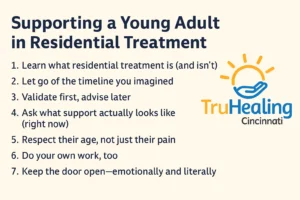
4. Ask What Support Actually Looks Like (Right Now)
Every young adult is different. Some want daily calls. Some want letters. Some want space.
So ask. Directly and without assumptions.
Try:
- “Would it help if I checked in more or less this week?”
- “Do you want me to send you anything from home?”
- “Is there anything I’m doing that’s not helping?”
By treating them as collaborators in their own recovery, you’re affirming their autonomy—something young adults deeply need, especially during treatment.
5. Respect Their Age, Not Just Their Pain
This one gets tricky.
They’re in treatment because they’re struggling. And it’s easy to slip into “parent mode”—micromanaging, making decisions for them, assuming they’re not capable of insight or choice.
But your loved one is also becoming an adult. They’re learning how to make decisions, set boundaries, and live independently—while also healing.
You can support both:
- Respect their input about aftercare.
- Let them share what they’re learning before you weigh in.
- Recognize growth, even if it doesn’t look like what you expected.
Balancing guidance with respect helps them build trust in themselves—and in you.
6. Do Your Own Work, Too
Let’s be honest: your nervous system probably needs support, too.
Watching someone you love struggle, enter treatment, and start to change can bring up grief, fear, old wounds, and guilt. Don’t ignore that.
While they’re in care, take the opportunity to:
- Join a support group for families
- Start your own therapy
- Learn about co-regulation, boundaries, and family dynamics
- Reflect on what you need to feel grounded and clear
This isn’t about blame. It’s about modeling what healing looks like at every age.
7. Keep the Door Open—Emotionally and Literally
When your young adult completes treatment, they’re not “done.” They’re stepping into the awkward, brave, uncomfortable stage of what comes next.
Some days they’ll need encouragement. Other days, space. Sometimes they’ll want to process a therapy insight with you. Other times, they’ll feel like strangers to themselves.
Don’t assume your job is over. But don’t assume they want a full-time cheerleader either.
Instead:
- Stay consistent.
- Celebrate small wins.
- Let hard days be part of the story.
- Offer support without pressure.
Healing is not a light switch. It’s a long hallway. Your presence helps light the path.
Why This Kind of Support Matters
It’s easy to think that once your loved one is “in the right place,” they’ll be fine. But the truth is, residential treatment only works when there’s space outside of it for continued growth—and that often starts with family.
We’ve seen it again and again in young adults from cities like Louisville and Lexington: when families shift from fear to support, from fixing to listening, it changes everything.
Not just for the person in treatment—but for the whole system around them.
FAQs: Supporting a Young Adult in Residential Treatment
Should I visit them during treatment?
Yes—if the program allows it and your loved one is open to it. Family visits can be meaningful, but they should be guided by clinical staff to ensure they support progress rather than disrupt it.
What if I say the wrong thing?
You probably will. We all do. What matters most is your willingness to repair. A simple “I’m sorry—I didn’t mean to pressure you” goes a long way.
Can I send them things while they’re in the program?
Usually yes, but always check with the program first. Letters, photos, books, or comfort items are often welcome—but some items may be restricted for safety or therapeutic reasons.
How involved should I be?
That depends on your relationship and the program’s guidelines. Aim to be available but not invasive. Let your young adult—and their treatment team—guide the level of involvement.
What happens after they complete the program?
Discharge planning often includes step-down care like outpatient therapy, sober living, or continued family sessions. It’s not the end—it’s the start of the next phase.
Want to support your young adult through treatment with more clarity and less pressure?
Call (513) 429-7900 to learn more about our Residential Treatment Program services in Cincinnati, Ohio.