A 2022 SAMHSA report found that cost and coverage confusion are the top two reasons adults delay entering addiction treatment. If you have private or PPO insurance and you’re trying to verify insurance for rehab in Cincinnati, the process is more straightforward than most people expect. This guide walks you through every step, from pulling your card to getting confirmation in writing before treatment begins.
What you’ll need before you start
Gather your insurance card, a pen and paper (or an open notes app), and 20 minutes of uninterrupted privacy before making your first call. Having these three things ready eliminates the most common reason verification stalls. You’ll also want access to your insurer’s member portal if you have one set up, since some documents are faster to retrieve online than by phone. Confirm ahead of time that you have an active PPO or private insurance plan, not a Medicaid, Medicare, or government-funded plan, since Cincinnati addiction treatment facilities that provide clinical-level care require private coverage to bill appropriately.
Step 1: locate your insurance information
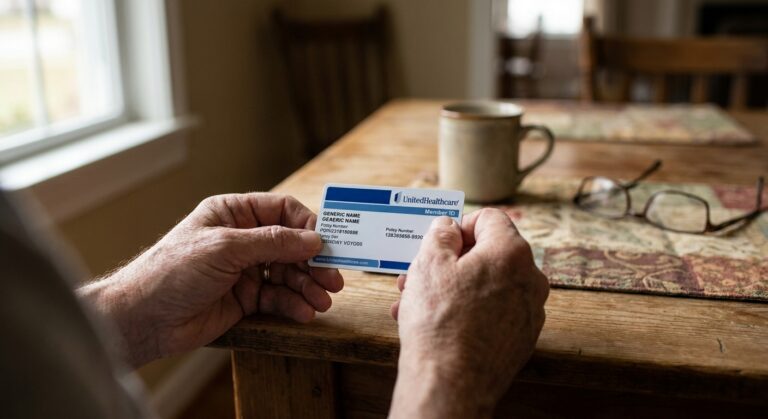
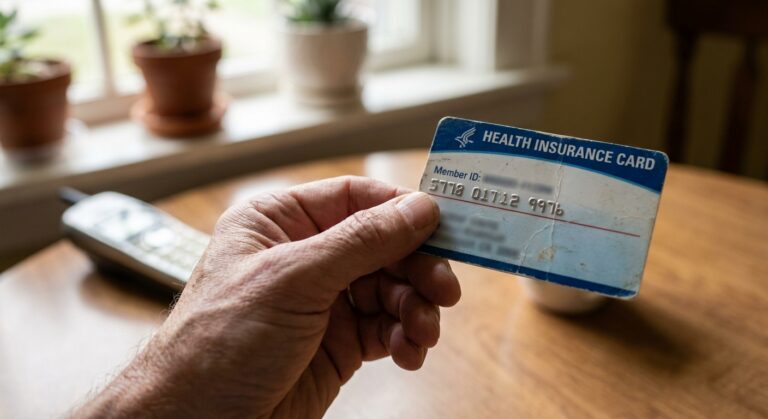
Pull your physical insurance card or log into your insurer’s member portal to retrieve three specific pieces of information: your member ID, your group number, and the behavioral health phone number printed on the back of the card. These three details are what every admissions team and insurer representative will ask for first.
Identify your plan type
A 2021 Kaiser Family Foundation analysis of 1,700 employer-sponsored plans found that PPO plans authorize out-of-network behavioral health services at a meaningful rate, while HMO plans almost always restrict coverage to in-network providers only. Knowing your plan type before you call sets the right expectation for what a Cincinnati facility can bill. If your card says “HMO” anywhere on it, ask the representative specifically whether your plan includes any out-of-network behavioral health exceptions before assuming you’re covered.
Locate your behavioral health benefits number
Most insurers separate medical and behavioral health benefits under different departments with different phone queues. The behavioral health line is the one that holds your substance use and mental health coverage details. Using the general member services number sends you to a representative who often cannot access the specific authorizations, prior auth requirements, or benefit limits that apply to addiction treatment. Find the behavioral health number on the back of your card and use that line exclusively for this process.
Step 2: understand the federal laws that protect your coverage
A 2023 report from the American Psychological Association found that fewer than 30% of adults seeking mental health or addiction treatment know that federal law requires insurers to cover behavioral health at parity with medical care. The Mental Health Parity and Addiction Equity Act (MHPAEA) and the Affordable Care Act together require your insurer to cover substance use disorder treatment if they cover medical or surgical care. Knowing this before you call means you won’t accept a flat denial as the final answer. If you’re researching whether your plan covers addiction treatment at all, that background is worth reading before you dial.
What parity means in practice
Parity does not mean your insurer pays for everything. It means they cannot impose stricter limits on addiction treatment than they apply to comparable medical conditions. If your plan covers 60 days of inpatient medical care, it must apply a comparable standard to inpatient rehab. Use this as your reference point when reviewing any coverage limits the representative quotes you on the call. If a representative tells you the plan only covers seven days of residential treatment while covering 30 days of comparable inpatient medical care, that discrepancy is worth raising directly and escalating if needed.
Step 3: call your insurance provider to begin verification
A 2023 Milliman analysis of behavioral health claims across 42 million commercial insurance members found that pre-verification calls reduce claim denials by 34% compared to facilities that bill without prior confirmation. Call the behavioral health number on the back of your card and tell the representative you are verifying benefits for inpatient or outpatient addiction treatment at a specific facility in Cincinnati, Ohio. Be specific about the level of care you’re asking about: detox, residential, partial hospitalization (PHP), or intensive outpatient (IOP).
Questions to ask the representative
Ask each of these in order, and write down the representative’s name and the call reference number before you hang up:
- Does the plan cover substance use disorder treatment?
- Is the Cincinnati facility in-network or out-of-network under this plan?
- What is the in-network deductible, and how much has already been met this year?
- What is the out-of-pocket maximum?
- Does treatment require prior authorization, and if so, who submits it?
Record every answer in writing
A 2022 study published in Health Affairs tracked 3,400 insurance disputes and found that members who documented representative names, call times, and reference numbers resolved disputes 41% faster than those who did not. Write every answer down during the call, not after. This record becomes your evidence if the insurer contests a claim later. A photo of your handwritten notes taken immediately after the call is sufficient.
Step 4: let the rehab facility’s admissions team run a parallel verification
Accredited rehab facilities in Cincinnati maintain direct relationships with major insurers and run their own verification process using your member ID. A 2024 report from the Joint Commission found that facilities with dedicated insurance verification staff catch coverage gaps and prior authorization requirements that members routinely miss on self-verification calls. Call the admissions team, give them your member ID and group number, and let them run verification on their end simultaneously with your own call in Step 3.
What the facility checks that you cannot
The facility’s verification team confirms whether the specific clinical services you need, including detox, residential, PHP, IOP, or dual diagnosis treatment, are individually authorized under your plan. They also confirm whether the facility’s specific provider number is credentialed with your insurer. These are not details a member services representative will surface unprompted. If you carry coverage through a BCBS plan or another major carrier, the admissions team’s direct relationship with that carrier is often what moves the process from hours to minutes.
What to expect from the facility’s verification timeline
Most accredited Cincinnati facilities complete insurance verification within 24 to 48 hours of receiving your member information. If a facility cannot give you a clear timeline, ask for a specific callback window. Same-day verification is available at many facilities when medical necessity is urgent, such as active withdrawal or acute psychiatric risk. Don’t let an unclear timeline prevent you from providing your information and starting the clock.
Step 5: review your summary of benefits and coverage document
The Summary of Benefits and Coverage (SBC) is a standardized federal document your insurer must provide within seven business days of your request. A 2023 Commonwealth Fund report on insurance literacy found that adults who reviewed their SBC before entering treatment were 27% less likely to face unexpected out-of-pocket costs. Request it directly from the insurer or download it from your member portal.
Find the mental health and substance use disorder section
The SBC organizes benefits by category. Locate the mental health and substance use disorder row, which lists your copay or coinsurance, any visit limits, and whether prior authorization is required. Cross-reference this section against what the representative told you on the call in Step 3. If the numbers match, you have solid confirmation. If they don’t, the SBC is the controlling document. If you’re specifically checking whether detox is covered under your plan, the SBC is where that answer will be spelled out most clearly.
Flag any limits or exclusions
Look specifically for day limits on inpatient stays, session limits on outpatient treatment, and any exclusions tied to specific diagnoses like dual diagnosis or medication-assisted treatment. If the SBC lists a limit that contradicts what the representative told you, note the discrepancy and raise it with the facility’s admissions team before treatment starts. The admissions team has seen these contradictions before and knows how to escalate them effectively.
Step 6: confirm prior authorization requirements and submit if needed
A 2023 American Medical Association survey of 1,000 physicians found that prior authorization delays caused patient harm in 34% of reported cases, with addiction and mental health treatment among the most affected categories. Prior authorization is a formal approval your insurer requires before agreeing to pay for a specific level of care. Confirm whether your plan requires it, and confirm who is responsible for submitting it.
Let the facility submit prior authorization on your behalf
Accredited Cincinnati facilities submit prior authorization requests routinely and know how to frame clinical documentation in the language insurers accept. Submitting it yourself without clinical documentation significantly increases the risk of denial. Tell the admissions team the insurer confirmed prior authorization is required and ask them to submit it using the clinical information from your intake assessment. This is the move that works.
Understand the typical prior authorization timeline
Most commercial insurers respond to prior authorization requests within 24 to 72 hours for urgent cases and up to 15 days for standard requests. Ask the facility’s admissions coordinator to flag your case as urgent if you are in active withdrawal or experiencing a psychiatric crisis. Urgency classification accelerates the timeline, and clinical staff at the facility know exactly how to document that classification for the insurer’s reviewers.
Step 7: get all coverage confirmations in writing
A 2022 Health Affairs study of 5,200 insurance disputes found that verbal-only confirmations were the single most common factor in denied claims that members could not successfully appeal. Before treatment begins, request a written explanation of benefits (EOB) preview or a letter of agreement from the insurer confirming the level of care, the facility, and the cost-sharing terms.
Ask the facility for a financial estimate
Request a written financial estimate from the facility that itemizes your expected deductible contribution, coinsurance responsibility, and any upfront costs. This is not a binding bill. It is a planning document. Having it in writing before day one of treatment eliminates billing surprises at discharge, which is one of the most disruptive things that can derail recovery momentum. If you’re carrying coverage through a carrier like Optum, Aetna, or Cigna, the admissions team’s estimate will reflect what they’ve already confirmed with that carrier’s verification line.
Step 8: understand your out-of-pocket costs before you commit
A 2023 Gallup survey of 5,500 U.S. adults found that 38% of people who left addiction treatment early cited unexpected financial costs as the reason. The out-of-pocket maximum on your plan is the ceiling on what you owe in a calendar year. Once you hit it, the insurer covers 100% of covered services. Ask the insurer exactly how much of your deductible and out-of-pocket maximum has already been met before the current treatment episode begins. If you’re calling late in the calendar year, a significant portion may already be satisfied.
Ask about payment plans for the deductible portion
Most Cincinnati rehab facilities offer payment plans for the deductible or coinsurance portion the insurer does not cover. Ask the admissions team directly whether a payment plan is available and what the terms are. Knowing this before you commit eliminates the most common financial barrier that delays admission for people who have valid coverage but hesitate because of the deductible amount.
Troubleshooting: common insurance verification problems
A 2023 report from the National Council for Mental Wellbeing found that 57% of adults who contacted a rehab facility did not complete admission, with insurance confusion as the leading cause. The problems below are the most frequent ones, and each has a direct fix.
The insurer says the facility is out-of-network
Ask the insurer whether your plan includes out-of-network behavioral health benefits. PPO plans frequently do. If yours does, ask for the out-of-network reimbursement rate and your out-of-network deductible. Then ask the admissions team whether they can pursue a single-case agreement, which is a negotiated arrangement that applies a rate comparable to in-network pricing for a specific episode of care. Facilities with established insurer relationships pursue these regularly. If you’re on a PPO and aren’t sure what your plan covers, understanding what PPO plans typically accept in Cincinnati is a useful place to confirm your baseline.
The insurer denies prior authorization
Request the denial in writing and ask for the specific clinical criteria the insurer used to deny. The facility’s clinical team can then submit a peer-to-peer review, where the treating physician speaks directly with the insurer’s medical reviewer. For treatment providers managing behavioral health claims and reimbursement, a specialized behavioral health billing company can also help address payer requirements, documentation, and claim-related issues. A 2022 AMA report found that peer-to-peer reviews reverse prior authorization denials in 75% of cases. Do not treat a first denial as a final answer.
Coverage runs out before treatment is complete
Ask the facility’s utilization review team to submit a concurrent review request to the insurer before the authorized days are exhausted. Insurers are required to respond to concurrent review requests before discontinuing coverage. Do not wait until the last authorized day to initiate this. The clinical team tracks authorized days and typically initiates concurrent review proactively, but confirm with the admissions or case management team that this process is in place when you start treatment.
Frequently asked questions
How long does insurance verification for rehab in cincinnati take?
Most facilities complete verification within 24 to 48 hours of receiving your member ID and group number. Same-day verification is available at many accredited Cincinnati facilities when the situation is medically urgent. The clock starts when you provide your information, so provide it as early as possible.
Does PPO insurance cover all levels of addiction treatment, including detox?
PPO plans typically cover multiple levels of care, including medical detox, residential treatment, PHP, and IOP, but the specific benefits depend on your plan. The Mental Health Parity and Addiction Equity Act requires insurers to apply the same coverage standards to addiction treatment that they apply to comparable medical care. Verify each level of care separately when you call, since authorization requirements can differ by level.
What if my employer’s PPO plan hasn’t been confirmed as in-network with a specific cincinnati facility?
Ask the facility’s admissions team to check your plan directly. Network status can vary by employer group even within the same carrier. If the facility is out-of-network under your specific plan, ask about out-of-network benefits and single-case agreements. Out-of-network does not automatically mean uncovered, particularly for PPO plans.
Can someone else call to verify my insurance on my behalf?
A family member or trusted support person can call to gather general information, but the insurer typically requires the member’s authorization before releasing specific benefit details. The facility’s admissions team can run verification using your member ID without you needing to be on the call, as long as you’ve provided your information to them directly.
What should I do if the insurer’s verbal answer contradicts what’s in my summary of benefits?
The SBC is the controlling document. Note the discrepancy in writing, include the representative’s name and call reference number, and bring the SBC language to the facility’s admissions team. They can escalate the contradiction directly with the insurer before treatment starts, which is far easier to resolve before admission than after.
Does verification mean the insurer guarantees payment?
Verification confirms your current benefit levels and coverage terms. It is not a guarantee of payment, which is why getting written confirmation before treatment begins is important. Written pre-authorization or a letter of agreement from the insurer, combined with the facility’s written financial estimate, gives you the closest thing to a guarantee that exists within the system.
What to try this week
Call the behavioral health number on the back of your insurance card today. Ask the five questions listed in Step 3, write down the representative’s name and reference number before you hang up, and then call the admissions team at the Cincinnati facility with your member ID ready. That sequence, the insurer call documented in writing followed immediately by a parallel facility verification, is the move that starts everything. The entire process from first call to confirmed admission typically takes 48 hours or less when you run both tracks simultaneously.