
I didn’t think I’d need detox again.
At 90 days sober, I thought I was in the clear. I had friends in recovery. I had routines. I was even sleeping again. But addiction doesn’t care about clean time—and it doesn’t wait for a major crisis to come knocking. Sometimes all it takes is one crack in the armor.
For me, it was a breakup and a bad weekend. What started as “just one drink” ended with me alone on my bathroom floor, sweating and shaking. The same symptoms. The same fear. The same realization: I needed a medical detox program—again. I checked myself into TruHealing Cincinnati for the second time in six months.
The First Time Was Survival. The Second Time Was Something Deeper.
My first detox was all adrenaline. I was scared, sick, and desperate. I didn’t know what I was walking into. The second time? I knew exactly what I was walking into—and that made it worse, emotionally. The shame hit harder. The disappointment in myself felt heavier. I worried that people would look at me like I didn’t take it seriously the first time.
But that’s not what happened.
Not one staff member made me feel like I had failed. They welcomed me back with calm eyes and steady hands. They asked what had happened—not to interrogate me, but to understand. They helped me stabilize physically and emotionally. And most of all, they reminded me that relapse isn’t a moral failure—it’s a warning light.
Why Relapse Happens After 90 Days
There’s something sneaky about the three-month mark. Early sobriety is full of fire. You’re in survival mode. Every day feels like a battle, and every win feels huge. But by the time you hit 90 days, the novelty wears off. The adrenaline fades. Life starts to feel…normal again.
And if you’re not careful, that’s when the old patterns start whispering.
You might ease up on meetings. You might stop checking in with your support network. You might tell yourself you’re “strong enough now.” I did all of that. And when something painful hit—when the loneliness crept in and I didn’t have a plan—I reached for what used to numb it.
It wasn’t conscious. It wasn’t planned. But it was dangerous. That’s why a medical detox program wasn’t just helpful—it was necessary.
Detox Isn’t Just for First-Timers
This is something I want every relapsed alumni to hear: You are still allowed to get help.
You don’t lose access to care because you stumbled. You don’t need to earn a second chance. If anything, you need more support the second time around—because you’re not just detoxing your body, you’re wrestling with shame.
When I returned to detox at TruHealing Cincinnati, I got more than medical stabilization. I got space to grieve. I got support from staff who understood. I even saw familiar faces—people who remembered my name and didn’t flinch when I said, “I messed up.”
That kind of environment is rare. And it matters more than I can explain.
What I Did Differently the Second Time
It would be easy to say “I took it more seriously”—but I was serious the first time too. The difference was this: I was more honest.
This time, I told the full truth in my assessment. I didn’t downplay anything. I asked for support planning my discharge—not just a list of meetings, but a real strategy for what to do when the cravings hit again.
I also chose to stay a little longer. Not because they told me to, but because I knew I needed it. Sometimes, you need to pause the world and fully focus on your healing—even if it’s not the first time.
You’re Not Starting Over
This is one of the biggest lies our brain tells us after a relapse:
“You’re back at square one.”
You’re not.
You still know what sobriety feels like. You still know what works for you. You still have people who care. You’re not starting over—you’re resuming the path. Maybe from a different angle. Maybe with a few more bruises. But you’re still on the road.
And the road still leads forward.
If you’re looking for treatment options near home, there’s help for people in Lexington, Kentucky and medical detox programs in Louisville too. You’re not alone, no matter where you’re reading this from.
What to Expect from a Medical Detox Program
If it’s been a while—or if this would be your second time too—here’s what you can expect:
- 24/7 medical care to monitor withdrawal symptoms safely
- Supportive environment with no judgment
- Medication as needed to reduce discomfort and prevent complications
- Mental health check-ins to support your emotional stability
- Planning support to figure out your next step—outpatient, residential, IOP, etc.
Whether it’s your first visit or your fifth, a good detox program is about safety, dignity, and creating the right conditions for you to heal.
FAQ: Medical Detox for Relapse Recovery
Is it normal to need detox more than once?
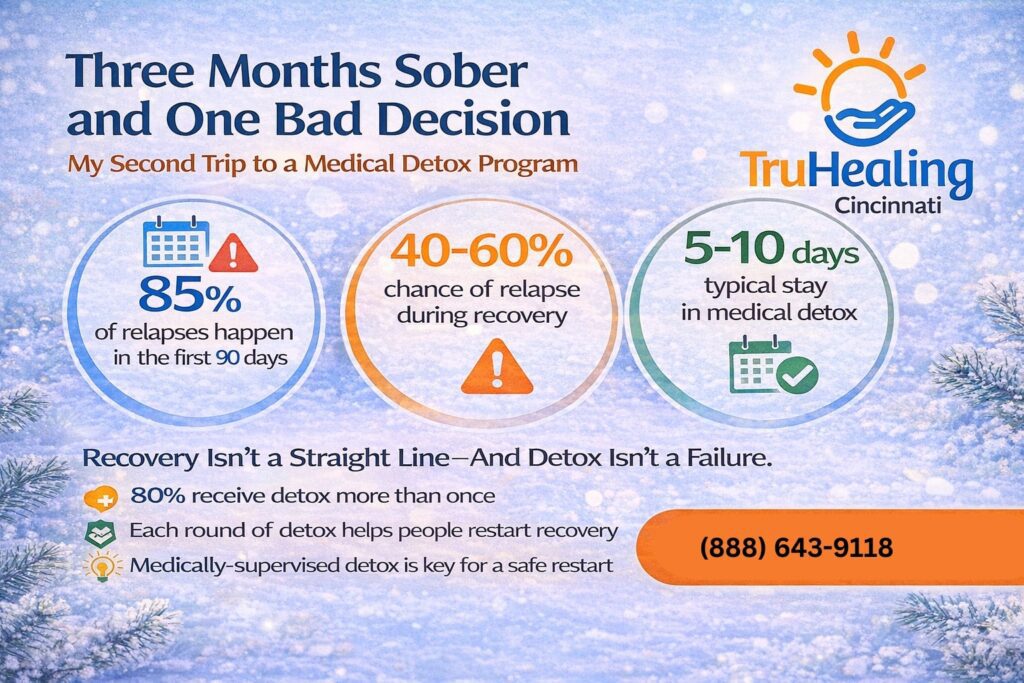
Yes. Many people relapse and need additional rounds of detox. This doesn’t mean treatment failed—it means you’re still in the process of recovery, which is rarely linear.
How long does medical detox take?
Most stays are between 5–10 days, depending on the substance and severity of withdrawal. The goal is safe stabilization so you can move on to longer-term support.
Can I go back to the same detox program I used before?
Absolutely. In fact, returning to a familiar setting can make it easier to open up and get the care you need. TruHealing Cincinnati welcomes returning clients with compassion, not judgment.
Will they treat me differently because I relapsed?
No. The staff is trained to work with people at every stage—including those who’ve relapsed. You’re still worthy of care, support, and recovery.
What comes after detox?
You’ll work with your treatment team to create a next-step plan. This could include intensive outpatient programs, residential treatment, therapy, support groups, or all of the above.
Ready to Reset?
Relapsing doesn’t make you a failure—it makes you human. If you’re ready to start again, or just want to explore your options, TruHealing Cincinnati is here to help.
Call (888) 643-9118 or visit our Medical Detox Program in Cincinnati, Ohio to get started.