
You’ve finally said it—maybe to yourself, maybe out loud: “I need help.”
That clarity can feel powerful… but also paralyzing. Because right behind that moment comes another question: “What kind of help?”
If you’ve been researching options, you’ve likely come across two main terms: residential treatment and outpatient treatment. They sound similar, but they function very differently. And depending on where you are—mentally, emotionally, logistically—one might support your healing more effectively than the other.
This blog isn’t about selling you on one. It’s about helping you understand both, so you can feel less overwhelmed and more grounded in your next step.
Let’s walk through it together.
What Is a Residential Treatment Program?
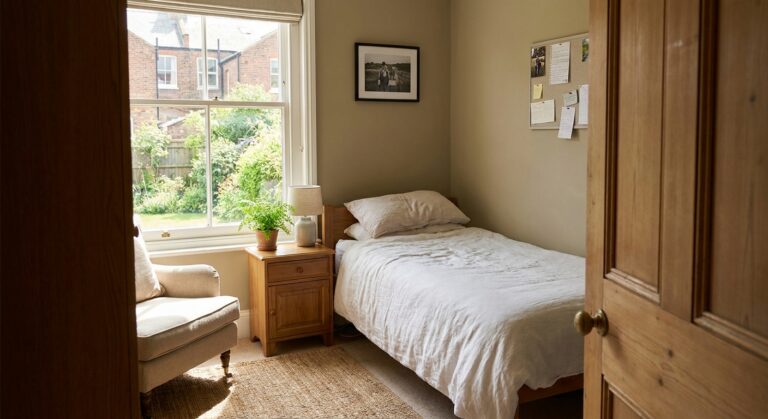
A residential treatment program is exactly what it sounds like: a live-in experience where your primary focus becomes healing.
It removes you from daily stressors and offers a structured, 24/7 environment—often for 28 days or more—where your recovery is supported by a full clinical team.
Here’s what you can typically expect:
- A safe, quiet place to stabilize
- On-site medical and emotional support
- Daily therapy sessions (individual and group)
- Medication-assisted treatment if appropriate
- Nutritious meals and guided daily routines
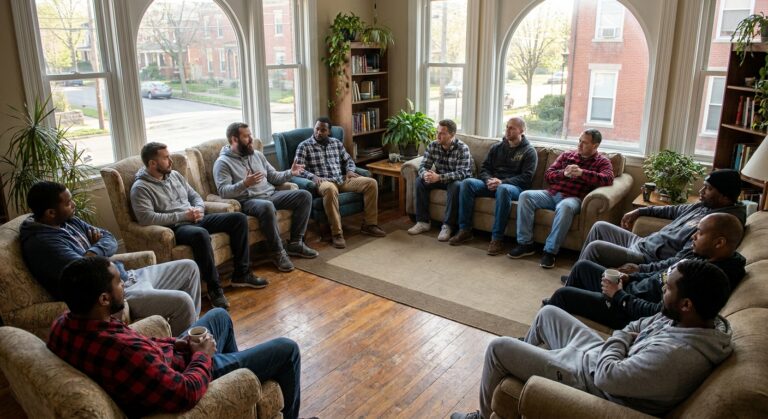
- A community of others in treatment
Residential treatment is ideal when you need more than a few hours a week to find your footing. If your home life is stressful or triggering, or if you’ve tried to quit on your own and struggled, residential care gives you the space and structure to fully reset.
What Is Outpatient Treatment?
Outpatient treatment allows you to live at home while attending scheduled treatment sessions at a facility. It’s more flexible than residential care and designed for people who may not need (or be ready for) a full-time commitment.
There are different levels of outpatient care:
- Standard Outpatient (OP): A few hours of therapy per week
- Intensive Outpatient (IOP): 9–12 hours of group and individual therapy each week
- Partial Hospitalization Program (PHP): Often 20–30 hours per week, still allowing you to return home in the evenings
Outpatient treatment works well for people who have a stable home life, reliable transportation, and enough support to manage triggers and responsibilities while staying engaged in their recovery.
How to Know Which One Fits Your Life Right Now
You don’t have to know everything today. But one way to start is by asking these honest questions:
- Can I stay sober or stable in my current home environment?
- Do I feel safe and supported at home—or constantly triggered?
- Am I early in recovery and feeling overwhelmed?
- Have I tried outpatient before and found myself slipping?
- Can I take time away from work or family right now?
If your answers lean toward needing space, stability, or a deeper level of care, residential treatment may be the safer starting point. If you have flexibility and a solid foundation, outpatient may help you integrate recovery into your everyday life.
The Deeper Layer: Emotional Safety
One thing people rarely talk about is how emotionally different these settings feel.
In residential treatment, you’re surrounded by people who are going through similar battles. You don’t have to hide. You’re not performing for anyone. That environment can be deeply validating—especially if you’ve spent years masking your pain in front of coworkers, family, or even yourself.
In outpatient care, you’re learning how to show up for life while still showing up for yourself. That means you’re practicing real-world recovery from day one—but it also requires emotional resilience. You’ll still be exposed to stress, temptation, and chaos. For some, that’s empowering. For others, it can be destabilizing too soon.
Recovery Isn’t One-Size-Fits-All
Here’s something important: just because outpatient feels easier to schedule doesn’t mean it’s the easier path.
And just because residential treatment sounds intense doesn’t mean it’s too much for you.
Think of it this way:
- Residential care is like going away to immerse yourself in healing.
- Outpatient care is like staying home while learning how to rebuild as you go.
Both are valid. Both are powerful. And neither has to be permanent. Many people start in residential treatment and transition to outpatient later. Others start in outpatient, build strength, and never need residential. The path isn’t rigid—it’s responsive.
Side-by-Side Comparison
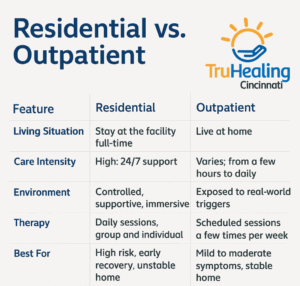
Here’s a simplified chart to help you compare:
| Feature | Residential Treatment | Outpatient Treatment |
|---|---|---|
| Living Situation | Stay at the facility full-time | Live at home |
| Care Intensity | High: 24/7 support | Varies: from a few hours to daily |
| Environment | Controlled, supportive, immersive | Exposed to real-world triggers |
| Therapy | Daily sessions, group and individual | Scheduled sessions a few times per week |
| Best For | High risk, early recovery, unstable home | Mild to moderate symptoms, stable home |
| Schedule | Structured and consistent | Flexible, often built around work/school |
What If You’re Still Not Sure?
Most people aren’t. That’s normal.
At TruHealing Cincinnati, our admissions team walks you through a personalized assessment—not to push you into one box, but to understand:
- What kind of support do you need to feel safe?
- What barriers are in your way—practically or emotionally?
- What resources (internal and external) do you already have?
- Are you in crisis, or are you coping but ready to grow?
We’ll help you map your next step. Whether that means enrolling in a residential treatment program in Cincinnati or starting with outpatient support close to home, you’ll be met with care—not judgment.
FAQs: Choosing Between Residential and Outpatient
Is residential treatment only for severe addiction?
Not at all. It’s for anyone who needs a safe, structured place to heal without distractions or triggers—regardless of how “bad” things seem on paper.
Can outpatient treatment work if I’m just starting recovery?
Yes, especially if your environment supports you. However, if you’re still unsure of your footing or experiencing strong cravings, residential care may offer a stronger start.
Do I have to choose one or the other forever?
No. Most people move between levels of care. For example, you might begin with residential and transition to IOP. Or start in outpatient and decide later to pause and go deeper.
What if I have kids or a job I can’t leave?
We get it. Residential care may still be possible with planning. Our team can help with medical leave documentation (FMLA), childcare logistics, or exploring outpatient options that still offer depth without a full-time stay.
Will I be supported either way?
Yes. Whether you choose residential or outpatient, you’ll have a team walking beside you. The intensity may differ, but the heart of the care doesn’t change.
Let This Be the Moment You Choose Your Healing
You don’t have to know everything today. You just have to be willing to ask: What would help me feel safe, supported, and seen right now?
If that answer points toward full-time care, we’ll help you get there. If that answer leans toward outpatient flexibility, we’ll walk with you there too. If you’re in Lawrenceburg, Lexington, Springfield, or Louisville, TruHealing offers programs with that same trusted approach.
Call (513) 429-7900 or visit our residential treatment program in Cincinnati, Ohio to talk through what’s possible. Not someday—today.