
It’s one of the most quietly painful fears we hear in treatment.
Not “What if I can’t stay sober?”
Not “What if I relapse?”
But:
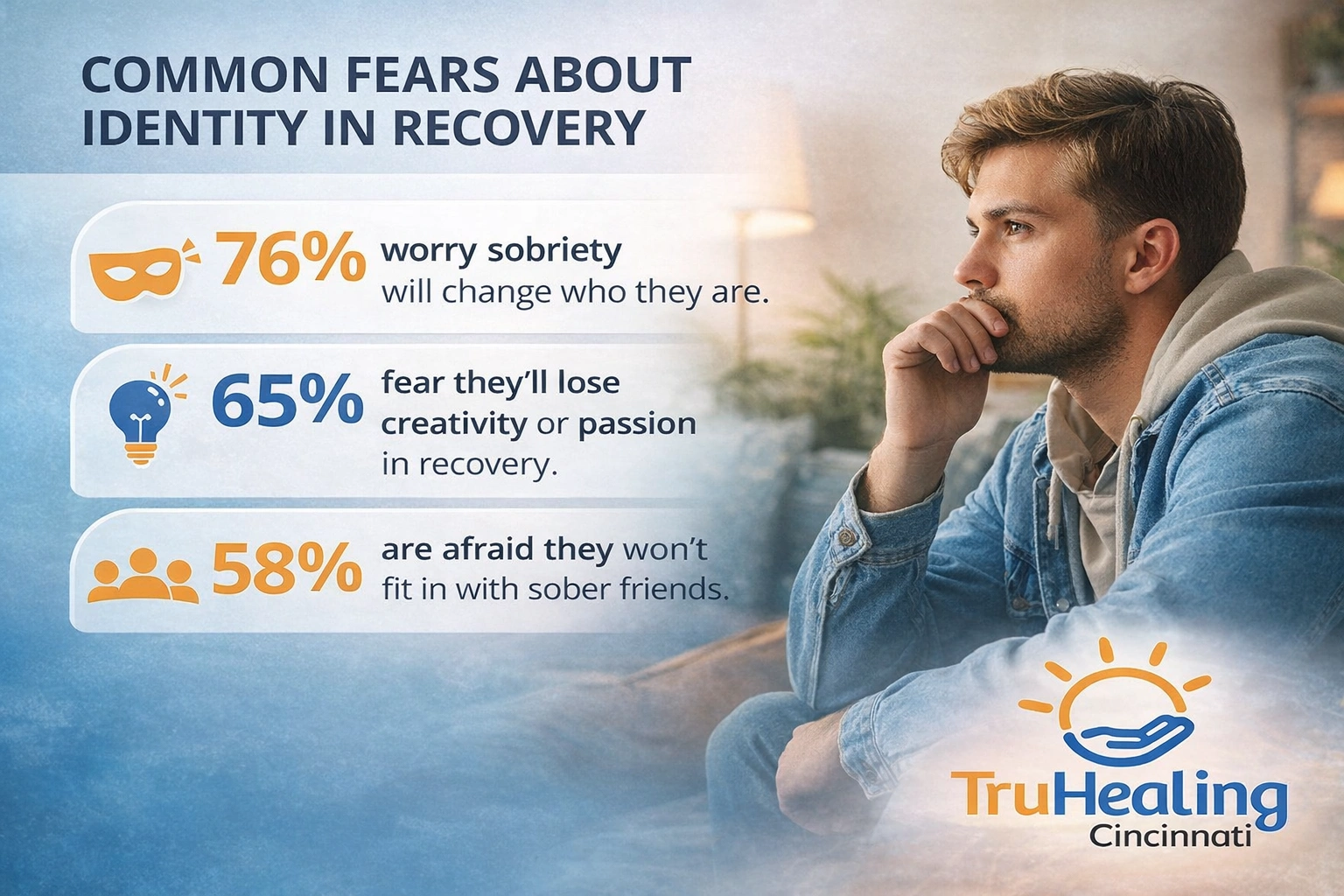
“What if sobriety changes who I am?”
This fear doesn’t always come out directly. Sometimes it’s cloaked in sarcasm. Sometimes it’s whispered in a late-night group session, or brushed off as a joke. But the truth behind it is serious—and deeply human.
For many people, especially creatives and sensitive types, substances weren’t just about escape. They were tools. Tools to access emotion. Tools to connect. Tools to perform, or to protect.
So the idea of giving those tools up can feel like giving up you.
At TruHealing Cincinnati’s Residential Treatment Program, we meet people holding this fear every day. And we want to tell you something we’ve learned from years of walking alongside them:
Your identity is not built on your coping mechanisms.
It’s built on who you are underneath them—and that person still exists.
You’re Not Broken for Wanting to Keep What Helped You Feel Alive
If you’ve ever felt like substances or intense habits made you more—more creative, more social, more connected—you’re not alone.
We’ve worked with:
- Artists who wrote their best music high
- Social butterflies who felt unstoppable at parties
- Quiet, tender people who finally felt confident when drinking
- High-performers who used stimulants to keep the edge sharp
They weren’t exaggerating. Those things did give them something.
They helped them survive, express, connect.
So it makes sense to be afraid of losing that.
We don’t minimize it. We honor it.
The problem isn’t that the tools didn’t work. The problem is that eventually, they started working against you.
You Are Not the Thing That Helped You Cope
When someone says, “I don’t know who I am without this,”
what they often mean is,
“I’ve built a life around needing this to function.”
And that’s not failure. That’s adaptation.
Coping mechanisms don’t come out of nowhere. They show up for a reason. They’re shaped by trauma, pressure, grief, personality, and environment.
Over time, those coping habits can start to feel like part of your identity. But they’re not. They’re responses. Armor. Tools. Patterns.
What we see in residential treatment is that when the need for those patterns softens, the person underneath begins to emerge—and that person is almost always deeper, more creative, more vibrant than they thought possible.
Early Sobriety Might Feel Flat—and That Doesn’t Mean You’re Gone
This is one of the hardest truths: the beginning is weird.
When you take away substances or behaviors that once activated your nervous system—whether through highs, risks, or emotional intensity—your body doesn’t immediately replace them with joy.
Instead, for a while, things might feel dull.
Colors might look gray.
Music might sound off.
The part of you that used to come alive at 2am might feel silent.
This is your system recalibrating. It’s not a sign that you’ve lost your spark. It’s a sign that your body is learning how to feel again—without a crutch.
And then slowly, day by day, it starts to come back.
We see it in the laughter that returns during lunch.
In the guitar that gets pulled out after dinner.
In the client who volunteers to lead group even though they never thought they could.
Your spark isn’t gone. It’s just learning to burn clean.
Recovery Isn’t About Erasing You—It’s About Meeting You
You don’t need to become someone else to recover.
You need to become someone you can live with.
That’s the heart of what we do in a residential treatment program.
We don’t ask you to abandon your passion, your creativity, or your sensitivity. We help you access them without paying the cost of exhaustion, panic, or emotional chaos.
Recovery doesn’t require you to dull your edges.
It invites you to hold them with care.
Some people fear they’ll become boring or flat in sobriety. What we actually see?
- Humor deepens
- Creativity expands
- Relationships become safer and more honest
- Energy becomes steadier and more sustainable
You don’t lose your intensity. You just stop bleeding for it.
The Real You Is Still In There—And Ready to Come Forward
We’ve had clients who were terrified they’d lose their artistic drive, their boldness, their voice.
What we saw instead?
- The writer who couldn’t string together a sentence at first… suddenly writing with clarity and depth three months in.
- The performer who thought they needed substances to be magnetic… realizing their presence was powerful all on its own.
- The quiet client who thought they had nothing to say… finding their voice in group and becoming a peer leader.
Healing doesn’t flatten people.
It frees them.
If you’re near Kentucky and looking for a place that holds space for identity while offering structured, caring support, consider a residential treatment program in Louisville. This option offers the same foundation of care you’ll find in Cincinnati—no pressure to change who you are, just support in finding your way back to yourself.
There’s Room to Grieve the Person You Thought You Had to Be
Not everyone talks about this, but we think it’s important:
You’re allowed to grieve the loss of your old self.
Even if that version of you was hurting…
Even if it wasn’t sustainable…
It was still yours. It still got you through.
We’ve had clients say goodbye to the “life of the party” version of themselves. The adrenaline-chaser. The late-night creator. The magnetic flirt. The always-working, never-sleeping overachiever.
There’s a real ache in letting those versions go. We make space for that.
But we also make space for the person that comes forward next: the one who doesn’t have to perform, pretend, or self-destruct to feel worthy.
FAQ: Your Identity and the Recovery Process
Will I still be myself if I stop drinking or using?
Yes. You’ll still be you—but often, a version of you that’s more grounded, clear, and emotionally present. Recovery doesn’t take away your essence. It helps you reclaim it without the distortion of substances.
What if my creativity depends on how I feel when I’m high?
This fear is common, especially among artists. In treatment, we see people rediscover their creative rhythm without substances. Often, their work becomes more honest, sustainable, and deeply connected to who they are.
Can I still be fun, social, or expressive in recovery?
Absolutely. Many people find their humor, charisma, and emotional range actually improve in sobriety. Early recovery might feel awkward—but those parts of you are not gone. They’re just learning to show up in new, more authentic ways.
I’m scared I won’t recognize myself—what helps?
You’re not alone. Therapy, peer support, and structured care in a residential treatment program help you process this fear. It’s okay to feel disoriented. We guide you through the identity shift with gentleness and care.
You’re Not Losing Yourself. You’re Meeting Yourself.
If you’ve built your identity around coping, performance, or intensity, you might wonder who’s left when that falls away.
Here’s what we see, every single day:
The person who comes forward is someone you can trust.
Still You. Just Supported.
Call (888) 643-9118 to learn more about our Residential Treatment Program in Cincinnati, Ohio.
Let’s talk about who you are—beyond the coping.