
You haven’t lost your job. Your kids still see you as “the fun one.” Your name’s not in the paper. No court dates. No detox bed. Just a little too much wine on weeknights. A little too many late nights you don’t remember. A little too much pretending.
But you’re still standing. So it can’t be that bad, right?
Here’s the truth no one talks about: high-functioning addiction is real—and it’s deadly quiet. No drama. No crash. Just a slow erosion of who you are. Until one day, you look in the mirror and think, I don’t even recognize myself.
And that’s exactly when a residential treatment program becomes not a last resort—but the bravest, clearest decision you can make.
You Don’t Have to Be in Ruins to Be in Trouble
We see it all the time. Teachers. Executives. Nurses. Parents. People who built entire lives while quietly disintegrating inside. They function. They achieve. They show up.
But behind closed doors? They’re drinking more than they admit. Using “just enough” to calm the storm inside. Managing life like a full-time PR campaign—one slip-up away from unraveling.
And because they haven’t “lost everything,” they keep going.
That’s the lie addiction tells high-functioners: you’re still in control.
But control isn’t peace. And white-knuckling your way through life isn’t living.
High-Functioning Addiction Looks Different—But Hurts the Same
Let’s drop the myth that addiction has to look like collapse.
For high-functioners, it often looks like:
- Making it to work every day… but hiding vodka in your desk drawer
- Showing up to family dinners… but needing pills just to get through them
- Paying the mortgage… but praying no one notices how much you’re unraveling inside
The mask is polished. The damage is private.
But make no mistake: the pain, the chaos, the emotional emptiness—it’s all there. And it doesn’t need to get worse before you get help.
Rock Bottom Is a Myth (And a Dangerous One)
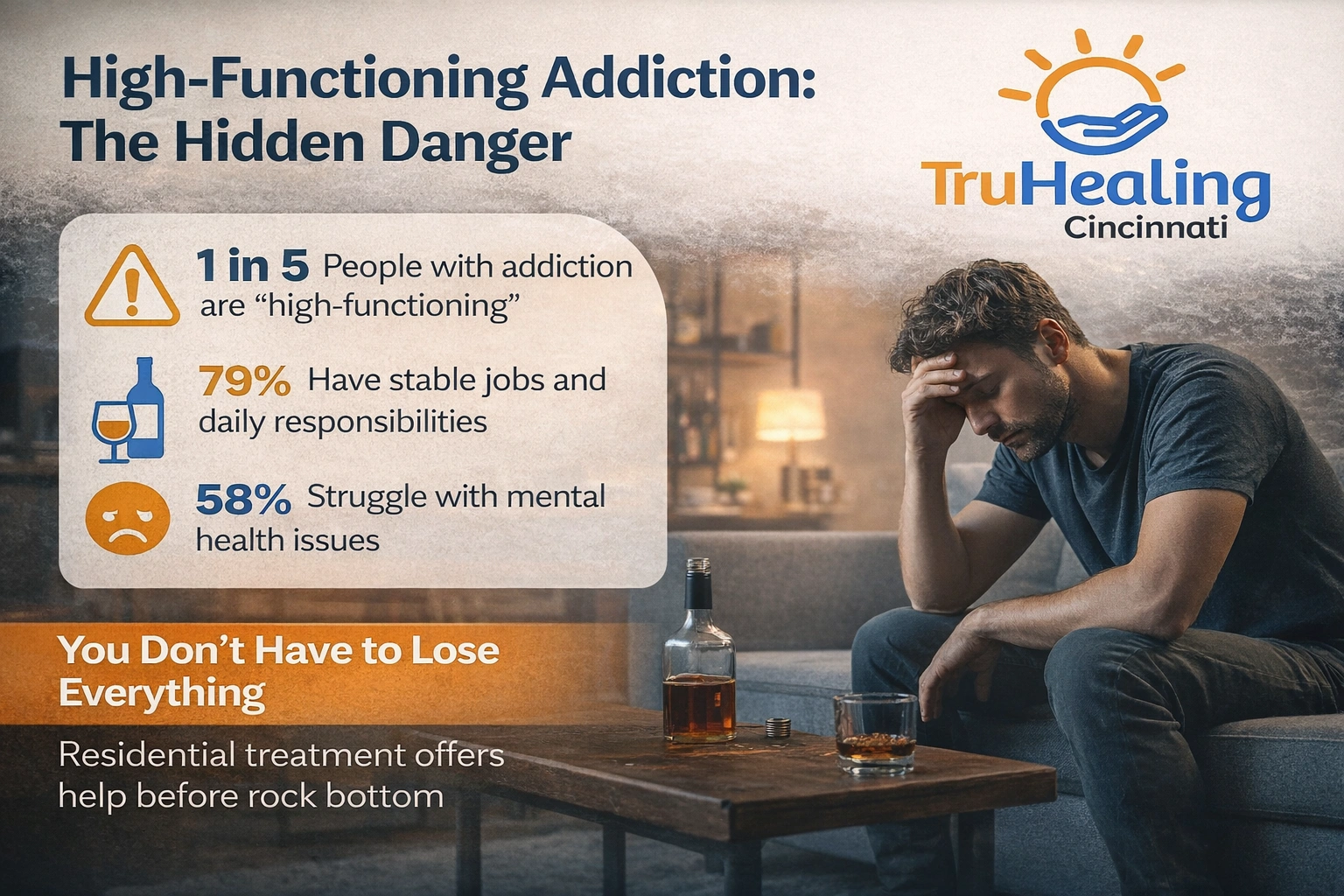
You don’t need to lose everything to earn help.
Residential treatment isn’t a place people go because they’ve failed. It’s a place people go because they’re done faking. They’re done living half-lives. They’re done waking up tired, wired, ashamed, and confused.
Real courage isn’t in the crash. It’s in the decision to step away from a life that’s “working”—on paper—and finally admit it’s not enough.
In Springfield, Ohio, we’ve worked with countless clients who entered residential care before the DUI, before the firing, before the overdose. And not a single one said, “I wish I’d waited until things were worse.”
Residential Treatment Isn’t Lockdown—It’s Liberation
If you’re imagining sterile walls, shouting therapists, and group hugs you don’t want—take a breath. That’s not what this is.
Residential treatment isn’t about punishment. It’s about pause. It’s stepping out of the noise to finally hear yourself think again.
You get structure, yes. But also space. Support. Safety. You get days without pretending. Nights where you sleep, not spiral. And slowly, you remember what it feels like to live without needing to escape it.
For many clients in Louisville, Kentucky, the residential setting is where their real life began—not ended.
Your Brain Isn’t Broken—But It’s Been Wired to Survive, Not Heal
Let’s talk science for a second. Addiction isn’t about weakness. It’s about repetition. Your brain has learned a shortcut: substance = relief. And it’s been rewarded for that shortcut—over and over again.
Willpower doesn’t rewire neurons.
But treatment can.
In residential care, you get the time and the tools to retrain your brain. To face the original pain. To develop new patterns that don’t involve self-destruction dressed as stress relief.
This is neuroscience. Not moral failure.
It’s Time to Redefine Strength
You’ve powered through everything. Maybe you’ve even helped others with their stuff. You’re the one people rely on. The steady one. The “rock.”
But strength isn’t just endurance. It’s honesty. It’s saying, “This is too much,” even when no one else can see the weight.
Residential treatment is where you stop performing strength and start living from it.
This Is What Coming Back to Life Looks Like
We’ve seen it happen. That first morning a client wakes up not panicking. That first night they laugh—really laugh—and don’t need anything in their system to feel it.
The small things come back first: sleep, appetite, a sense of humor. Then the bigger ones: truth-telling, relationships, purpose.
You don’t have to settle for half-alive. You don’t have to numb your way through the rest of your life.
You can recover. Not just from the substances. But from the shame, the silence, and the story that said you had to hold it all together by yourself.
Frequently Asked Questions
What exactly is a residential treatment program?
It’s a live-in addiction treatment model where you receive round-the-clock support. That includes medical supervision, therapy, group work, and time away from your usual environment. It offers safety, structure, and the ability to focus entirely on healing.
Do I really need residential care if I’m still functioning?
If functioning is code for surviving, hiding, or silently suffering—then yes. Just because you can still “do life” doesn’t mean you’re okay. Residential care isn’t for people who’ve failed. It’s for people who are ready to stop pretending.
What’s the difference between inpatient and outpatient treatment?
Inpatient (or residential) treatment means you live on-site at the facility. Outpatient care allows you to live at home while attending treatment during the day or evening. Residential care is often more intensive and ideal for people who need full reset support.
How long will I need to stay?
The typical residential program lasts 30 to 90 days, depending on your needs. Length of stay is a clinical decision made with your treatment team. It’s based on how you’re doing—not a fixed calendar date.
Will I lose my job if I take time off?
In many cases, the Family and Medical Leave Act (FMLA) can protect your job while you attend treatment. We can walk you through those conversations and help you with documentation if needed.
What happens when I leave?
Before you leave, we build a discharge plan with you. That includes outpatient services, sober support, community connection, and a path forward. You’re not just sent home—we stay connected.
You’re not broken because you’re tired. You’re not weak because you’re struggling. And you don’t have to wait for disaster to get help.
The residential treatment program isn’t the bottom. It’s the truth. It’s the mirror. And it’s the place where high-functioning people finally get to stop performing and start healing.
Call (513) 429-7900 to learn more about our residential treatment program in Cincinnati, Ohio.