
I used to say treatment was for other people.
The ones who hit rock bottom. The ones who lost everything. The ones who needed to be saved.
Not me.
I was still working. Still holding things together—barely. I’d been to a residential treatment program before, so I told myself I’d done the work. But the truth was, I went through the motions and left with the same hole in my chest I walked in with.
So when things got bad again, I didn’t feel broken. I felt betrayed. I thought, “If treatment didn’t fix me last time, why would it work now?”
And then, everything changed—because I stopped asking if treatment worked in general, and started asking what I actually needed this time.
I Thought Going Once Should’ve Been Enough
The first time I stepped into treatment, I was full of expectations. I thought 30 days in a residential facility would clean the slate. That I’d walk out “better.” That I’d never have to come back.
But treatment isn’t a car wash. You don’t go in dirty and come out shining.
It’s more like physical therapy after a major injury. It requires repetition. Realignment. Slowness. And yeah—sometimes, you have to go back for more work because the healing didn’t hold the first time.
I didn’t fail treatment. I just didn’t finish what needed finishing.
I Was Too Polished the First Time
Looking back, I played a role in my first residential program.
I knew how to say the “right” things in group. I didn’t cry. I didn’t admit I was scared. I nodded in therapy but never really let my guard down. I treated it like a performance.
I was afraid to be messy in front of other people. Afraid of what I’d find underneath the surface.
So I stayed surface-level. And recovery doesn’t live there.
What Finally Shifted for Me
I didn’t go back to treatment because I had hope. I went back because I was tired of pretending I was okay.
This time, I didn’t come in looking for magic. I came in looking for truth.
That made space for something very different.
I didn’t “click” with everyone. Not every therapist gave me breakthroughs. But what changed was this: I let myself be real. Angry. Tired. Confused. Grieving.
And the program held that—not perfectly, but well enough. And it gave me tools that actually landed, because I was finally open enough to use them.
The Power of a Real Residential Treatment Program
This wasn’t a bootcamp or a hospital ward. It was a structured, 24/7 environment where I could finally stop managing the chaos of my day-to-day life and start listening to what was going on inside me.
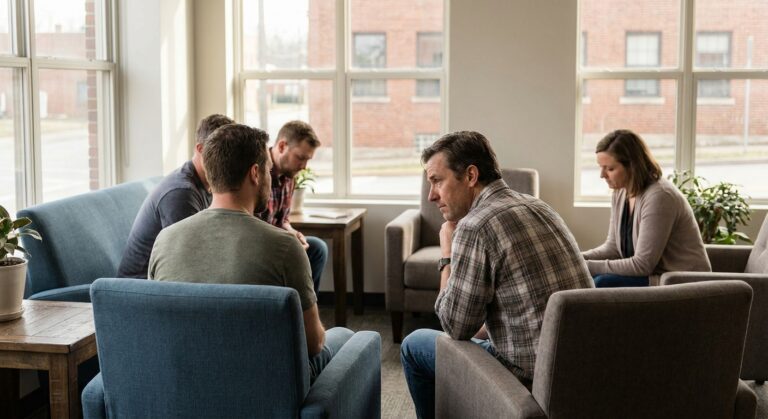
- I had group therapy where I actually talked instead of faking insight.
- I had one-on-one sessions that didn’t rush me.
- I got sleep. Real, consistent sleep.
- I ate food that wasn’t takeout or skipped entirely.
- I journaled and didn’t hate what came out.
- I cried, which shocked me.
It wasn’t a transformation overnight. But slowly, I remembered what peace could feel like. That alone was worth the second shot.
You’re Allowed to Come Back
There’s so much shame wrapped up in returning to treatment.
It’s like we’re taught that asking for help once is brave—but asking again means we’re weak. But that’s not how healing works.
If you tried to walk on a broken leg too soon and it re-fractured, would you tell yourself never to go back to the doctor?
Exactly.
In Louisville, Kentucky, I met others who had also been through this cycle—one treatment, then another. But they weren’t failures. They were fighters. Each return was a refusal to give up.
That mindset shifted everything for me.
Treatment Didn’t Save Me. It Gave Me Space to Save Myself.
Here’s the biggest lie I believed: that treatment was supposed to fix me.
It’s not.
A residential treatment program is a container. It’s a place to sit with your reality, safely and supported, until you can do something different with it.
Nobody did it for me. But I was finally in a place where I wasn’t doing it alone.
That’s what made the difference.
If You’re Skeptical, You’re Not Alone
I was the guy who rolled his eyes during mindfulness. The one who sat in the back of group with his arms crossed. The one who swore therapy was just talking in circles.
And still—I found something there.
You don’t have to believe it’ll work. You just have to be willing to try again with both eyes open. Because real healing doesn’t start when you’re convinced. It starts when you’re honest.
Frequently Asked Questions
Can a residential treatment program still help me if I’ve already tried it?
Yes. Many people return to treatment more than once. Sometimes the first experience was surface-level. Sometimes life throws new challenges you weren’t equipped for. Returning is not a failure—it’s a sign that you still want something better.
What’s the difference between this and outpatient therapy?
Residential treatment provides 24/7 support and a break from the everyday triggers and routines that keep you stuck. Outpatient therapy can be helpful, but if you’re overwhelmed or unsafe in your environment, residential care creates the space you need to reset fully.
What if I didn’t like treatment the first time?
Not all programs are the same. Some are more clinical, some more holistic, some more trauma-informed. If your first experience didn’t meet your needs, that doesn’t mean all treatment is useless. It means finding a program that fits who you are now.
Will they judge me for coming back?
A good program won’t. At TruHealing Cincinnati, we’ve worked with many clients returning after past experiences—and we meet them without shame. Your decision to come back is a strength, not a stain.
How long is a residential treatment program?
Most programs last 30 to 90 days, depending on your needs. Some stays are shorter; others longer if clinically appropriate. The goal isn’t to keep you forever—it’s to give you enough support and stability to build from.
What if I don’t believe in this anymore?
You don’t have to believe in the whole thing. Just believe in one small part: that you deserve more than what you’re surviving. Start there. We can work with the rest.
Recovery isn’t linear. It’s not a straight path or a one-time event.
I’m not where I thought I’d be—but I’m no longer stuck in the loop of asking if treatment works. Because now, I ask something better:
“What do I need today to keep showing up?”
Call (513) 429-7900 to learn more about our residential treatment program in Cincinnati, Ohio.
If you’re ready to stop pretending and start again, this might be your moment. Even if it’s not the first. Especially if it’s not.