

There’s a kind of heartbreak that doesn’t look loud from the outside.
It’s quiet. Heavy. Repetitive.
Your child was doing better. Or at least, it seemed like they were.
And then something shifted.
And now you’re here again.
Not just scared—but questioning everything.
“What did we miss?”
“Why wasn’t it enough?”
“What do we do differently this time?”
If you’re looking into live-in treatment options, this isn’t about starting over.
It’s about understanding what this moment is actually telling you—and what it might require next.
Relapse feels like failure—but it’s usually information
It’s hard not to take this personally.
As a parent, relapse can feel like:
- Everything you hoped for didn’t hold
- Everything they learned didn’t stick
- Everything you did somehow wasn’t enough
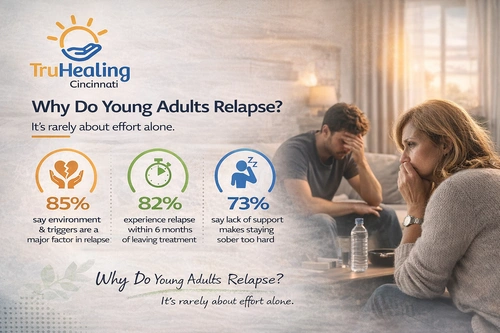
But relapse is rarely about effort alone.
It’s usually about mismatch.
A mismatch between:
- The level of support they had
- The level of challenge they returned to
Your child didn’t forget everything.
They reached a point where what they had wasn’t strong enough to hold them in the environment they were in.
That’s not failure.
That’s a signal.
The environment matters more than people want to admit
Imagine trying to change everything about how you live—while standing in the exact same place that shaped your old patterns.
Same stress.
Same people.
Same triggers.
Even with the best intentions, that’s incredibly hard.
Many young adults relapse not because they don’t want change—but because they’re trying to build something new in a space that keeps pulling them back.
That tension wears people down.
And eventually, something gives.
Why “trying harder” isn’t the answer
This is where parents often get stuck.
They think:
“Maybe they just didn’t try hard enough.”
“Maybe we need to push more.”
But this isn’t about willpower.
It’s about support.
You can’t outwork an environment that’s constantly working against you.
And your child can’t either.
Sometimes, what’s needed isn’t more effort.
It’s a different level of structure.
When more structure becomes necessary
This is the part that feels uncomfortable.
Because recommending more intensive care can feel like:
- A step backward
- Too extreme
- Something your child will resist
But here’s the truth:
More structure isn’t punishment.
It’s protection.
It’s what helps when:
- Change hasn’t had time to stabilize
- The outside environment is too unpredictable
- Your child struggles to stay consistent without support
It creates space.
Space away from the patterns that keep repeating.
Space to practice something new—long enough for it to stick.
The difference between “getting through” and actually stabilizing
Your child may have made progress before.
That part matters.
But there’s a difference between:
- Completing a phase of care
and - Being able to sustain change outside of it
Short-term progress can look like success.
But without enough time, repetition, and support, it can fade under pressure.
Long-term stability requires something deeper.
Something more consistent.
And often, something more structured.
What we’ve seen in families who reach this point
We’ve worked with parents who are exactly where you are.
Exhausted. Scared. Unsure what to do next.
They’ve told us:
- “I don’t know if I can watch this happen again.”
- “I don’t know if they’ll agree to anything else.”
- “I feel like I’m running out of options.”
And we’ve seen something important.
When the level of support finally matches the level of need, things begin to shift differently.
Not overnight.
Not perfectly.
But more steadily.
We’ve seen young adults who struggled to hold progress on their own begin to stabilize when they had:
- Daily structure
- Consistent accountability
- Distance from the environments that triggered relapse
We’ve seen families from Indianapolis, Indiana come in feeling like they were out of answers—and leave with something they hadn’t felt in a while:
Clarity.
Not certainty.
But direction.
The fear that you’re doing too much—or not enough
This is where most parents live after relapse.
Caught between:
- Not wanting to push too hard
- Not wanting to do too little
That space is exhausting.
Because every decision feels like it carries weight.
But here’s what matters:
You’re not reacting blindly.
You’re responding to new information.
You’re adjusting based on what didn’t hold before.
That’s not overreacting.
That’s being present.
What your child may not be able to express
Even if they seem resistant, distant, or shut down—there’s often more happening underneath.
Many young adults in this position feel:
- Ashamed
- Overwhelmed
- Unsure how to stop the cycle they’re in
And instead of asking for more help, they pull away.
Because needing more feels like failure.
That’s where the right level of support can make a difference.
Not as control.
As containment.
As safety.
This isn’t starting over—it’s refining the path
It may feel like you’re back at the beginning.
But you’re not.
You know more now:
- What didn’t hold
- Where things broke down
- What your child struggled with after leaving care
That insight matters.
Because now, you’re not guessing.
You’re adjusting.
And that’s how real progress happens.
Frequently Asked Questions
Does relapse mean the previous treatment didn’t work?
No.
It usually means the level or duration of support wasn’t enough to sustain change in real-life conditions.
Why would a more structured setting help now?
Because it provides consistency, distance from triggers, and time to build stability before returning to everyday life.
What if my child refuses to go?
That’s common.
Resistance often comes from fear, shame, or feeling overwhelmed—not from a lack of need.
Conversations and support can still move things forward.
How do I know what level of care is right?
It depends on:
- How quickly relapse happened
- The environment your child is in
- Their ability to maintain progress independently
A professional assessment can help guide this.
Is there still hope after relapse?
Yes.
Many people who achieve long-term recovery have relapse as part of their story.
It’s not the end—it’s information that helps guide what’s next.
What can I do right now?
Stay connected.
Avoid reacting only out of fear.
And explore options that provide stronger, more consistent support.
You didn’t fail your child.
And your child didn’t lose their chance.
This moment is painful—but it’s also revealing.
It shows you what wasn’t enough.
And that gives you a clearer path toward what might be.
Not starting over.
Moving forward—with better information.
Call (513) 429-7900 or visit our residential treatment program in Cincinnati to learn more.