
I remember the exact thought:
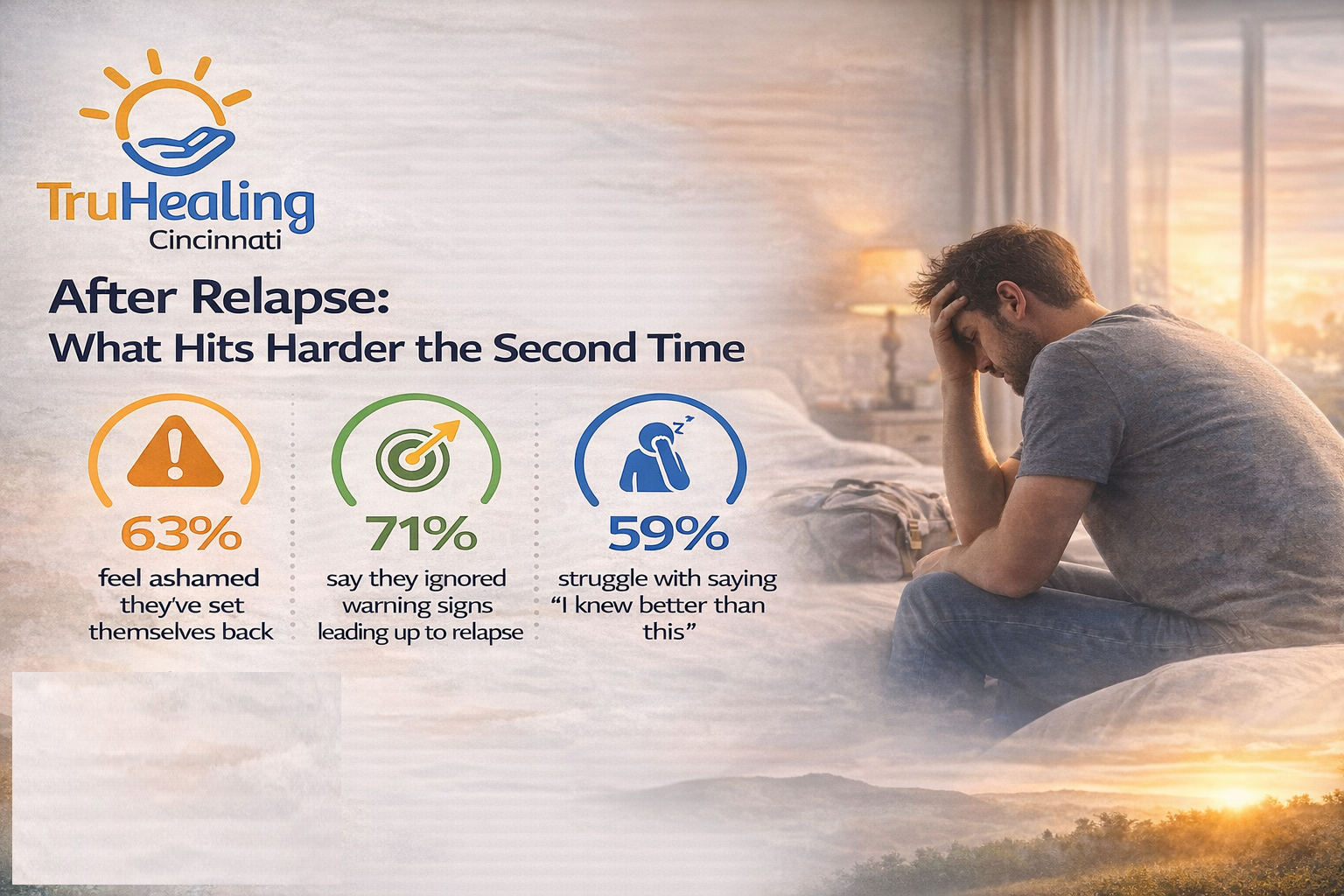
“I knew better than this.”
That’s what made it hit harder.
Not the relapse itself.
Not even the consequences.
It was the awareness.
Because this time, it wasn’t confusion or chaos.
It was clarity—and then slipping anyway.
If you’ve been through live-in treatment options and found yourself here after real time, real effort, and real progress… this kind of relapse lands differently.
Heavier.
More personal.
Like you didn’t just mess up—you betrayed something you worked hard to build.
But that’s not actually what happened.
It’s not the relapse—it’s the meaning you attach to it
The moment itself is one thing.
But what follows?
That’s what really hurts.
Your brain moves fast:
- “I threw everything away.”
- “That was my chance.”
- “I’m back at the beginning.”
And it feels true.
Because you’ve experienced what it’s like to be on the other side—even briefly.
So losing that feels like losing everything.
But you didn’t lose everything.
You lost alignment.
And those are not the same thing.
You’re not the same person you were before
This is the part that gets overlooked.
Before, you didn’t have:
- The awareness
- The language
- The experience of what life could feel like without it
Now you do.
That doesn’t disappear because of one moment.
Even now, you’re more aware than you were before you ever started.
And that awareness?
It changes what happens next—if you let it.
Why this relapse feels more personal
Because you care more now.
That’s the truth.
Before, things might have felt chaotic.
Now, they feel intentional.
So when something breaks, it feels like it says something about you.
Like:
“I should’ve been stronger.”
“I should’ve seen it coming.”
But “should” isn’t insight.
It’s pressure.
And pressure doesn’t help you understand what actually happened.
What actually led up to it (even if it didn’t feel obvious)
Relapse rarely starts at the moment it happens.
It starts earlier.
Quieter.
You might have:
- Pulled back from support just a little
- Started thinking you had more control than you did
- Avoided talking about something building under the surface
Nothing dramatic.
Just small shifts.
And those small shifts matter more than the moment itself.
Because they’re where the pattern lives.
This isn’t starting over—it’s seeing the pattern more clearly
It feels like you’re back at zero.
But you’re not.
You’re at a different starting point now.
One where you can actually recognize:
- What led up to this
- Where things started to slip
- What didn’t hold long enough
That’s not failure.
That’s information.
And information is what helps things change the second time in a way they couldn’t the first.
The shame is louder—but it’s also misleading
This kind of relapse comes with a specific kind of shame.
Not just:
“I messed up.”
But:
“I knew better.”
That’s the part that sticks.
But knowing something doesn’t mean you can execute it perfectly every time.
You’re not a system.
You’re a person.
And people don’t change in straight lines.
What I wish someone had said to me sooner
You didn’t waste your time.
You didn’t lose everything.
You didn’t prove that this doesn’t work.
You proved that something still needs reinforcement.
That’s it.
And that’s fixable.
I’ve seen people come back from this—and it holds differently
Not in a dramatic, overnight way.
But in a way that’s more grounded.
Because the second time around, there’s less illusion.
More honesty.
More awareness of what actually needs to be in place.
We’ve seen people from Lexington, Kentucky walk back in feeling like they ruined their only chance—only to realize they were actually walking in with more clarity than they had before.
Not easier.
But stronger.
The decision point you’re standing in right now
This is the part that matters most.
Not what happened.
What you do with it.
Because right now, you can:
- Let the story take over: “This proves I can’t do this.”
- Or interrupt it: “Something broke down. What was it?”
One path closes things off.
The other opens them back up.
And the fact that you’re still here, still reading, still thinking about it?
That means you haven’t closed that door.
You don’t need to be perfect—you need to stay in it
This idea that you have to get it right every time?
It’s what keeps people stuck.
Because the moment something goes wrong, it feels like everything is invalid.
But that’s not how this works.
Progress isn’t about perfection.
It’s about:
- Catching things earlier
- Being honest faster
- Reaching out instead of pulling back
That’s what builds something that actually lasts.
The part that might hit you the hardest
You’re not starting over.
But you are being asked to go deeper.
Deeper than:
- Just staying away from substances
- Just getting through the day
- Just doing what worked before
This is about reinforcing what didn’t hold.
And that requires more honesty—not less.
Frequently Asked Questions
Why does relapse feel worse after I’ve had time sober?
Because you’ve experienced something different.
You know what it feels like to live without it—and losing that, even temporarily, feels more personal.
Did I lose all my progress?
No.
You still have the awareness, tools, and insight you gained.
Those don’t disappear.
Does this mean treatment didn’t work?
No.
It means something didn’t hold long enough.
That’s information you can use—not proof that it failed.
How do I deal with the shame?
By separating what happened from what you’re telling yourself it means.
The event is one thing.
The story is another.
What should I do right now?
Don’t isolate.
Reach out.
This is the moment where support matters most—not least.
Can I actually come back from this?
Yes.
And many people do—with more clarity and stability than they had before.
This kind of relapse hits differently because you’re different now.
You’ve seen something better.
You’ve felt something more stable.
And even if it feels like you lost it—you didn’t.
You touched it.
And that means you can build it again.
Not from scratch.
From experience.
Call (513) 429-7900 or visit our residential treatment program in Cincinnati to learn more.