

I didn’t sit there and carefully think it through.
It was faster than that.
One moment I had slipped. The next, my brain had already made the call:
“Yeah… that didn’t work. Whole thing was useless.”
No pause. No reflection. Just a clean, final verdict.
If you’ve been there—if you relapsed and immediately wrote off everything you did before—you’re not alone.
But let’s be honest about something most people avoid saying:
That conclusion? It feels true.
But it’s usually not accurate.
If you’re even considering getting help again for opioids, that means something in you hasn’t bought your own story completely.
And that matters more than the relapse.
The story your brain tells right after it happens
Relapse doesn’t just hit your body.
It hits your narrative.
Fast.
Your brain starts cleaning things up into something simple and harsh:
- “Nothing stuck.”
- “I’m right back where I started.”
- “That place didn’t help me at all.”
It’s almost impressive how quickly it rewrites everything.
Because the truth—the full, messy version—is harder to sit with.
So your brain gives you something easier:
A conclusion that lets you walk away without looking too closely.
You didn’t learn nothing—you just stopped using it
Let’s slow this down for a second.
Before things fell apart, there were moments where something was different.
Even if it was brief.
Maybe you:
- Caught yourself before reacting—even once
- Made it through a day that used to feel impossible
- Started noticing patterns you never saw before
- Had a conversation you wouldn’t have had months ago
That didn’t vanish.
You didn’t lose it.
You stopped applying it.
There’s a difference—and pretending there isn’t just keeps you stuck.
Calling it “useless” is a defense move
Here’s the part most people don’t say out loud.
Calling everything “useless” isn’t just frustration.
It’s protection.
Because the alternative thought is heavier:
“What if it did help… and I still went back?”
That thought comes with responsibility.
It means:
- You’re not beyond help
- You’re not immune to change
- But you also have more say in what happens next
And that’s uncomfortable.
So your brain chooses the easier exit:
Throw the whole experience away.
Not because it’s true—because it’s simpler.
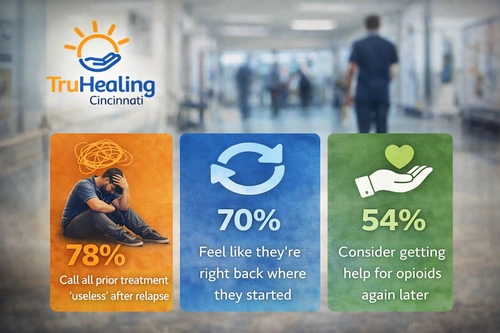
You are not back at the beginning
It feels like you are.
I know.
But you’re not.
You didn’t reset to zero.
You moved forward—and then slipped.
Those are two different things.
You’ve already:
- Sat in rooms you didn’t want to sit in
- Heard things that hit deeper than you expected
- Seen a version of yourself that didn’t feel completely out of control
That doesn’t disappear.
It’s still there—even if you’re not using it right now.
The part where people get honest—or don’t
This is usually where things split.
Some people double down on the story:
“Didn’t work. Waste of time.”
Others do something harder:
They get honest.
Not dramatic. Not self-hating. Just honest.
They ask:
- Where did things actually start slipping?
- What did I stop doing before I stopped caring?
- What did I ignore because I thought I had it handled?
That kind of honesty isn’t comfortable.
But it’s useful.
And useful beats comfortable every time.
Sometimes it really wasn’t enough
Let’s not pretend every experience is perfect.
Sometimes:
- The support wasn’t the right fit
- The structure wasn’t strong enough
- You weren’t fully ready to engage yet
That happens.
But there’s a difference between:
“it didn’t fully work for me”
and
“it was completely useless”
Don’t flatten your own experience just to make it easier to walk away from.
You’re not uniquely broken—you’re in a pattern
This might not be what you want to hear.
But you’re not the exception.
Relapse is part of a lot of people’s story.
Not because they failed.
Because change is messy.
What actually matters isn’t whether you slipped.
It’s what you do after.
Do you shut the door?
Or do you get curious about what actually happened?
What actually led up to it?
Not the surface answer.
Not “I just messed up.”
Go a layer deeper.
- Did you check out mentally before anything physical happened?
- Did something build up that you didn’t say out loud?
- Did you start convincing yourself you had more control than you actually did?
That’s the real work.
Not beating yourself up.
Understanding the pattern so it doesn’t run the show again.
I’ve seen this play out in real people
We’ve worked with people from Indianapolis, Indiana who walked in saying the exact same thing:
“Didn’t work. I already tried that.”
Not defensive. Just done.
But when we slowed things down and actually looked at what happened, it wasn’t a failure of effort.
It was a breakdown in timing, support, and follow-through.
And once that became clear, the next step looked different.
Not easier.
But clearer.
The next move doesn’t need to be impressive
You don’t need a comeback story right now.
You don’t need to suddenly be motivated or inspired.
You just need one honest step.
That could be:
- Reaching out even though you feel like you shouldn’t
- Going back even though it’s uncomfortable
- Asking for something different this time instead of repeating the same approach
That’s it.
One move.
Here’s the part that might hit
You can keep calling it useless.
You can keep telling yourself none of it mattered.
But if that were actually true…
You wouldn’t still be thinking about it.
You wouldn’t still feel something when it comes up.
You wouldn’t still be here.
That tension you feel?
That’s not failure.
That’s unfinished business.
Frequently Asked Questions
Does relapse mean treatment didn’t work?
No.
Relapse usually means something in the process broke down—not that everything you learned disappeared.
It’s a signal, not a final verdict.
Why does it feel like I’m back at square one?
Because relapse is emotional, not just physical.
It can make everything feel erased, even when it isn’t.
You still have the awareness and experience you gained—you’re just not using it right now.
Is it normal to feel like giving up after relapse?
Yes.
That reaction is common.
It’s easier to walk away than to sit with the discomfort of trying again.
But that doesn’t mean walking away is the right move.
What should I do differently this time?
Start by being honest about what didn’t hold.
Was it lack of support? Avoiding certain conversations? Overconfidence too early?
You don’t need a full plan yet—just clarity on what needs to change.
How do I go back without feeling embarrassed?
You probably will feel embarrassed.
Most people do.
But the truth is—people who understand this process expect that.
You’re not the first person to come back. You won’t be the last.
What if I still think it won’t work?
That’s okay.
You don’t need full belief to take a step.
You just need enough honesty to admit that what you’re doing now isn’t working either.
You’re not disqualified because you slipped.
You’re not the person who “couldn’t make it.”
You’re the person who saw something different once—and hasn’t fully let go of it.
And that matters.
More than the relapse.
More than the story you told yourself right after it happened.
If you’re willing to look at this differently—even a little—you have a next step.
Not a perfect one.
Just a real one.
Call (513) 429-7900 or visit our opioid addiction treatment in Cincinnati to learn more.