
I felt like the weird one. When I quit drinking, I worried my social life would die. I thought friends would fade, invitations would stop, conversations would always circle back to what I can’t do.
Then I entered a partial hospitalization program in Cincinnati. Something shifted—not overnight but gradually. I found people who didn’t just tolerate my sobriety—they lived it right alongside me.
If you’re young, clean, and still wondering how to rebuild your social world, here are 8 ways PHP helps you find a new kind of crew that really gets you.
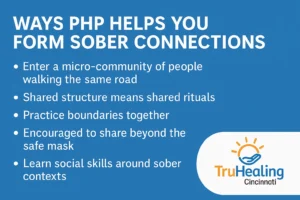
1. You Enter a Micro-Community of People Walking the Same Road
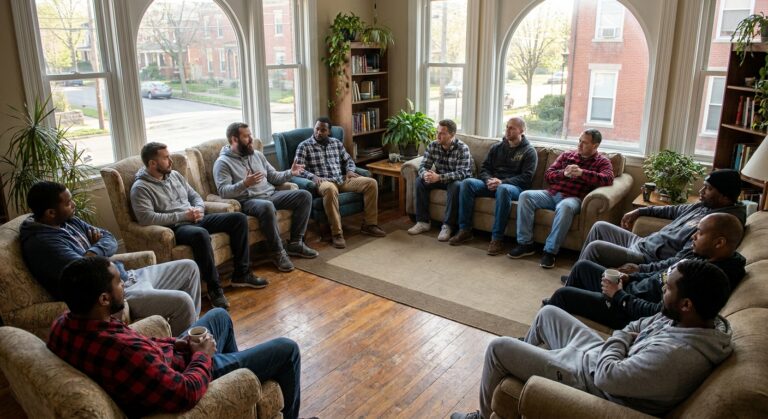
In PHP, you don’t just sit in groups—you show up in full days of shared work, vulnerability, and responsibility. You talk therapy, skills, relapse prevention—but also little things: how you slept, how your cravings flickered, jokes about cravings.
You see people fight tears. You see people laugh when they realize they’re not alone. You see resilience in motion.
That week-long blur of faces becomes faces you remember. People you exchange numbers with. People you text when you leave. People who remember.
Because shared struggle—especially the kind you can’t hide—is what builds connection. PHP environments foster peer accountability and support in ways outpatient settings often can’t.
2. Shared Structure Means Shared Rituals
Rituals matter—and in PHP, you live in rituals: morning check-ins, afternoon groups, evening reflections, skill sessions. When you repeat them daily with others, you build shared pace.
Those rituals create inside jokes, shorthand gestures, relational touchpoints. You know someone else stayed for the same 90-minute group you did. You know someone else got triggered after lunch.
That shared rhythm gives you relational depth that doesn’t rely on partying or distraction.
3. You Practice Boundaries Together
One of the hardest parts of early sobriety: boundaries feel lonely. Saying “no thanks” to a drink or an event feels like a social rejection.
In PHP, you see other people doing that—asserting boundaries, naming discomfort, walking away from topics or triggers. You learn how to hold your ground with witness. Others get it.
That practice teaches you how to preserve connection and sanity. Because your crew doesn’t expect you to drink—they expect you to show up as you are.
4. You’re Encouraged to Share Beyond the Safe Mask
Before, I never talked about shame, relapse, cravings, or mental health in general with my friends. I put on a mask. I pretended.
PHP invites tearing off the mask—gradually, in safe space. You’re allowed to cry. You’re allowed to scratch at old wounds. You’re allowed to say, “I’m scared.”
Those pieces of rawness don’t push people away—they draw the right ones in. When you share depth, people who resonate can lean forward. You don’t have to be superficial to belong anymore.
5. You Learn Social Skills Around Sober Contexts
You get to rehearse “normal life” inside treatment. PHP programs often simulate real-world scenarios: conflict, disappointment, craving in social settings, excitement, triggers. You process out loud. You talk through what you would do.
So when you leave PHP, you don’t feel thrown into deep water blindfolded. You’ve rehearsed asking “non-alcoholic drink?” in a social context. You’ve practiced deflecting invites politely. You’ve practiced what to say when someone pressures.
You don’t re-learn everything from square one. You bring social tools with you.
6. You Expand What “Social” Means
Before, my social life meant bars, parties, late-night chaos. After PHP, I realized social life is bigger. Sober brunches, game nights, park walks, art shows, open mic nights, hiking, book clubs—these become new currencies.
PHP often includes holistic or recreational therapy—music, art, movement, mindfulness. In those spaces, you meet people who share interest, not just recovery. Those become bridges to sober social worlds beyond the program.
7. You’ll Find Accountability—not Policing
In a lot of old friendships, there was implicit permission to ignore or enable each other’s destructive behavior. In sober circles, accountability looks different. It’s less “gotcha” and more “I see you, I hold you.”
In PHP, people check in. They remember your goals. They ask gently how you’re doing in moments you’re tempted to withdraw. That kind of caring brings relational gravity you can lean into.
You aren’t policing each other’s mistakes. You’re holding each other toward better.
8. You Become Magnetic (Without Drinking as Your Identity)
Here’s a twist: sobriety doesn’t need to be your social alibi—it becomes part of your identity. Because you show up differently. You bring clarity. You bring honesty. You bring thresholds.
People who want depth, authenticity, growth are drawn to that. When I left PHP, I had people messaging me: “I’m proud of how you show up.” That wasn’t because I abstained—it was because I showed up.
Your sober self can attract the right kind of social life—not hollow connections, but ones that matter.
Real Voices: What Others in PHP Told Me
- “I used to hide my anxiety—here, someone said, ‘Me too,’ and I didn’t feel broken.”
- “After one week, my phone feels different—I’ve gotten messages from people I never thought would ask.”
- “It felt scary to show up vulnerable. But every time I did, someone mirrored me back.”
These aren’t embellishments. They’re real stories from real people who walked through PHP and came out socially alive and more connected than before.
FAQs: Young Sober Folks & PHP Social Dynamics
Will I be stuck with only people in recovery forever?
Not necessarily. Some of your strongest friendships may come from PHP peers. But as you exit PHP, you’ll also practice bridging to other social circles—with better boundaries and clarity about what you need.
What if I feel awkward around “non‑sober” friends?
That’s normal. Some might not understand. You don’t owe everyone the full narrative. Start by inviting people to sober-friendly hangouts. Let them see you steady and present. Many surprise you.
Does PHP mean I can’t work or study?
PHP is intensive, but it usually allows time for structure in life. Because you return home at night, you can often maintain school, part-time work, or family obligations. It’s a support level between inpatient and outpatient.
Will I lose friends who don’t “get it”?
Some will drift—and that’s okay. That’s part of evolution. Some will climb back in when they see you aren’t disappearing. Trust that your tribe is shifting, not vanishing.
If I’m not in Cincinnati, can I still access PHP?
Yes. TruHealing serves clients in and around Cincinnati. If you’re in nearby regions such as Lawrenceburg, Kentucky, we can explore options for PHP or connected support close by.
Your social life isn’t over. It’s not a casualty of sobriety or treatment. PHP didn’t erase connection—it helped me reboot it.
If you’re young, sober, and still fishing for a crew who gets you—you can build it. You’re not the only one wearing the weird badge. And every room you walk into sober becomes a new chance.
Call (513) 429-7900 or visit our PHP page to see how partial hospitalization can help you build real social life in sober skin.