
You thought you were through the worst of it.
Your child had completed treatment, maybe held onto sobriety for a few months. You began to breathe a little easier. Maybe the tension at home had started to loosen. Maybe you finally had a full night’s sleep.
And then came the silence. The lies. The look in their eyes you hoped you’d never see again.
Relapse.
If your 20-year-old has returned to opioid use after treatment, you’re not alone. You’re not a bad parent. And your child is not beyond help.
At TruHealing Cincinnati, we’ve worked with countless families in this exact moment. This blog is for the parent who feels like their heart is breaking—again. It’s here to offer hope, yes, but also clarity about what opioid addiction treatment can offer after a relapse and what you, as a parent, can expect emotionally and practically.
Why Young Adults Relapse—Even After Treatment
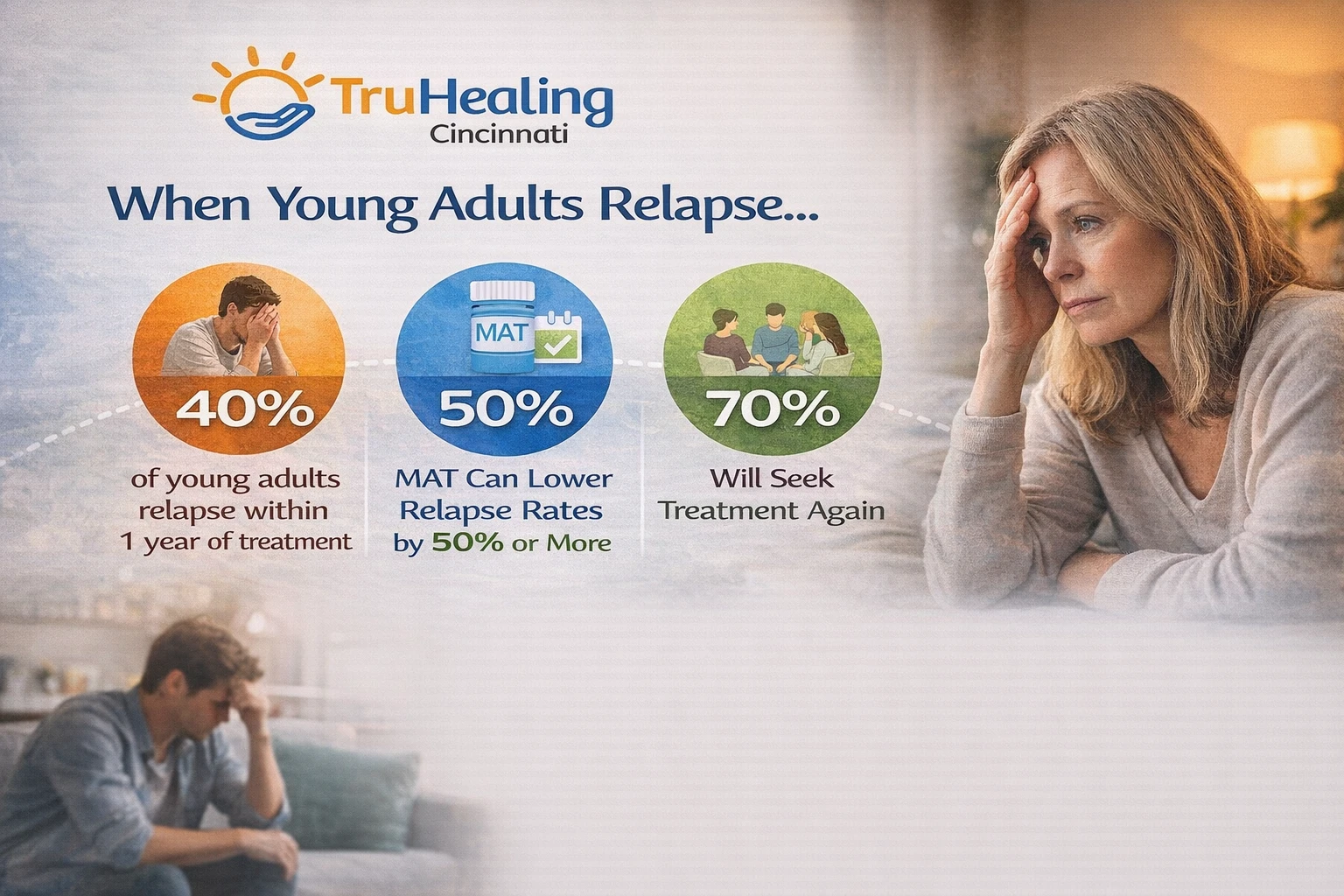
First, let’s name a hard truth: relapse is common, especially among young adults in early recovery. Not because they didn’t care. Not because you didn’t support them enough. But because addiction, especially opioid addiction, changes how the brain works.
Young adults are still in the thick of brain development—especially in areas that govern impulse control, emotional regulation, and long-term decision making. On top of that, they’re navigating a storm of life changes: identity, independence, relationships, money, school, work.
When stress hits, even briefly, old coping habits resurface quickly.
Here’s what often leads to relapse in this age group:
- Emotional overwhelm (grief, loneliness, anxiety)
- Unstructured time or sudden life transitions
- Overconfidence in recovery (“I’ve got this now”)
- Lack of accountability or peer support
- Mental health challenges not fully addressed in initial treatment
Relapse doesn’t mean treatment didn’t work. It means the support system needs to be strengthened.
What Relapse Looks Like (And What It Doesn’t)
It might start subtly: missed calls, forgotten commitments, irritability, a change in friend groups. You might hear them say, “I’m just stressed,” or, “I don’t want to talk about it.” The signs are often there before the crisis.
Relapse doesn’t always look like dramatic overdoses or disappearing acts. Sometimes it looks like them showing up, but differently. More withdrawn. Less honest.
And sometimes it looks exactly the same—until it doesn’t.
You might wonder, How did I miss it?
But this isn’t your fault. Relapse is built on secrecy. It hides by design.
What’s important now is this: the return to use has happened. And they need support again—not punishment, not panic, not pressure. Support.
What Happens When They Return to Opioid Addiction Treatment
The first thing to know? It’s not a copy-paste of last time. Treatment after relapse is not about starting over. It’s about starting from here.
Here’s how our clinical approach shifts when a young adult returns after relapse:
1. A Deeper, Judgment-Free Assessment
We begin by exploring what contributed to the relapse. We ask questions gently:
- What triggered the return to use?
- What coping skills didn’t stick?
- What did you avoid during your last treatment?
We use those answers to inform what comes next—not to assign blame, but to create a more tailored, relevant care plan.
2. Re-Evaluating Level of Care
If your child did outpatient before, they may need a higher level of structure now—like residential or a partial hospitalization program (PHP). This isn’t punishment. It’s a way to create more safety and more time for stabilization.
3. Integrating Medication-Assisted Treatment (MAT)
If they weren’t previously on MAT, we may recommend it now. Suboxone or other medications can reduce cravings, stabilize brain chemistry, and significantly reduce overdose risk—especially important after a break in sobriety when tolerance is lower.
4. Family Involvement and Support
This time, we may involve you more—if you’re willing. Family therapy, parent coaching, and education sessions help rebuild trust and improve communication. Not because you caused the relapse—but because your relationship with your child can be part of the healing process.
5. Aftercare Planning That’s More Realistic
Post-treatment life needs to include not just sobriety goals, but systems: employment, school support, housing, peer recovery, therapy continuity. We help create a sustainable plan that addresses the cracks relapse exposed.
What Parents Should Expect Emotionally
This isn’t your first time facing the fire—but somehow, this time burns differently.
You might feel:
- Grief for the version of your child you thought was returning
- Anger that they “wasted” the treatment you worked so hard to support
- Shame (yes, even when you know you didn’t cause it)
- Guilt for not seeing it coming, or not setting firmer boundaries
- Exhaustion from years of emotional whiplash
All of this is normal. And none of it makes you a bad parent.
If your child is in treatment—or returning to it—it’s okay for you to get support too. Therapy, support groups for parents of addicts, or even just conversations with other families who’ve been there can lighten the emotional load.
You don’t have to be their rescuer. You just need to be a safe and stable presence. That’s more than enough.
How to Support Your Child Without Enabling
There’s a delicate balance between support and enabling—and relapse often makes that boundary feel even blurrier.
Here’s what healthy support can look like:
- Encouraging treatment re-entry without forcing it
- Refusing to lie or cover up their behavior
- Setting boundaries around money, living arrangements, or communication
- Offering love that doesn’t require them to perform perfection
- Saying no when it protects your peace
If they’re open to returning to treatment but aren’t sure where, you can explore local options with them. Opioid addiction treatment in Lexington, Kentucky or Lawrenceburg, Kentucky may be a fit if you’re near those areas.
What You Can Say (When You Don’t Know What to Say)
If you’re struggling to find the words, you’re not alone. Here are a few phrases other parents have found helpful during the return-to-treatment window:
- “I’m hurting too, but I still love you.”
- “You don’t have to fix everything today. You just have to stay in treatment.”
- “I’m proud of you for being honest, even if it’s hard.”
- “You are more than your relapse.”
- “We’ll walk this next part together—but I won’t carry it for you.”
You don’t need perfect words. You just need to stay steady.
FAQs: Parents of Young Adults Returning to Opioid Treatment
Is it common for young adults to relapse?
Yes. While it’s painful, it’s not unusual. Many young adults need multiple rounds of treatment or adjusted levels of care before sobriety stabilizes. This isn’t a sign that treatment failed—it’s a sign that treatment is still needed.
Will they be judged for relapsing?
Not here. At TruHealing Cincinnati, relapse is treated as an event that provides useful clinical insight—not a failure. Our team supports returning clients with understanding and updated care planning.
How can I avoid enabling without abandoning them?
By setting clear, loving boundaries. You can support treatment engagement while refusing to fund harmful behavior. In family sessions, we help you clarify those lines together.
Should they go back to the same treatment center?
Not always. Some young adults benefit from returning to a familiar place. Others need a new environment. We can help assess what’s best based on personality, progress, and history.
What if they don’t want to return to treatment?
This is hard—but common. Our team can help with compassionate outreach, support you in finding intervention resources, and offer next steps even if they’re currently resistant.
The Story Isn’t Over—It’s Just Not the Chapter You Wanted
You didn’t expect to be here again. And we’re so sorry that you are.
But here’s the truth: relapse isn’t the end of the story. It’s not even the final plot twist. For many families, it’s the moment things begin to go deeper—into more honesty, more sustainable healing, more realistic support.
Your child can return to treatment. And this time, it might hold more. More structure. More insight. More hope.
Call (888) 643-9118 to learn more about our Opioid Addiction Treatment services in Cincinnati, Ohio.
You’re not alone. Not in the relapse. Not in the return. Not in the healing.