
If you’ve ever wondered “Do I actually need help?” or “What would treatment even look like?”—you’re not alone. Many people exploring opioid addiction treatment aren’t in crisis. They’re simply noticing a quiet discomfort. A pattern. A worry they can’t ignore anymore.
At TruHealing Cincinnati, we meet people in exactly that space. We don’t expect you to show up with answers. Our job is to help you ask the right questions—and to walk alongside you as the answers unfold.
In this blog, we’ll break down how clinicians evaluate opioid use in the context of treatment. Whether you’re curious, nervous, or somewhere in between, here’s what you can expect from the clinical side of healing.
Explore our opioid addiction treatment approach in Cincinnati, Ohio
Why Evaluation Matters—Even If You’re Not Sure You “Qualify”
Opioid misuse doesn’t always look like addiction. For some people, it started with a prescription after surgery or an injury. For others, it’s become a way to cope with emotional pain, anxiety, or exhaustion.
That’s why clinical evaluation matters. Not because you need a label—but because understanding the relationship you have with opioids is the first step to changing it.
We don’t start with assumptions. We start with curiosity. Just like you.
Step One: A Judgment-Free Conversation
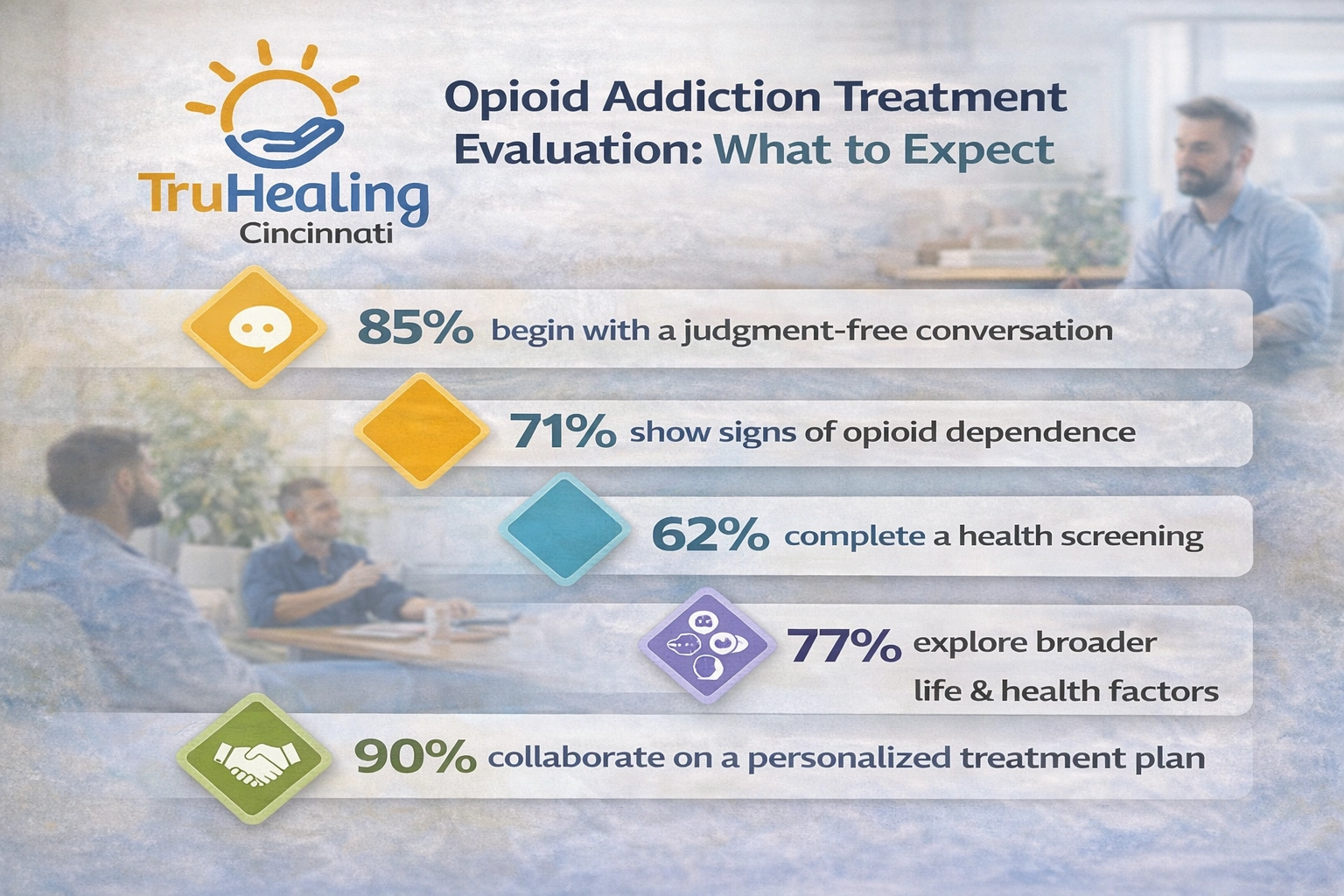
When you meet with a clinician, we begin with a clinical interview. Think of it less like an “assessment” and more like a structured, honest conversation.
We might ask:
- What types of opioids have you used? (prescription painkillers, heroin, fentanyl, etc.)
- How often and in what amounts?
- How did it start? Was there an event, stressor, or trigger?
- Have you tried to cut back or stop before?
You don’t have to tell your whole story perfectly. This isn’t about proving anything—it’s about building a clear picture of what you’ve been carrying.
We know how hard it is to say this stuff out loud. That’s why we meet it with care, not criticism.
Step Two: Noticing Dependence Without Defining You
One of the next steps in evaluating opioid use is identifying signs of dependence. We don’t do this to reduce you to a diagnosis. We do it to guide the safest and most effective treatment plan.
Signs we might look for include:
- Needing higher doses to get the same effect (tolerance)
- Feeling sick, anxious, or physically unwell when not using (withdrawal)
- Spending a lot of time thinking about, getting, or using opioids
- Losing interest in other things that once mattered to you
If any of these sound familiar, it doesn’t mean you’re broken or beyond help. It simply means your body and brain are asking for something different now—and there are safe ways to respond.
Step Three: Using Screening Tools (They’re Not Tests)
Clinical evaluation may include standardized screening tools. These help us better understand the impact of opioid use on your mental, emotional, and physical health.
You might encounter:
- DSM-5 criteria for opioid use disorder (helps classify severity)
- Clinical Opiate Withdrawal Scale (COWS) if detox support is needed
- Mental health screenings (for depression, anxiety, PTSD, etc.)
These tools give structure to your story—but they don’t replace it. We know that behind every checkbox is a person with context, history, and strength.
Step Four: Exploring the Bigger Picture
Substance use doesn’t happen in isolation. We want to know:
- How is opioid use affecting your relationships?
- Are you sleeping okay?
- Is it harder to focus at work or school?
- Do you feel emotionally numb or on edge?
These questions help us understand where you are right now—not just in terms of substance use, but life as a whole. And that’s essential for making a care plan that fits you—not the other way around.
Step Five: Collaborative Treatment Planning
After the evaluation, we talk with you, not at you. You’ll never be handed a plan and told “this is what you have to do.”
Instead, we discuss:
- What level of care would feel most sustainable?
- Whether medication-assisted treatment (MAT) would be helpful
- How therapy—individual, group, or trauma-focused—could support you
- What you’re willing to explore and what feels too overwhelming right now
There’s room for your questions. For your hesitations. For your agency.
This isn’t about assigning you a path. It’s about building one together.
It’s Okay to Explore Without Committing (Yet)
Here’s something we say often: You don’t have to be sure you need treatment to talk to someone about it.
Being curious about your relationship with opioids is reason enough to reach out. Wanting to feel more connected to yourself is valid. Feeling like you’re living a double life—and wondering if there’s another way—is valid.
Whether you’re using occasionally, regularly, or not at all but still thinking about it—your experience matters. You deserve to understand it, not hide from it.
If you’re looking for a place that treats you like a human being first, not a diagnosis, you’ll find that at TruHealing Cincinnati.
And if you’re nearby and seeking support options, know that we also help people looking for opioid addiction treatment in Lawrenceburg, Kentucky and surrounding areas like Lexington and Louisville.
Frequently Asked Questions
Do I have to be using heavily to qualify for opioid addiction treatment?
No. We work with people across the spectrum—from those using occasionally but feeling uneasy, to those struggling with daily use or withdrawal symptoms. If your use is affecting your life in any way, we’re here to help.
Will I be judged if I’m not ready to quit completely?
Absolutely not. Our goal is to meet you where you are, not where we think you “should” be. Many people come to us unsure of their goals, and that’s okay. Exploration is a valid stage of recovery.
What if I used opioids in the past but I’m not using now?
Even if you’re not currently using, treatment can still support you in understanding past use, processing trauma, managing mental health symptoms, or preventing future patterns. Evaluation is about insight—not just current behavior.
Is medication-assisted treatment (MAT) required?
No. MAT is one tool in a comprehensive approach. Some people benefit from medications like Suboxone or methadone, while others prefer non-medication options. We’ll talk about what feels right for you.
Can I do treatment while still working or going to school?
Yes. We offer flexible care options—including outpatient programs—that are designed to fit around your responsibilities. Healing doesn’t have to mean pausing your life; in fact, it often helps you re-engage with it.
What if I’ve been through treatment before and it didn’t help?
You’re not alone. Many people explore treatment multiple times before finding the right fit. What matters is what you need now, not what happened then. We won’t judge your past—we’ll focus on your next step.
What happens after the evaluation?
After the assessment, we’ll share our clinical impressions and walk you through potential treatment options. You’ll have a chance to ask questions, express preferences, and decide what feels like the right next step. You’re always in the driver’s seat.
You Don’t Need to Know Everything to Begin
You don’t have to commit to a program, declare sobriety, or explain everything that’s ever happened to you. You just have to be curious enough to ask: Could this be something worth understanding?
We believe it is.
Call (888) 643-9118 or visit TruHealing Cincinnati’s Opioid Addiction Treatment in Cincinnati, Ohio to take the first step—without pressure, without shame, and with the clinical support you deserve.
Let us meet your curiosity with care. Your questions are welcome here.