
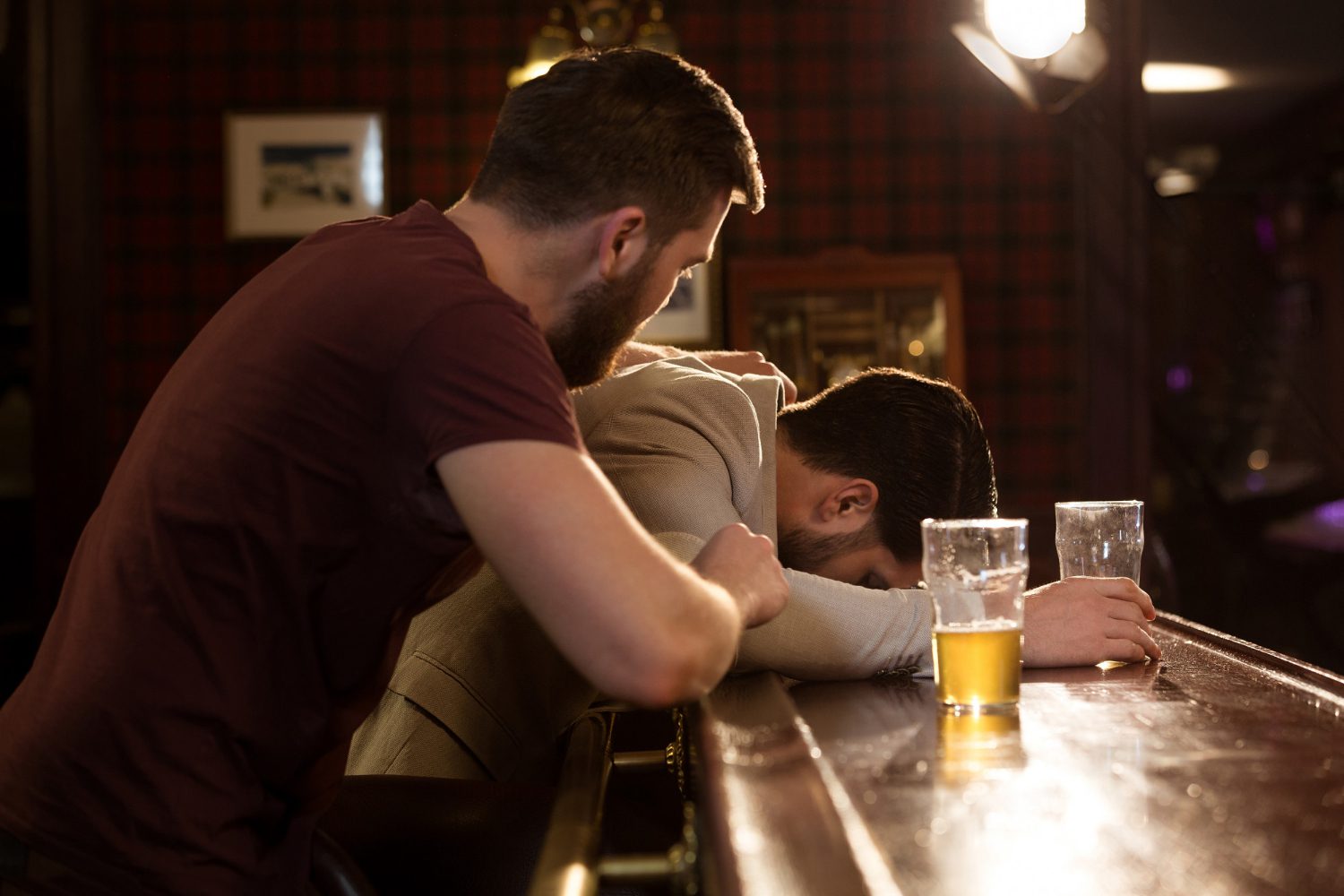
Some people crash. Others quietly wear down.
You might be in that second group—the ones who don’t make headlines but carry the weight of a thousand expectations anyway. The ones who still show up to work, still smile when they have to, still answer the texts, even when they feel like they’re unraveling inside.
If that sounds like you, you’re not alone. And if alcohol has slowly become the one thing that feels like it works—just for a little while—you’re not broken. You’re exhausted.
At TruHealing Cincinnati, we work with people like you every day: high-functioning, emotionally burned out, quietly overwhelmed. Alcohol addiction treatment isn’t just about stopping drinking—it’s about finding relief, clarity, and a way back to yourself. Learn more about our alcohol addiction treatment services in Cincinnati, Ohio, or take a moment to exhale. You’re allowed to want more peace.
When Drinking Becomes a Quiet Survival Strategy
Burnout doesn’t always look like collapse. Sometimes it looks like managing everything except your own emotional wellbeing. It looks like getting through the day—then reaching for a drink to make the edges softer, to help you “come down,” to turn the volume down on the overwhelm.
It’s not always reckless. It might even look socially acceptable. But slowly, the glass of wine after work becomes essential. The nightcap becomes routine. Drinking stops being something you enjoy—and starts being the only time you feel okay.
This is the hidden face of alcohol addiction in burnout. It doesn’t scream for help. It whispers. And the longer it goes on, the more disconnected you feel—not just from others, but from your own needs.
Treatment isn’t about taking away the only thing that seems to work. It’s about offering something better: sustainable peace, not numbing; real rest, not escape.
The Overlap Between Emotional Burnout and Alcohol Use
Burnout and alcohol misuse feed each other in a painful loop:
- Burnout increases emotional exhaustion, anxiety, and sleep problems.
- Alcohol temporarily numbs those symptoms but disrupts sleep and emotional regulation.
- The next day feels even worse, which leads to more drinking.
You don’t need to be an “alcoholic” in the traditional sense to get caught in this cycle. In fact, many people we help never saw themselves as having a drinking problem—they just knew they were tired, disconnected, and not okay.
Recognizing this pattern is not a failure. It’s the beginning of something new.
What Real Alcohol Addiction Treatment Looks Like
At TruHealing Cincinnati, we tailor alcohol addiction treatment to the person—not the stereotype.
There is no one-size-fits-all path. Instead, we create space for healing that matches the exhaustion you’ve been living with. For many clients navigating both burnout and alcohol use, we focus on:
- Physical recovery – Helping your body restore balance through detox, nutrition, and rest.
- Emotional processing – Therapy that addresses not just alcohol, but the grief, pressure, and expectations underneath it.
- Connection without pressure – Support groups where you don’t have to perform or pretend.
- Tools for real-life resilience – Strategies to manage stress, relationships, and energy once you’re back outside treatment.
You’re not expected to show up “ready.” Just present. Healing happens from there.
Recovery Stories That Begin in Burnout
We’ve had clients tell us they didn’t even realize they were burnt out. They just thought they were bad at life. Lazy. Failing.
One client, a nurse in her thirties, said:
“I didn’t think I deserved help. I thought I was just weak—that everyone else was handling life better than me. But when I got here, they didn’t tell me to toughen up. They told me to rest. That changed everything.”
Another client described treatment like this:
“The first few days, I couldn’t stop crying. Not from withdrawal—from relief. I didn’t have to hold it all together anymore.”
– Outpatient Client, 2023
These stories aren’t dramatic. They’re deeply human. And they’re a reminder that sometimes the bravest thing you can do is admit you’re tired of pretending everything’s fine.
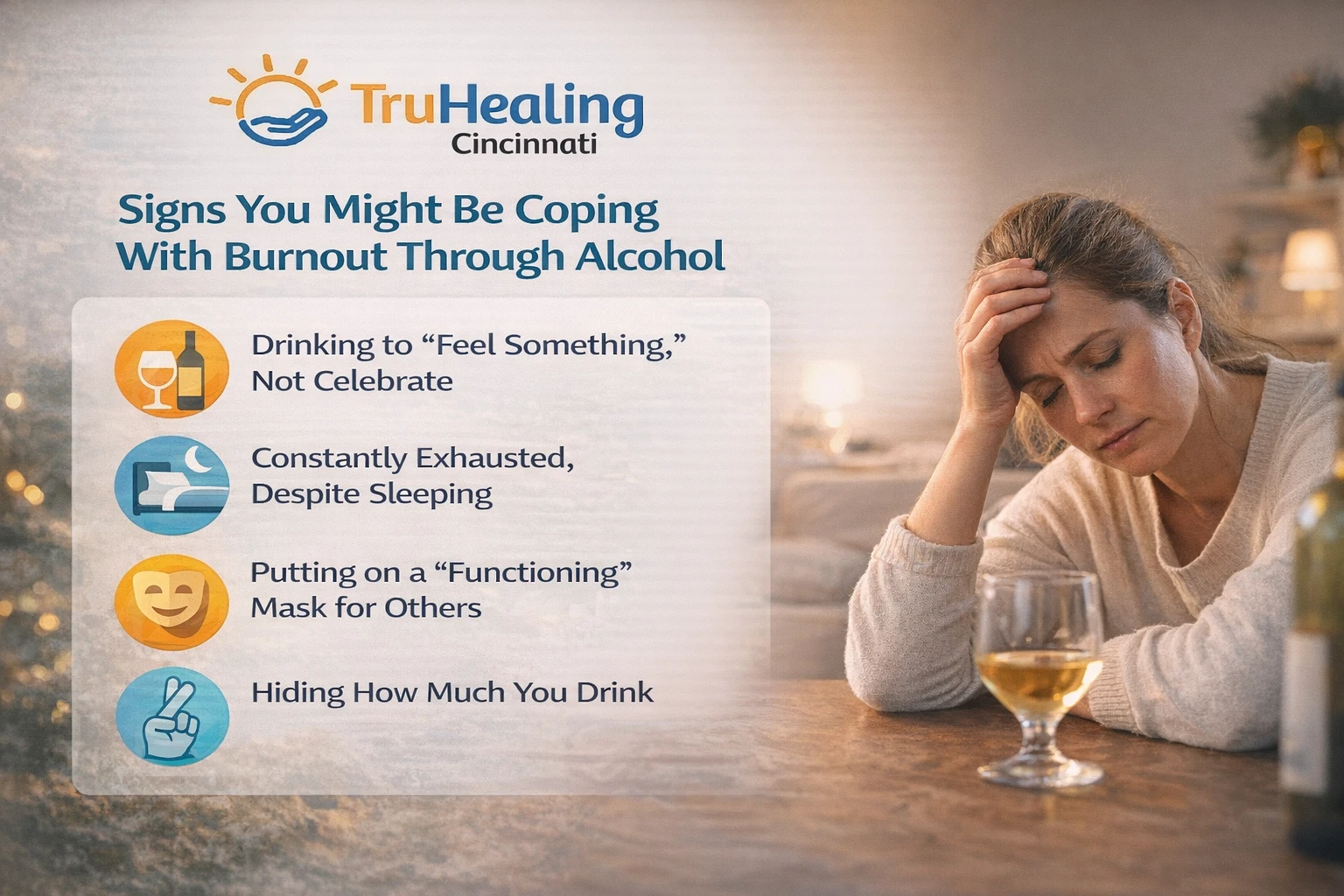
Signs You Might Be Coping With Burnout Through Alcohol
Still unsure whether treatment is “for you”? Here are a few quiet signs that your alcohol use might be more about survival than celebration:
- You drink not to have fun—but to feel anything at all.
- You’re constantly exhausted, even if you’re technically sleeping.
- You’ve stopped feeling like yourself, even if life looks “fine” from the outside.
- You find yourself hiding how much you drink—from others or even from yourself.
- You worry what would happen if you didn’t have that drink at the end of the day.
These aren’t failures. They’re signals. And you don’t have to wait for a crisis to respond to them.
How Treatment Helps You Recover More Than Sobriety
Sobriety is a start. But for people dealing with emotional burnout, recovery means so much more.
Alcohol addiction treatment helps you:
- Reconnect to your own needs – Many burned-out people don’t even know what they enjoy anymore. Therapy can help you rediscover that.
- Create boundaries that protect your energy – Not everything is yours to carry.
- Feel things again – Safely, gradually, with support.
- Build a life where alcohol isn’t necessary – Not because you “shouldn’t,” but because you truly don’t need it anymore.
We believe healing should feel like coming home to yourself—not a punishment.
You Deserve Help Wherever You Are
You don’t have to be in Cincinnati proper to begin recovery with us. If you’re nearby, exploring alcohol addiction treatment in Lawrenceburg, Kentucky or seeking support in Lexington, Kentucky, our team is here to walk with you.
Our programs are designed to meet you with compassion—whether you’re stepping into care for the first time or returning after time away. There’s no shame here. Just next steps.
FAQs About Alcohol Addiction Treatment for Burnout
Is alcohol addiction treatment really necessary if I’m just burned out?
If alcohol use has become your main way to cope—and you’re feeling emotionally numb, disconnected, or anxious without it—treatment may be more helpful than you think. Burnout and alcohol often reinforce each other, and treating both together gives you a stronger foundation for recovery.
Do I have to stop drinking forever?
Not everyone who seeks treatment identifies with being “sober for life.” What matters is understanding the role alcohol is playing in your life, and deciding whether it’s helping or hurting you. Many people find that once they heal the emotional exhaustion, they no longer feel the same pull toward drinking.
What if I don’t feel “bad enough” for rehab?
We hear this all the time. Emotional pain doesn’t always look dramatic. If you feel like something’s not right—if you’re tired, checked out, or hiding how much you’re struggling—you’re not overreacting. You’re allowed to ask for help.
Will I be judged for not having hit rock bottom?
Absolutely not. Many of our clients are high-functioning professionals, parents, caregivers, or students who’ve simply reached their limit. We meet you with understanding, not judgment.
What’s the first step to getting help?
You can start by calling us. You don’t need all the answers. Our team will walk you through what to expect, help you decide what level of care is best, and make sure you feel supported every step of the way.
You’re Tired. We See That. Let’s Rest, Then Rebuild.
You’ve spent so long surviving, managing, holding it together. But there’s a difference between functioning and truly living. If you’re emotionally exhausted, quietly unraveling, or just ready to feel something more than numb—we’re here.
Call (888) 643-9118 to learn more about our Alcohol Addiction Treatment services in Cincinnati, Ohio. There’s space for you here—to rest, to feel, to heal.