

Some people imagine suicidal thoughts as dramatic moments—alarm bells, emergencies, sudden decisions. But for many of the individuals I’ve worked with as a clinician, the truth is much quieter. Suicidal thoughts often grow in the same shadows where alcohol dependence lives: the late‑night hours, the numbing routines, the exhaustion that blurs one day into the next.
If you’re reading this, you may know that quiet darkness well.
You might not want to die.
You just can’t see how to keep living the way you have been.
This is the overlap—where alcohol becomes both the escape and the trap, and where suicidal thoughts slip in not because you want an ending, but because you can’t imagine another beginning.
My goal here is simple: to gently explain why this overlap is so common, what it means, and how alcohol addiction treatment, whether here in Cincinnati or in surrounding areas like Lawrenceburg and Lexington, can interrupt a cycle that feels impossible to escape.
Let’s go slowly.
When Alcohol Stops Helping and Starts Pulling You Under
Most people don’t start drinking to self‑destruct.
They drink to cope.
To sleep.
To feel less alone.
To turn the volume down on thoughts that never seem to stop.
Alcohol is a depressant—it softens, numbs, slows. For someone carrying depression, anxiety, trauma, or emotional exhaustion, that feeling can feel like relief.
Until it doesn’t.
Because over time:
- Alcohol stops helping you sleep.
- It magnifies sadness instead of dulling it.
- The numbness turns into a heaviness you can’t shake.
- The sense of “I’m overwhelmed” slowly becomes “I can’t do this anymore.”
That’s the part people don’t talk about.
Not the drinking itself—but the quiet emotional erosion that follows it.
I’ve sat across from many individuals who tell me, “I’m not trying to hurt myself. I just don’t care what happens anymore.” That indifference is a red flag—not of weakness, but of deep overwhelm.
And alcohol is often at the center of that shift.
The Quiet, Dangerous Spiral
Here’s the clinical reality in simple human terms:
Alcohol lowers your ability to manage stress.
Alcohol increases hopelessness.
Alcohol intensifies impulsive thoughts.
Emotionally, that means this:
- You drink to numb feelings.
- Alcohol makes your brain less able to bounce back from sadness.
- That sadness becomes heavier, quicker.
- Drinking increases because you’re trying to outrun the heaviness.
- Sleep gets worse.
- Shame grows.
- Isolation increases.
- Thoughts darken.
- You drink more to make the thoughts go away.
And then—one night—you realize alcohol isn’t taking the edge off anymore. It’s pushing you toward an edge you never wanted to be near.
This spiral doesn’t happen all at once. It happens sip by sip, night by night, moment by overwhelmed moment.
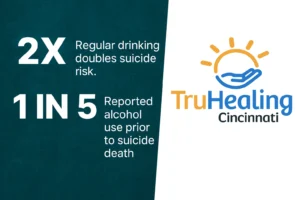
Suicidal Thoughts Don’t Always Mean You Want Death
This is something I tell clients often:
There’s a difference between wanting life to stop hurting and wanting life to end.
Many people experiencing suicidal ideation don’t want to die at all.
They want:
- Rest
- Relief
- Stillness
- A pause button
- An end to the weight they’ve carried alone
Alcohol sometimes masquerades as that pause button.
But in the long run, it becomes part of the weight.
A person who is suicidal but doesn’t want to die often says things like:
- “I just want to disappear for a while.”
- “I don’t want to be here, but I don’t want to be gone.”
- “I just can’t do this version of life anymore.”
These statements aren’t manipulative or dramatic. They’re honest. And they’re treatable.
This is exactly where support, connection, and treatment can make all the difference.
Where Alcohol Addiction Treatment Fits In
(And Why It Helps Both the Drinking and the Darkness)
Many people think alcohol addiction treatment only focuses on drinking. But treatment, especially here at TruHealing Cincinnati, actually addresses:
- Depression
- Anxiety
- Hopelessness
- Trauma
- Numbness
- Thought patterns that feel stuck
- The emotional pain alcohol has been covering
Treatment doesn’t just interrupt the alcohol use.
It interrupts the hopelessness that grows around it.
Here’s how:
1. You get a safe detox, not a frightening one.
Alcohol withdrawal can be emotionally brutal.
Treatment stabilizes your body so your emotions can stabilize too.
2. You get support instead of silence.
Isolation feeds suicidal thoughts.
Connection weakens them.
3. You learn to replace numbness with real relief.
Not toxic positivity.
Not “cheer up.”
Actual coping tools that work at 1 a.m. when everything hurts.
4. Your brain starts to heal.
Once alcohol isn’t constantly disrupting brain chemistry, mood regulation improves.
Thoughts soften.
Impulses steady.
5. You get clinicians trained to help you feel safe—not judged.
We don’t ask “Why would you think that?”
We ask “How can we support you through this moment?”
This is the heart of treatment.
What Treatment Feels Like (From a Clinician’s Perspective)
Treatment often surprises people.
They expect interrogation.
They expect shame.
They expect to be told what they “should” do.
Instead, it usually looks like:
- A therapist speaking gently.
- A quiet room where you can breathe.
- Support staff helping you through fear without pressure.
- Group sessions where someone else says exactly what you’ve been thinking.
- People who understand the difference between wanting help and not knowing how to ask for it.
I’ve watched people walk into treatment convinced they don’t belong here.
And I’ve watched them walk out months later saying:
“I didn’t realize how heavy everything was until I wasn’t carrying it alone.”
Treatment doesn’t magically fix pain.
But it makes the pain manageable.
It makes life feel possible again.
You Don’t Need to Hit “Rock Bottom” to Deserve Help
One of the biggest misconceptions people hold is the idea that they have to lose everything to qualify for treatment.
Let me say this clearly:
You don’t have to fall apart to deserve care.
If any of the following resonate, treatment is appropriate:
- You’re drinking more to cope with sadness.
- You feel emotionally numb most of the time.
- You’ve had thoughts like “What’s the point?”
- You’re tired—not in a sleepy way, but in a soul‑tired way.
- You think people would be better off without you.
- You don’t want to die, but you don’t feel alive either.
This is enough.
You are enough.
And treatment can help.
FAQs About Alcohol Use and Suicidal Thoughts
Is it normal to feel suicidal when drinking heavily?
Yes. Alcohol worsens depression, lowers inhibition, and intensifies negative thoughts. Many people experience suicidal ideation during or after heavy drinking.
Do I have to talk about my suicidal thoughts in treatment?
You don’t have to say everything at once. You can share at your own pace. Clinicians are trained to create safety, not pressure.
What if I’m ashamed to admit how much I’ve been drinking?
Shame is common, but unnecessary. We’ve heard it all. The goal isn’t judgment—it’s support.
Do I have to quit drinking before I start treatment?
No. Many people enter treatment while still drinking. Programs can help you detox safely.
Is outpatient care enough if I’m struggling with dark thoughts?
Often, yes. Outpatient programs offer intensive support without requiring you to leave home. This can be especially helpful for those in nearby areas like Lexington or Lawrenceburg.
What if my suicidal thoughts come back during treatment?
We are trained to help you through them safely and compassionately. You won’t face those moments alone.
One More Thing You Deserve to Hear
You don’t have to convince anyone your pain is real.
You don’t have to be okay right now.
And you don’t have to walk through this alone.
Alcohol may have been helping you cope—
but there’s a way forward that doesn’t require you to lose yourself to it.
Even if you’re exhausted.
Even if you’re scared.
Even if you’re not sure you deserve help.
You do.
And this is a place that will meet you gently.
Call (888) 643-9118 to learn more about our Alcohol Addiction Treatment services in Cincinnati, Ohio.
You’re allowed to stay. You’re allowed to heal. You’re allowed to want tomorrow.