

The first few weeks after you stop drinking can feel like a fog you didn’t expect. Maybe you’re proud of your progress, but something still feels…off. Maybe you were ready for the physical symptoms of withdrawal, but not the emotional ones that sneak in afterward.
If you’re in early recovery and you’re wondering why you feel so raw, numb, lonely, or overwhelmed—you’re not broken. You’re healing.
Emotional changes are a very real part of the alcohol addiction treatment process, especially within the first 30 to 90 days. At TruHealing Cincinnati, we see this pattern again and again, and we want to help you understand it—not so you can avoid it, but so you know how to move through it.
Why do I feel more emotional now that I’ve stopped drinking?
Because alcohol masked your emotions. That’s what it does. It slows down your nervous system, dulls anxiety, and disconnects you from the emotional pain underneath. It doesn’t fix the hurt—but it numbs it, for a while.
So when you stop drinking, that buffer disappears. The anxiety comes back. The shame comes back. The old grief or loneliness that you buried years ago may start knocking again.
You didn’t do anything wrong. You’re not being dramatic. This is your body and brain re-learning how to feel without numbing.
And while that process can be uncomfortable—it’s also progress.
What’s going on in my brain during early sobriety?
During the first 90 days of alcohol addiction treatment, your brain is adjusting to life without alcohol. Here’s what’s happening:
- Dopamine levels (your brain’s reward chemical) are regulating after being overstimulated by alcohol.
- GABA and glutamate, the chemicals that manage relaxation and excitement, are trying to rebalance.
- Your limbic system (which controls emotions) is sensitive and highly reactive.
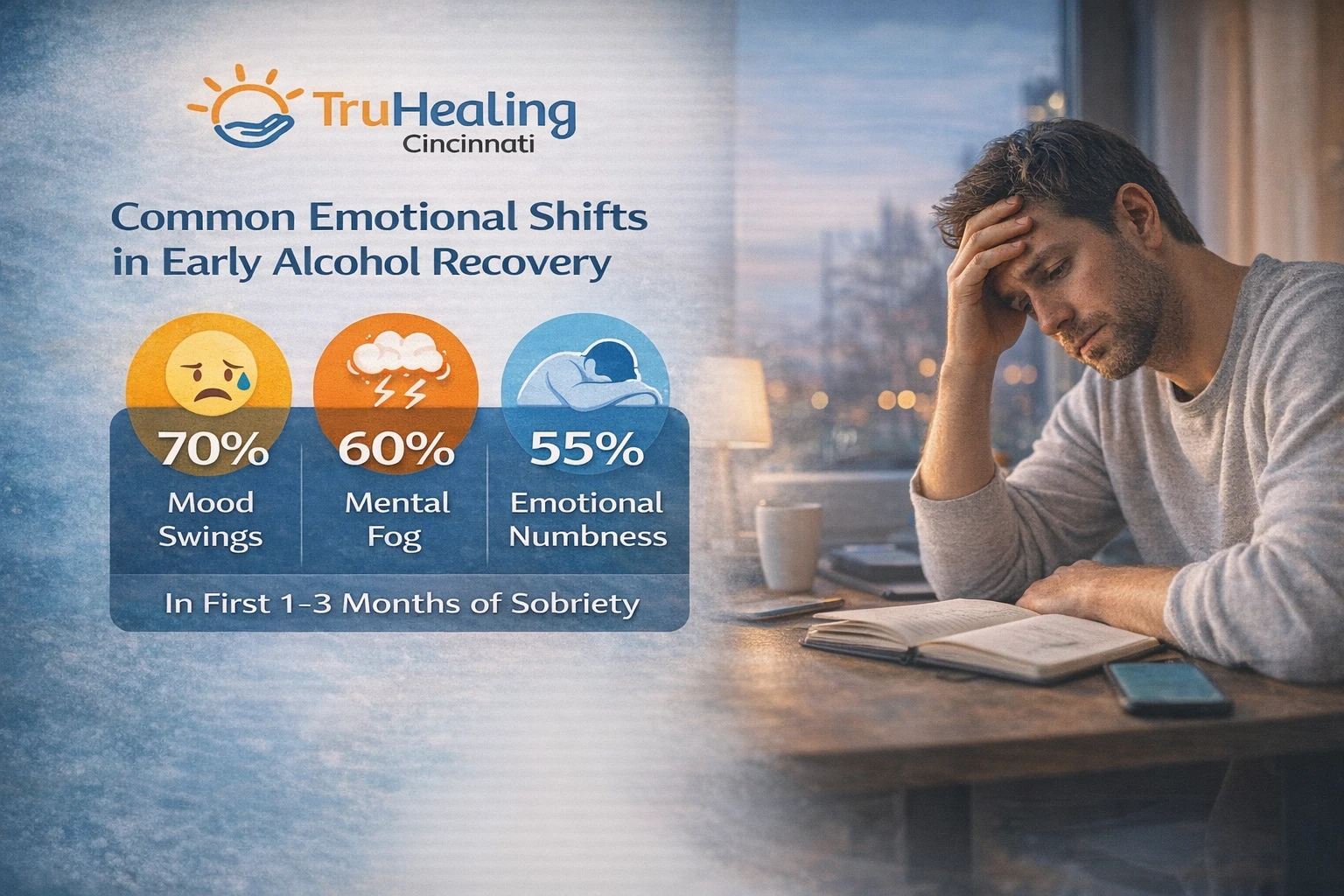
This chemical shift can create intense mood swings. You may cry easily. You may feel nothing at all. You may feel joy for the first time in a while—or panic without warning.
It’s not a flaw in your recovery. It’s chemistry—and it stabilizes with time and support.
Why does early recovery feel so lonely, even with support?
Because early sobriety creates space. And space often feels like emptiness at first.
You’ve removed something—alcohol—that filled your time, managed your stress, and helped you connect (even if that connection wasn’t always real or healthy). Without it, you’re left sitting with yourself.
Many people also step back from old social circles in early recovery. That’s a healthy boundary—but it can leave you feeling emotionally stranded. You may look around and think, Who am I without this? Where do I belong now?
The answer doesn’t come all at once. It comes slowly, through therapy, community, and the small brave act of showing up even when you feel alone.
If you’re seeking support nearby, alcohol addiction treatment in Lexington, Kentucky or community support in Lawrenceburg can provide more options for local connection.
Why do I feel emotionally numb instead of alive?
You might’ve expected clarity or joy in recovery—but instead, you feel… nothing. Like you’re watching your life happen from a distance.
This emotional flatness is called anhedonia, and it’s common in the first few months of sobriety. Your brain is slowly re-learning how to produce and respond to natural rewards. That emotional blunting is temporary—but understandably discouraging.
You may also feel numb because it’s a defense. After years of emotional overload or chaos, your system might be protecting you from overwhelm by muting everything at once.
Let that be okay. Let your numbness exist without rushing it away. Talk about it in group. Sit with it in therapy. You’re not doing sobriety “wrong.” You’re just walking through a quiet part of healing.
I’m grieving my old life. Is that normal?
Yes. Even if you wanted to quit drinking. Even if it was destroying you.
Alcohol may have played a huge role in how you socialized, how you calmed down after a hard day, or how you celebrated. Letting go of it can feel like losing a relationship—even if that relationship was toxic.
Grief might come in waves: nostalgia, anger, regret, confusion. You may miss the old routines, or even the person you were when you drank.
Let yourself mourn. That grief is a bridge—not a wall. It helps you process the loss so you can create something new.
What emotional shifts are common in weeks 1–4?
In the first month of alcohol addiction treatment, you might experience:
- Mood swings – You may cry easily, feel irritable, or snap unexpectedly.
- Mental fog – Concentration and memory can feel off.
- Sleep disruption – Vivid dreams, insomnia, or fatigue are common.
- Shame spirals – You may start revisiting past actions, relationships, or regrets.
- Cravings as emotions – Cravings often show up as anxiety, restlessness, or agitation.
This is also the time when many people feel the most temptation to isolate. If possible, resist that urge—even if connection feels awkward. Just being in a room with others who get it can be healing.
What about weeks 5–8? Will I feel better?
Usually, yes—but not always in the way you expect.
This is often when your physical body starts to feel stronger. Energy may return. Cravings might ease slightly. But emotionally, this phase can be tricky. Why?
Because now you’re sober enough to feel more—and you’re still learning how to manage it.
You may notice:
- Old emotions resurfacing
- Triggers becoming more obvious
- Confusion about who you are without alcohol
This is a great time to deepen your therapy work. You’re clear enough to begin exploring deeper wounds—and strong enough to stay grounded while you do.
What happens emotionally in the 2–3 month window?
By the time you reach 60–90 days, many people start to feel more regulated—but also more reflective. You may find yourself asking:
- What now?
- Who am I sober?
- What kind of life do I want to rebuild?
This period can bring:
- Clarity about relationships and boundaries
- Hope as you notice small wins and emotional stability
- Grief for things you lost or avoided while drinking
- Loneliness that feels less painful and more like space for new things
It’s a powerful window for change—and also one that benefits from support and structure. Many clients shift from detox or residential care into IOP or individual therapy around this time.
What if I feel worse before I feel better?
That’s actually expected. It’s often said that the first 90 days are like emotional detox. You’re not just clearing your body of substances—you’re clearing your system of patterns, lies, numbing, and avoidance.
There may be days where you feel like you’re going backward. You’re not. You’re just deeper in.
Let those moments be part of the work. Reach out. Go to group. Say, “Today’s hard.” You don’t have to bounce back quickly. You just have to keep going.
Is there anything I can do to ease the emotional discomfort?
Here are a few things that help during this phase:
- Talk about it – Don’t wait until it “makes sense.” Say it messy. Say it confused. Say it numb.
- Stick to structure – Your emotions may be unpredictable. Routine helps anchor you.
- Lower the bar – Some days, showing up is the win.
- Connect, even a little – Text someone. Sit in group. Let someone witness you.
- Practice kindness – You’ve spent years being hard on yourself. Early sobriety is the time to practice gentleness.
Is what I’m feeling proof that treatment isn’t working?
Not at all.
In fact, the emotional intensity of early recovery is often proof that it is working. Treatment doesn’t just help you stop drinking. It helps you feel again. It helps you see the patterns, grieve the pain, and build something honest.
The discomfort isn’t punishment. It’s part of the thawing. And you don’t have to move through it alone.
We’re Here—For the Fog, the Feelings, and the First 90 Days
Whether you’re here in Cincinnati or looking for alcohol addiction treatment in Indianapolis, Indiana, we offer support that honors the emotional complexity of early recovery.
You don’t have to know how to feel better yet. You just have to stay long enough to feel.
Call (888) 643-9118 to learn more about our Alcohol Addiction Treatment services in Cincinnati, Ohio.
We’re not here to fix you. We’re here to walk with you—one feeling at a time.