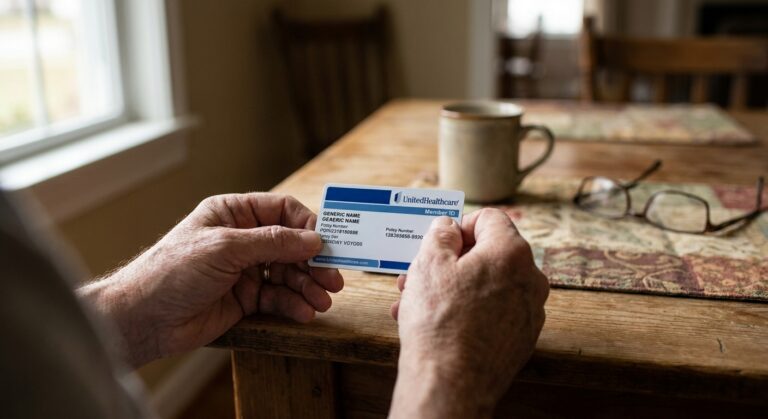
If you have UMR listed on your insurance card and you’re trying to figure out whether it covers rehab in Cincinnati, the short answer is: yes, UMR-administered plans cover addiction treatment, but your actual benefits depend entirely on the specific plan your employer designed. Here’s what that means for you, and how to check your coverage before making any decisions.
What UMR is and how it works as a third-party administrator
UMR is not an insurance company in the traditional sense. It is a third-party administrator (TPA) owned by UnitedHealthcare that processes claims and manages benefits on behalf of employers who self-fund their health plans. According to UMR’s own documentation, the company administers benefits for thousands of employer groups across the country. The distinction matters because UMR does not set your benefits. Your employer does.
When you call UMR’s member services line, you are talking to a company that is executing a plan your employer designed. That is why the question “does UMR cover rehab” does not have a single universal answer. Two coworkers at different companies, both with UMR cards, can have radically different rehab coverage.
How your employer plan controls your benefits
Self-funded employer plans work differently from fully insured plans you buy on the marketplace. Your employer collects premium dollars, bears the financial risk of claims, and contracts with UMR to handle the administrative side: processing claims, managing networks, and coordinating utilization review. Because the employer is the plan sponsor, they set the benefit design. They decide the deductible, the coinsurance rate, whether behavioral health is carved out to a separate vendor, and what treatment modalities get covered.
This is why benefits verification is not optional. It is the only way to know what your specific plan actually pays for rehab. Two people with UMR on their card can walk into the same Cincinnati treatment center and receive very different coverage determinations.
The federal laws that force UMR to cover mental health and addiction
Two federal laws create a baseline that most UMR-administered plans cannot fall below. The Mental Health Parity and Addiction Equity Act (MHPAEA), first passed in 2008 and significantly strengthened by amendments in 2024, requires that mental health and substance use disorder benefits be no more restrictive than comparable medical and surgical benefits. In practice, this means if your plan covers 30 days of inpatient medical care, it cannot impose a stricter day limit on inpatient addiction treatment.
The Affordable Care Act adds another layer for certain plan types, requiring coverage of substance use disorder services as one of ten essential health benefits. The catch is that grandfathered self-funded employer plans have more flexibility to carve out certain requirements. If your employer’s plan predates 2010 and has maintained grandfathered status, some ACA mandates may not apply. For most people with employer-sponsored coverage today, though, parity protections are real and enforceable.
Does UMR cover inpatient rehab?
UMR-administered plans cover inpatient and residential addiction treatment when the stay meets medical necessity criteria. Coverage is not automatic based on diagnosis alone. The plan requires clinical evidence that your condition warrants the inpatient level of care, that a lower level of care is not clinically appropriate, and that the treatment being provided is evidence-based.
Medical necessity criteria UMR uses to approve inpatient stays
UMR, like most commercial insurers, uses the American Society of Addiction Medicine (ASAM) criteria as the foundation for medical necessity determinations. ASAM criteria evaluate patients across six dimensions: withdrawal risk and management needs, biomedical conditions and complications, emotional and behavioral conditions, readiness to change, relapse potential, and recovery environment. A 2020 analysis published in the Journal of Substance Abuse Treatment found that facilities using ASAM criteria for placement decisions showed significantly better treatment matching outcomes compared to facilities using non-standardized criteria.
What this means in practice: to justify inpatient placement under UMR’s utilization management process, your clinical picture needs to show meaningful risk in at least some of these dimensions. Severe withdrawal requiring medical monitoring, co-occurring psychiatric conditions that destabilize in lower-care settings, or a home environment that makes recovery impossible are the most common clinical justifications. If you are medically stable, psychiatrically stable, and have a safe and supportive living situation, UMR’s reviewers are more likely to approve a PHP or IOP level of care rather than residential treatment.
Prior authorization: what it is and how to get it
UMR requires prior authorization for inpatient rehab in virtually all plan configurations. Starting inpatient treatment without authorization does not mean the claim is automatically denied, but it significantly complicates the process and puts you at risk for a retroactive denial. The cleanest path is to secure authorization before or on the day of admission.
To get prior authorization, the treatment facility submits clinical information to UMR’s utilization management team: the admitting assessment, the diagnosis, the proposed level of care, and the clinical justification using ASAM dimensions. UMR then assigns a care manager who reviews the submission and either approves an initial stay (typically measured in days, not the full anticipated length of treatment), requests additional information, or issues a denial. Good Cincinnati treatment centers handle this process for you through their admissions team, which is one practical reason to work with a facility that has experience navigating commercial insurance.
Does UMR cover outpatient and intensive outpatient rehab?
For most UMR plan holders, outpatient levels of care, including partial hospitalization programs (PHP), intensive outpatient programs (IOP), and standard outpatient therapy, are covered benefits. PHP typically runs 5 to 6 hours per day, 5 days per week, and serves as either a step-down from inpatient or a primary level of care for individuals who do not meet residential criteria. IOP usually involves 9 to 12 hours per week across 3 days and is the most common step-down level after PHP.
Coverage for outpatient rehab is generally broader and less contentious than inpatient coverage because the medical necessity bar is lower. If you are clinically appropriate for outpatient care, UMR’s authorization process for PHP and IOP is typically more straightforward than for residential. That said, authorization is still required for PHP in most plans.
How UMR determines which level of care you qualify for
Utilization review does not end at admission. UMR assigns a care manager who conducts concurrent reviews, typically every few days for inpatient and weekly for PHP. These reviews assess whether continued stay at the current level of care remains medically necessary. If the clinical picture improves, the reviewer may recommend stepping down to a less intensive level.
A 2021 report from the Milliman Research Institute found that average commercial insurance authorizations for residential substance use treatment have shortened significantly over the past decade, with most initial authorizations running 7 to 14 days before a concurrent review. Understanding this dynamic helps you set realistic expectations: getting into treatment is step one, and maintaining authorization through the full course of treatment requires ongoing clinical documentation from the facility’s utilization review team.
If you are also researching how detox fits into your coverage picture, that step typically carries its own authorization and is evaluated separately from rehab placement.
Does UMR cover dual diagnosis and co-occurring mental health treatment?
Dual diagnosis treatment, meaning integrated care for addiction and a co-occurring mental health condition like depression, anxiety, PTSD, or bipolar disorder, falls squarely within the parity protections that apply to UMR-administered plans. If your plan covers psychiatric care, it must apply the same standards to addiction care. If it covers both, it must cover integrated treatment that addresses both simultaneously.
This matters practically because many people seeking rehab in Cincinnati are dealing with more than just substance use. A 2022 SAMHSA survey found that approximately 9.2 million adults in the United States had both a mental health disorder and a substance use disorder in the previous year. Treatment that addresses only the addiction while ignoring the underlying or co-occurring psychiatric condition produces worse long-term outcomes.
What parity violations look like and how to spot one
Parity violations are not always obvious. They do not usually take the form of an outright refusal to cover mental health. More commonly, they appear as stricter prior authorization requirements for behavioral health than for comparable medical services, more frequent concurrent review for psychiatric admissions than medical ones, lower reimbursement rates that make it harder to find in-network mental health providers, or non-quantitative treatment limitations applied to mental health but not to surgery or specialty medical care.
If UMR denies your inpatient rehab claim while approving comparable medical admissions without the same documentation requirements, that asymmetry is worth examining as a potential parity violation. The New York State Office of the Attorney General’s 2016 investigation of UnitedHealthcare, UMR’s parent company, found systematic application of overly restrictive medical necessity criteria to behavioral health claims. If you believe a denial reflects a parity violation, an appeal is the appropriate next step, and a treatment center’s utilization review team can help you document the comparison.
Finding an in-network UMR rehab provider in cincinnati
To search for providers, log in to your member account at umr.com and use the provider search tool to find behavioral health facilities in the Cincinnati area. You can also call the member services number on the back of your UMR card and ask a representative to search for in-network substance use disorder treatment facilities.
TruHealing Cincinnati accepts PPO and private insurance plans, including UMR-administered plans. Because network status varies by plan configuration, the most accurate way to confirm your specific benefits is through a direct verification call, either by you or by the admissions team at the facility you are considering. If you want a step-by-step breakdown of how that call works, the guide on verifying your insurance before rehab admission covers the full process.
In-network vs. out-of-network rehab: what the cost difference looks like
In-network providers have contracted rates with UMR, which means the plan’s cost-sharing structure, your deductible, coinsurance, and out-of-pocket maximum applies in the most favorable way. Out-of-network providers do not have contracted rates, which typically means higher cost-sharing, no out-of-pocket maximum protection in some plans, and potential balance billing for the difference between what UMR pays and what the facility charges.
The dollar difference can be significant. For inpatient rehab, an in-network stay might expose you to your deductible plus 20% coinsurance up to your out-of-pocket maximum. The same stay at an out-of-network facility on a plan without out-of-network benefits could leave you responsible for a much larger share of the bill. This is why confirming network participation, not assuming it, is the move that protects your finances.
How to verify your UMR rehab benefits before admission
Call the member services number on the back of your UMR card and ask specifically about behavioral health or substance use disorder benefits. The questions to lead with: What is my in-network deductible and how much has been met? What is my in-network coinsurance for inpatient behavioral health? Is prior authorization required for residential treatment, PHP, and IOP? Is my behavioral health benefit administered by UMR directly or through a separate vendor?
Get the name of the representative, the call reference number, and the answers in writing if possible. A Cincinnati treatment center’s admissions team should handle this verification for you as part of the intake process. If they do not offer that service, that tells you something about how they handle insurance-related complications once you are admitted.
For comparison, if you are considering multiple insurance options, the breakdown of how Optum-administered plans work for rehab covers a similar TPA structure worth understanding.
What UMR typically does not cover for rehab
UMR plans do not cover luxury amenities, resort-style accommodations, or experimental therapies that lack evidence-based support. If a treatment program charges a premium for equine therapy, private chef services, or other non-clinical amenities, those costs come out of pocket regardless of your plan’s coverage levels. The clinical treatment, group therapy, individual counseling, medical management, and medication-assisted treatment are the covered components.
Extended stays beyond authorized limits are also not covered. If UMR authorizes 14 days and the facility keeps you for 21, the last 7 days require either a concurrent authorization extension or they will not be paid. Sober living or transitional housing after formal treatment is generally not a covered benefit under most UMR plans. Balance billing from out-of-network providers, in plans that allow it, can also create unexpected costs after discharge.
Appeals: what to do when UMR denies a rehab claim
A denial is not the end of the process. Under ERISA and ACA regulations, you have the right to appeal a denied claim through UMR’s internal appeals process and, if that fails, through an independent external review. For urgent clinical situations, expedited appeals can be resolved in 72 hours. Standard appeals typically take 30 to 60 days depending on the plan.
The strongest appeals pair clinical documentation with parity arguments. If UMR denied your inpatient stay because they determined a lower level of care was sufficient, the appeal should include the treating clinician’s documentation of why that determination was clinically wrong, referencing ASAM criteria dimensions. A 2019 study in Psychiatric Services found that appeals of behavioral health denials succeed at meaningful rates when clinicians provide thorough ASAM-based documentation. Facilities with experienced utilization review teams handle this process as a standard part of their clinical operations.
UMR rehab coverage in cincinnati: your costs at a glance
Your actual out-of-pocket cost for rehab under a UMR plan depends on four variables: your deductible, your coinsurance rate, your out-of-pocket maximum, and how much of your deductible you have already met at the time of admission. Timing matters more than most people realize. Entering treatment in November, when you may have already met most of your annual deductible, produces a very different financial picture than entering in January when the deductible resets.
There is no single dollar figure that applies universally because plan designs vary so widely. What is consistent across most UMR-administered PPO plans is that some cost-sharing exists, that the out-of-pocket maximum caps your total annual exposure, and that clinical necessity drives authorization rather than a flat day limit.
How to calculate your real out-of-pocket cost before you start
Pull your Summary Plan Description (SPD), which your employer is legally required to provide. Find these numbers: your in-network deductible, your in-network coinsurance percentage for inpatient behavioral health, your in-network out-of-pocket maximum, and your year-to-date deductible accumulation. The formula is straightforward: the remaining deductible comes out of pocket first, then coinsurance applies to covered charges until you hit the out-of-pocket maximum, after which the plan pays 100%.
If you cannot locate your SPD, your HR department has it, and UMR’s member portal shows your year-to-date accumulations. Doing this math before admission is the simplest version of financial planning for rehab, and it prevents the sticker shock that derails treatment before it starts.
UMR coverage for cincinnati residents vs. those traveling for treatment
UMR’s provider network is national. As a TPA for UnitedHealthcare, it operates within UHC’s network infrastructure, which covers facilities across the country. For residents of Dayton, Indianapolis, or other areas surrounding Cincinnati, seeking treatment at a Cincinnati facility does not mean losing network benefits, assuming the facility participates in your specific plan’s network tier.
This has a practical implication: if you live in Dayton and your employer’s UMR-administered plan covers care at a Cincinnati rehab facility, your cost-sharing structure is the same as it would be for a local provider. Distance does not automatically shift a claim into out-of-network territory. What matters is whether the facility has a contract with your specific plan. Verification, again, is the step that confirms this.
Who UMR rehab coverage works best for in cincinnati
UMR coverage delivers its strongest value for rehab when you have an employer-sponsored PPO plan with a reasonable deductible, when you are seeking treatment that matches evidence-based levels of care (inpatient, PHP, IOP), and when you need dual diagnosis treatment that integrates psychiatric care with addiction services. If your employer is a mid-to-large organization with a generous benefits package, your UMR plan likely has solid behavioral health coverage.
People who have already met a significant portion of their annual deductible get particularly strong value from treatment that starts before the plan year resets. If you are comparing UMR coverage to other carriers your employer might offer, understanding how similar PPO plans work for rehab puts the comparison in useful context.
Who should explore other funding options
High-deductible health plans (HDHPs) paired with UMR administration can create real financial barriers to inpatient treatment. If your annual deductible exceeds $5,000 and your savings do not cover it, the financial exposure from a residential stay may require a payment plan or supplemental financing even with solid insurance.
Some self-funded employer plans carve out behavioral health benefits to a separate managed behavioral health organization (MBHO). In that case, UMR handles your medical claims but a different organization manages your mental health and addiction coverage, with its own network, authorization process, and benefit limits. If you call UMR and they redirect you to a different number for behavioral health, you are in a carved-out plan. Treat that referral seriously and run the full verification process with the carve-out vendor, not with UMR.
Plans that explicitly exclude certain treatment modalities, such as medication-assisted treatment (MAT) or residential programs longer than 30 days, also require honest assessment. If the treatment you need is excluded, knowing that before admission is far better than discovering it after discharge.
What to do this week
Call the member services number on the back of your UMR card today. Lead with three questions: Is prior authorization required for inpatient behavioral health and IOP? What is my remaining in-network deductible for this plan year? Is my behavioral health benefit managed by UMR or a separate vendor?
If that process feels overwhelming, the admissions team at TruHealing Cincinnati can run the verification for you at no cost and with no obligation. That call takes the uncertainty off your plate and gives you a real picture of your coverage before you commit to anything. The number to reach TruHealing Cincinnati’s admissions team is available on the facility’s website. That one conversation is the concrete next step that makes everything else clearer.
Frequently asked questions
Does UMR cover residential rehab in cincinnati?
Yes, UMR-administered plans cover residential addiction treatment when the stay meets medical necessity criteria based on ASAM clinical dimensions. Prior authorization is required before or at admission. The specific benefit limits, deductible, and coinsurance depend on your employer’s plan design, which is why benefits verification with UMR before admission is the necessary first step.
How do I know if a cincinnati rehab accepts UMR insurance?
Call the treatment center’s admissions team and ask directly. Because UMR operates as a TPA within UnitedHealthcare’s network infrastructure, network participation varies by plan configuration. TruHealing Cincinnati accepts PPO and private insurance plans including UMR-administered plans. The admissions team can verify your specific benefits and confirm coverage before you make any decisions.
What happens if UMR denies my rehab claim?
You have the right to appeal. UMR’s internal appeals process must be exhausted first, typically within 60 to 180 days of the denial depending on your plan. If the internal appeal fails, you can request an independent external review. Treatment facilities with utilization review teams will support the appeal with clinical documentation. A denial is not a final answer.
Does UMR cover dual diagnosis treatment for addiction and mental health?
Yes. The Mental Health Parity and Addiction Equity Act requires UMR-administered plans to cover mental health and substance use disorder treatment under terms no more restrictive than medical and surgical benefits. If your plan covers psychiatric care, it must cover integrated addiction and mental health treatment under comparable standards. If you believe UMR is applying stricter criteria to behavioral health claims, that asymmetry is the basis for a parity complaint or appeal.
Can someone in dayton or indianapolis use their UMR plan at a cincinnati rehab facility?
Yes. UMR’s coverage is national, operating within UnitedHealthcare’s network infrastructure. Residents of Dayton, Indianapolis, or other surrounding areas can seek treatment at a Cincinnati facility without automatically losing network benefits. What determines cost-sharing is whether the specific facility participates in your plan’s network, not geographic distance from your home. Verification with UMR confirms network status for your specific plan.
Is prior authorization always required for outpatient rehab under UMR?
Prior authorization is required for PHP (partial hospitalization) in most UMR plan configurations. Standard outpatient therapy often requires referral but not always prior authorization. IOP authorization requirements vary by plan. Because requirements differ across employer plans, confirming authorization requirements as part of your benefits verification call prevents claim denials. For a full breakdown of how insurance verification works before rehab admission, that process applies directly to your situation.