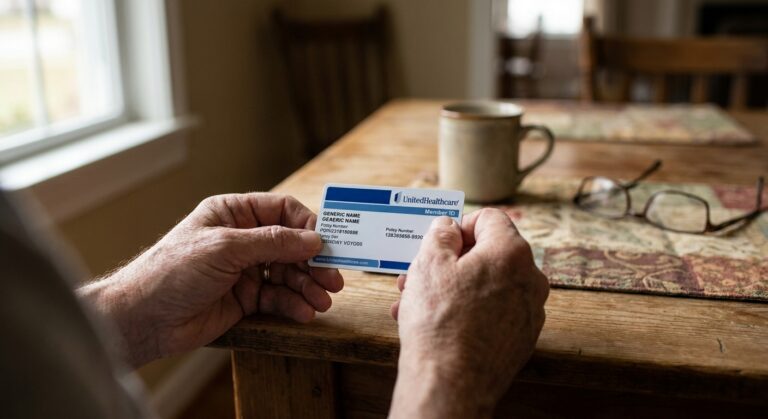
According to SAMHSA’s 2023 National Survey on Drug Use and Health, fewer than 10% of Americans with a substance use disorder who needed treatment actually received it at a specialty facility, and insurance confusion is one of the most cited barriers. If you have UHC coverage and you’re trying to figure out whether it pays for rehab in Cincinnati, the answer is yes , but the details of how much, at what level of care, and through what process matter enormously.
How UHC approaches addiction treatment coverage
Federal law shapes everything about how UHC handles addiction treatment claims. The Mental Health Parity and Addiction Equity Act (MHPAEA) requires that behavioral health benefits, including substance use disorder treatment, receive coverage at least as favorable as comparable medical and surgical benefits. The Affordable Care Act extended this to plans sold on the individual and small group markets. A 2022 report from the HHS Office of the Inspector General found that insurers continue to violate parity protections at higher rates for behavioral health than for any other benefit category, which means knowing the law before you call UHC gives you real leverage.
What federal parity law requires UHC to cover
Parity does not mean UHC pays for everything without restriction. What it means is that UHC cannot apply stricter prior authorization requirements, shorter day limits, or higher cost-sharing to addiction treatment than it applies to analogous medical care. If UHC covers 30 days of inpatient cardiac care without a prior auth review every five days, it cannot require one every five days for residential addiction treatment either. The same principle applies to outpatient visit limits, step-down timelines, and out-of-pocket costs across every level of care.
The difference between “covered” and “authorized”
Coverage existing in your plan documents is not the same as approval to receive treatment. UHC separates these two things deliberately. Your Summary of Benefits and Coverage may confirm that residential rehabilitation is a covered benefit, but you still need prior authorization before admission for UHC to pay. Understanding this distinction before you make a single call saves time and prevents the most common confusion members experience when a facility says UHC is accepted but treatment cannot start immediately.
UHC plan types available in cincinnati and how they affect rehab access
A 2024 KFF Health Insurance Survey found that employer-sponsored PPO plans remain the most common private coverage arrangement in Ohio, accounting for a significant share of commercially insured adults in the greater Cincinnati market. Your plan type determines how much control you have over choosing a rehab facility and whether you need a referral before you can access one.
PPO plans: the widest access to cincinnati rehab facilities
PPO plans give you the most flexibility. You can access both in-network and out-of-network providers without a primary care referral, which matters when you’re choosing a specialized addiction program. For members holding a PPO and trying to place themselves or a family member, the network question becomes about cost-sharing rather than permission. TruHealing Cincinnati accepts PPO and private insurance, and verification with your specific plan determines your out-of-pocket exposure before admission.
HMO and EPO plans: what referral requirements mean for rehab access
HMO and EPO plans restrict your ability to self-refer to a rehab facility. HMO members generally need a primary care physician referral before UHC will authorize behavioral health treatment, and both HMO and EPO plans typically restrict coverage to network providers. If you have one of these plan types, your first step is a call to your PCP, not the treatment center, followed by a call to UHC to confirm which Cincinnati-area facilities fall inside your network.
Levels of rehab care UHC covers in cincinnati
The American Society of Addiction Medicine (ASAM) publishes placement criteria used by UHC to determine which level of care is medically necessary for a given patient. A 2021 SAMHSA report found that placement in the appropriate level of care significantly improves 12-month abstinence outcomes compared to under-placement at lower levels. UHC applies these criteria in making authorization decisions across the full continuum.
Medical detox coverage under UHC
Medical detox is UHC’s most commonly authorized acute level of care because withdrawal from alcohol, benzodiazepines, and opioids carries documented medical risk. UHC covers medically supervised detox when clinical criteria support it, including documented substance dependence, withdrawal symptom severity, and the absence of a safe lower-level alternative. Authorization is typically required before or immediately upon admission, and concurrent review begins quickly. If you’re wondering whether UHC’s coverage extends to detox specifically, the clinical justification in your intake documentation is the deciding factor. Detox alone is not considered a complete course of addiction treatment under UHC’s clinical guidelines, and step-down planning to a residential or partial hospitalization program should begin during detox.
Residential treatment coverage and prior authorization
Residential treatment authorization under UHC requires clear clinical documentation of medical necessity: a diagnostic assessment, ASAM criteria placement at Level 3.1 through 3.7, a physician letter of medical necessity, and often a treatment plan from the admitting facility. UHC also performs concurrent review during residential stays, meaning a clinical reviewer re-evaluates your continued need for that level of care at regular intervals, typically every five to seven days. If UHC’s reviewer determines you have stabilized enough for a lower level, authorization for residential may not be extended. This is standard practice, not a denial of coverage, but it is something to understand before admission.
Partial hospitalization and intensive outpatient coverage
PHP (partial hospitalization) and IOP (intensive outpatient) are the levels UHC most frequently approves as primary placements or step-downs from residential. PHP typically involves five to six hours of structured programming per day, five days a week. IOP runs three to four hours per day, three to five days a week. UHC’s clinical criteria for PHP require documented instability that warrants daily monitoring but does not meet the threshold for 24-hour residential care. For many Cincinnati members, PHP and IOP represent effective treatment options, not compromises, particularly when the clinical team builds a structured program around co-occurring conditions.
The prior authorization process for rehab with UHC in cincinnati
A 2023 American Medical Association survey found that 94% of physicians reported prior authorization delays or denials that negatively affected patient care, with behavioral health among the highest-friction categories. Prior authorization for UHC rehab coverage in Cincinnati is initiated either by the treatment facility’s admissions team or by you directly, though most facilities handle this on your behalf once you provide your insurance information.
What clinical documentation UHC requires
UHC’s behavioral health authorization reviewers require a diagnostic assessment confirming a substance use disorder diagnosis, ASAM level-of-care scoring that supports the requested placement, a physician or licensed clinician letter of medical necessity, a proposed treatment plan with goals and modalities, and documentation of any prior treatment episodes. The strength of this documentation package directly affects the speed and outcome of the authorization decision. Facilities that have established relationships with UHC’s behavioral health division and understand what documentation reviewers look for move through this process faster.
How to appeal a UHC denial for rehab coverage
A denial is not the end of the process. According to a 2021 KFF analysis of ACA marketplace plans, roughly 60% of internal appeals resulted in a favorable outcome for the member. UHC offers a standard internal appeal, an expedited internal appeal for urgent clinical situations where a delay would harm the member’s health, and an external independent review through Ohio’s Department of Insurance once internal options are exhausted. File your appeal in writing, attach all supporting clinical documentation, and explicitly cite MHPAEA parity protections if UHC applied stricter criteria to your behavioral health claim than it does to comparable medical care. Most initial residential denials are reversed on first appeal when the clinical record is complete.
In-network vs. out-of-network rehab in cincinnati: cost breakdown
A 2022 HCCI analysis found that out-of-network behavioral health claims result in patient cost-sharing that is, on average, three to four times higher than in-network claims for equivalent services. Whether a Cincinnati rehab facility is in-network with your specific UHC plan affects your deductible, coinsurance rate, and total out-of-pocket exposure.
How UHC calculates out-of-network reimbursement
When you use an out-of-network facility under a PPO plan, UHC reimburses a percentage of what it considers the “allowed amount” for the service, which is typically based on a multiple of the Medicare rate or a percentile of regional billed charges. The facility may bill more than UHC’s allowed amount, and the difference, called balance billing, becomes your responsibility unless the facility agrees to accept UHC’s payment as full. Confirming a facility’s billing practices before admission eliminates this surprise.
Deductibles, copays, and out-of-pocket maximums for rehab
Your deductible applies first, and for most employer-sponsored UHC plans, behavioral health and medical claims draw from the same deductible pool. Once your deductible is met, coinsurance kicks in, typically ranging from 10% to 40% depending on your plan and network tier. Your out-of-pocket maximum caps your total annual exposure, and all covered behavioral health claims count toward it. If you enter rehab later in the calendar year after meeting your deductible through other medical expenses, your cost-sharing for treatment is significantly lower. Verifying your current deductible status and out-of-pocket accumulation before admission is one of the highest-value steps you can take.
Co-occurring mental health conditions and UHC coverage in cincinnati
NIDA reports that approximately 50% of people with a substance use disorder also meet criteria for at least one co-occurring mental health condition, including depression, anxiety, PTSD, or bipolar disorder. Dual-diagnosis treatment, which addresses both conditions simultaneously, is the clinical standard, but it creates a more complex insurance picture.
Why dual-diagnosis coverage requires separate authorization in some cases
UHC may route substance use disorder and mental health claims through different authorization pathways, even when treatment is delivered in the same program. This means your admission team needs to verify both behavioral health benefit categories before you enter treatment: the substance use disorder benefit and the mental health benefit. If your program includes psychiatric evaluation, medication management, or individual therapy targeting a DSM-5 mental health diagnosis alongside your addiction treatment, confirm that both benefit lines are authorized. Failure to do this before admission is one of the more avoidable sources of claim disputes.
Mental health parity protections for co-occurring treatment
MHPAEA covers mental health and substance use disorder benefits equally, which means UHC cannot impose stricter limits on the psychiatric component of your dual-diagnosis care than it does on comparable medical services. If UHC attempts to deny or limit coverage for co-occurring depression treatment delivered within a rehab setting because it considers the program “primarily” an addiction program, this is a parity question worth escalating. Document UHC’s stated reasoning in writing, cite the federal parity requirement, and file an appeal if necessary. How other major carriers handle similar dual-diagnosis claims follows the same federal framework, which gives you a consistent basis for appeal across insurers.
How to verify your UHC benefits for cincinnati rehab before you call a facility
A 2023 GAO report on behavioral health coverage found that a majority of insured adults who needed mental health or substance use treatment reported confusion about what their plan actually covered. The most effective way to eliminate that confusion is to call UHC Member Services directly using the number on the back of your insurance card before you contact any treatment center.
The exact questions to ask UHC member services
Ask UHC these questions and write down every answer along with the representative’s name, the call reference number, and the date. Does my plan cover substance use disorder treatment at each level of care: detox, residential, PHP, and IOP? What is my behavioral health deductible, and how much has been met this year? Is prior authorization required for each level, and what is the typical turnaround time? What is my in-network coinsurance rate for behavioral health? What is my out-of-network reimbursement rate for behavioral health facilities in Cincinnati? Does my plan have a separate out-of-pocket maximum for behavioral health, or does it share one maximum with medical claims? The reference number from this call becomes your documentation if UHC later disputes coverage.
How rehab facilities verify benefits on your behalf
Most Cincinnati rehab facilities, including TruHealing Cincinnati, have admissions or billing staff who will contact UHC directly to verify your benefits once you provide your member ID, date of birth, and the name of the plan subscriber. Their verification is a useful cross-check, but it is not a guarantee of coverage. Facilities verify benefits, not claims. The final determination of what UHC will pay happens after treatment, through the claims adjudication process. Cross-checking the facility’s verification findings against your own call to UHC is the most reliable approach.
UHC coverage for out-of-state rehab: what cincinnati members need to know
Research published in the Journal of Substance Abuse Treatment has found that geographic distance from the home environment reduces exposure to relapse triggers and improves treatment engagement, which is one clinical rationale for traveling to receive care. For members coming to Cincinnati from Dayton or Indianapolis, the same benefit verification process applies, with one additional step.
When traveling to a cincinnati facility makes clinical sense
If you hold a UHC PPO plan issued in Indiana or elsewhere in Ohio and you’re seeking treatment at a Cincinnati facility, your PPO benefits generally travel with you, though in-network status is plan-specific. A member from Indianapolis with a UHC Choice Plus PPO, for example, needs to verify whether a Cincinnati facility falls in-network under that specific plan, not just whether UHC broadly accepts it. The verification call to UHC Member Services answers this directly. Out-of-state members evaluating their carrier options for Cincinnati treatment benefit from knowing that federal parity protections apply regardless of which state their plan was issued in.
Pros of using UHC for rehab in cincinnati
UHC’s PPO network is among the broadest in the commercial insurance market, which gives Cincinnati-area members meaningful access to specialized treatment facilities without being restricted to a narrow list. Federal parity law protections apply to every UHC plan, giving you legal standing if the insurer imposes coverage restrictions that do not meet the standard. UHC’s internal appeal process is established and navigable, and the expedited appeal pathway for urgent clinical situations provides recourse when delays create medical risk. UHC also offers behavioral health case management services that can coordinate authorization and care transitions across levels, which reduces the administrative burden on members navigating a complex treatment episode.
Cons and limitations of UHC rehab coverage in cincinnati
Prior authorization requirements add time between the decision to enter treatment and the ability to begin it. Concurrent review during residential treatment creates uncertainty about how long authorization will continue, and some members experience mid-treatment step-downs to lower levels of care before they feel clinically ready. UHC, like all major commercial carriers, applies its own clinical criteria to authorization decisions, and these criteria sometimes result in an initial denial of residential care in favor of PHP even when a higher level is clinically appropriate. Out-of-network cost exposure under plans with high deductibles or low out-of-network reimbursement rates can be substantial if a facility is not confirmed in-network before admission.
What cincinnati rehab coverage costs under UHC: pricing analysis
FAIR Health data indicates that the cost of behavioral health treatment varies significantly by level of care and geography, with residential treatment representing the highest per-diem cost and outpatient representing the lowest. What UHC members actually pay depends on their specific plan’s cost-sharing structure, not on sticker prices.
Estimated cost by level of care with UHC coverage
Under a typical UHC PPO plan with a deductible in the range of $1,500 to $3,000 and a 20% in-network coinsurance rate, your out-of-pocket exposure for detox ranges depending on length of stay and whether your deductible has been met. PHP and IOP carry lower per-diem costs and are subject to the same coinsurance once the deductible is satisfied. The out-of-pocket maximum on most employer-sponsored UHC plans caps your annual exposure, meaning a full treatment episode from detox through IOP rarely results in costs exceeding that maximum. The only way to calculate your actual exposure is through the benefit verification call described above, since plan-specific deductible amounts, coinsurance rates, and accumulator balances determine your real number.
Who UHC rehab coverage in cincinnati works best for
Members with UHC PPO plans get the most out of their coverage when seeking Cincinnati rehab. PPO holders who have already met a significant portion of their deductible through earlier medical expenses in the calendar year face lower out-of-pocket costs for treatment. Members of employer-sponsored group plans often have stronger behavioral health benefits than individual marketplace plans, including lower coinsurance and higher out-of-pocket maximums. Those who need dual-diagnosis treatment for co-occurring addiction and mental health conditions benefit from UHC’s parity protections across both benefit categories. Members willing to engage the appeal process when an initial authorization is denied consistently achieve better outcomes than those who accept the first denial.
Who should know the limitations before committing
HMO and EPO plan holders face the most friction, because network restrictions and referral requirements add steps before treatment can begin. Members early in their deductible year who have not yet accumulated significant deductible credit face higher initial out-of-pocket costs. Those who require longer residential stays and face concurrent review step-downs should have a clear conversation with the treatment facility about advocacy and clinical documentation practices before admission. Members considering a facility that cannot confirm its billing and network status with UHC in advance carry more financial uncertainty than those who complete verification before admission.
Frequently asked questions
Does UHC cover residential rehab in cincinnati?
Yes. Residential treatment is a covered benefit under UHC plans subject to federal parity law, but prior authorization is required. Coverage approval depends on clinical documentation supporting medical necessity at the residential level, including an ASAM placement score and a physician letter. Initial denials can be appealed, and a strong clinical record significantly improves the outcome.
What is the first step to using UHC insurance for rehab in cincinnati?
Call the Member Services number on the back of your UHC insurance card and ask specifically about behavioral health benefits: your deductible status, coinsurance rate, prior authorization requirements for each level of care, and in-network facility options in Cincinnati. Record the reference number for every call.
Does UHC cover dual-diagnosis treatment in cincinnati?
Yes. Federal mental health parity law requires UHC to cover co-occurring mental health and substance use disorder treatment equally with comparable medical benefits. Verify that both your substance use disorder and mental health benefit lines are authorized before admission, since UHC may route these through separate authorization pathways even within the same treatment program.
Can UHC deny coverage for rehab in cincinnati?
UHC can issue an initial denial, most commonly citing insufficient documentation of medical necessity or recommending a lower level of care. A denial is not final. Ohio law and federal regulation give you the right to an internal appeal, an expedited appeal in urgent situations, and an external independent review. The majority of first-level appeals with complete clinical documentation result in a coverage reversal.
Does TruHealing cincinnati accept UHC insurance?
TruHealing Cincinnati accepts PPO and private insurance, including UHC. Because in-network status is plan-specific and varies by UHC product, the verification call determines whether your specific plan covers treatment at TruHealing at in-network or out-of-network rates. The admissions team can assist with this verification once you provide your member information.
How does UHC coverage for rehab in cincinnati compare to other carriers?
UHC’s behavioral health coverage follows the same federal parity framework as other major carriers. How Aetna approaches rehab coverage in Cincinnati and how Cigna handles similar benefits operate under identical legal requirements, though plan-specific cost-sharing, network composition, and authorization processes differ across carriers.
What to do this week
Call the Member Services number on the back of your UHC insurance card. Ask the five questions listed in this article: your deductible and how much is met, your coinsurance rate for behavioral health, whether prior authorization is required for detox, residential, PHP, and IOP, your in-network facility options in Cincinnati, and your out-of-network reimbursement rate. Write down the name of the representative and the reference number for the call. That single conversation eliminates the most common source of confusion before Cincinnati rehab admission and gives you documented evidence of what UHC confirmed if a claim dispute arises later.