
Even when you saw it coming, it still hits hard.
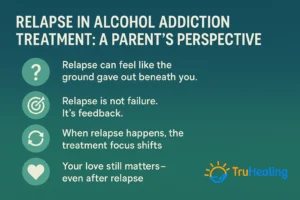
Relapse can feel like the ground gave out beneath you. As a parent, you’re left with a thousand questions and a quiet ache: What now?
Maybe your child was doing well. Maybe you finally started to breathe again. Now the fear is back—and the guilt is louder than ever.
This is where understanding alcohol addiction treatment—for your child and for yourself—can begin to bring some light back in.
At TruHealing Cincinnati, we’ve worked with hundreds of families who’ve been exactly where you are. Relapse isn’t the end of the story. But it does change the chapter.
What Relapse Actually Means in Recovery
Relapse doesn’t always look like chaos. Sometimes it’s subtle—missed therapy sessions, a drop in communication, old habits creeping back in. Other times, it’s obvious and heartbreaking. Either way, here’s what’s true:
Relapse is not failure. It’s feedback.
It tells us that something in the plan wasn’t working or wasn’t ready yet. It doesn’t mean your child wasn’t trying. It doesn’t mean you failed. It means we need to reassess, not give up.
Young adults especially face unique stressors. Their brains are still developing, their lives are still forming, and their coping skills are still being built. Alcohol often becomes a shortcut to numbness. Treatment becomes a place to learn how to feel and function again—without shutting down.
What Alcohol Addiction Treatment Offers After a Relapse
When relapse happens, the treatment focus shifts. We’re not starting over—we’re starting differently. That includes:
- Reevaluating triggers: What was missed or underestimated?
- Building new coping strategies: Especially for real-life stress like work, school, or relationships.
- Rebuilding trust and structure: Treatment isn’t just about the individual—it’s about creating systems that support stability.
- Processing guilt: Because your child likely feels worse than they’re showing.
- Re-engaging the family: So no one is carrying this alone.
At TruHealing Cincinnati, we tailor care to what’s needed now. Whether that’s returning to an intensive outpatient program or trying a different therapeutic approach, we help families figure out the next right step.
Your Love Still Matters—Even After Relapse
It’s easy to feel powerless. You might wonder if anything you say makes a difference. But your presence, your willingness to stay connected—even with boundaries—matters deeply.
One parent told us:
“I didn’t know what to say anymore. But I started ending every call with, ‘I love you and I’m still here.’ And eventually, he called back.”
Family involvement isn’t about fixing. It’s about being a steady presence while your loved one finds their footing again. Many programs, including ours, offer:
- Family therapy sessions
- Psychoeducation about relapse and recovery
- Support in setting healthy boundaries
- Updates (with permission) from the clinical team
You deserve to be supported, too.
Healing Isn’t Linear—But It Is Possible
This might not be your child’s first relapse. That doesn’t mean recovery isn’t working. Addiction recovery is more like physical therapy than surgery—it takes repetition, adjustment, and support.
Some clients need to fall and get back up more than once. Others find their turning point earlier. What matters is that treatment remains available, respectful, and responsive.
We’ve seen clients return after multiple relapses and finally find a rhythm that works. Not because they were suddenly “ready,” but because the pieces—support, timing, willingness—finally aligned.
“He was 20 and had already been through two programs,” one mother shared. “I didn’t know if we could do another. But something was different this time. He was ready to learn, not just get by.”
What to Look for in a Post-Relapse Program
Not all treatment centers approach relapse with compassion. It’s important to choose a program that understands this moment as part of the process—not a failure to be punished.
Here’s what to prioritize:
- Staff with experience treating relapse—not just prevention
- A program that blends therapy, medical support, and life skills
- A plan for transitioning back into life (not just detox or short stays)
- Ongoing family engagement and education
- Care tailored to young adults, not just general population
If you’re near Cincinnati or considering support nearby, you may also explore trusted extensions of our care, including alcohol addiction treatment in Lawrenceburg or Lexington, Kentucky.
Why Some Relapse—Even After Seeming “Better”
Relapse isn’t always about addiction being stronger than your child’s will. Sometimes, it’s about loneliness, unprocessed trauma, or fear of who they’ll be without alcohol.
Recovery requires learning to live without something that once felt like comfort, release, or even identity. That’s a tall order for anyone—especially a young adult still figuring out who they are.
That’s why effective treatment after relapse must include:
- Addressing the emotional role alcohol plays
- Developing peer connections through group therapy or alumni programs
- Practicing sober coping in real-life situations (e.g., through outpatient care)
- Learning to name and respond to emotions without shame
At TruHealing, we meet your loved one where they are—without pretending relapse didn’t happen, and without letting it define them.
You’re Allowed to Get Support, Too
You’re likely grieving, even if you wouldn’t call it that. You’ve probably cycled through anger, fear, guilt, and numbness—all in the same week.
Your pain matters, too.
We encourage parents to seek out:
- Therapy for themselves
- Support groups (like Al-Anon or parent-specific groups)
- Reading and education to understand addiction beyond blame
You don’t have to navigate this alone. And you’re not expected to hold it together for everyone else.
Frequently Asked Questions About Alcohol Addiction Treatment After Relapse
Is relapse common in alcohol recovery?
Yes. Relapse is a common part of the recovery journey for many individuals. Especially for young adults, it’s often a signal that more support, different tools, or deeper healing is needed—not a sign that treatment failed.
Should my child go back to the same program?
It depends. If your child had a positive relationship with the staff and engaged meaningfully before, returning might offer continuity. But if they outgrew the level of care or had unmet needs, exploring new options—like our outpatient and post-relapse programming—may be more effective.
How do I talk to my child after relapse?
Keep it simple and loving. Avoid lectures or shame. Even a short message like, “I love you. I’m here when you’re ready,” can make a lasting impact. If they’re open, offer support in exploring next steps together.
What if my child doesn’t want to go back to treatment?
Resistance is common. Let them know treatment is available when they’re ready—and that relapse doesn’t disqualify them. Consider consulting a professional for guidance on how to support their autonomy without enabling continued harm.
How can I trust again after so many ups and downs?
Trust after relapse takes time, consistency, and often support for your own healing. It’s okay to set boundaries while staying connected. Trust isn’t blind—it’s built through small, repeatable actions over time.
When You’re Ready, We’re Here
Call (513) 429-7900 or visit Alcohol Addiction Treatment in Cincinnati, Ohio to learn more about how we support families through relapse and recovery. Whether it’s the first time or the fifth, your child—and your family—deserves care that sees the full picture.