

There’s a very specific kind of exhaustion that doesn’t always look like a crisis.
You’re still showing up.
Still functioning.
Still getting through the day.
But underneath it, there’s this quiet thought:
“I don’t think I can keep doing this like this.”
And then right after that thought comes another one:
“But I also don’t know if I’m ready for something bigger.”
If that’s where you are, you’re not alone—and you’re not as stuck as it feels.
When people begin exploring live-in treatment options, it’s rarely because everything has fallen apart.
It’s because something inside them is starting to shift.
Step 1: Stop trying to figure out which problem “matters more”
A lot of people come in trying to separate things:
“Is it depression?”
“Is it substance use?”
“Which one do I fix first?”
But here’s what we tell every client:
You don’t have to solve that puzzle before getting help.
Because most of the time, they’re connected.
Depression can make everything feel heavier:
- Getting out of bed feels like effort
- Motivation disappears
- Things that used to matter don’t feel the same
And substances can start to feel like relief:
- A break from your own thoughts
- A way to feel something instead of nothing
- A way to get through the day without shutting down
They feed each other.
So instead of trying to untangle it perfectly, we focus on addressing both—together.
Step 2: Get honest about how hard “functioning” actually is
This is where a lot of sober-curious people pause.
Because on paper, things might look okay.
You’re:
- Going to work
- Handling responsibilities
- Keeping things from falling apart
But how much effort is it taking?
We hear this all the time:
- “I’m exhausted just trying to stay on track.”
- “Everything feels heavier than it should.”
- “I need something just to feel normal.”
That’s not balance.
That’s survival.
And survival isn’t meant to be permanent.
Step 3: Let go of the idea that you need to hit bottom
There’s a belief that you have to get worse before you get help.
That things have to fall apart first.
But that’s not true.
You don’t need:
- A crisis
- A breaking point
- A moment where everything collapses
You just need awareness.
If something in your life feels off—if your days feel heavier than they should—that’s enough.
You don’t have to wait for things to get worse to take yourself seriously.
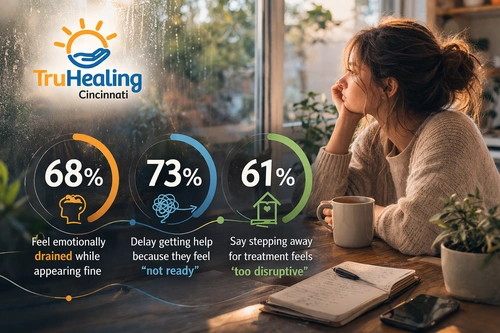
Step 4: Understand why stepping away feels so overwhelming
Let’s be honest about this part.
The idea of stepping into full-time support can feel like too much.
Not because you don’t want help.
But because it feels like:
- Pausing your life
- Letting go of control
- Admitting something you’ve been trying to manage quietly
That’s a lot.
And for many people, that’s where they stop.
But here’s the shift:
You’re not giving your life up.
You’re stepping out of survival mode long enough to rebuild something that actually holds.
That’s not loss.
That’s investment.
Step 5: Expect doubt—and don’t treat it like a stop sign
You don’t have to feel fully confident to move forward.
Most people don’t.
They feel:
- Unsure
- Hesitant
- A little resistant
And they still take a step.
We’ve had people say:
“I’m not even sure this is right for me.”
And that’s okay.
Because honesty gets you further than pretending to be ready.
Step 6: Pay attention to how your life feels, not just how it looks
From the outside, things might seem fine.
But inside?
That’s where the real answer is.
Ask yourself:
- Do I feel connected to my life?
- Do I feel present—or just going through the motions?
- Do I have energy—or am I constantly drained?
Those answers matter more than appearances.
Because you’re the one living it.
Step 7: Start smaller than your fear is telling you to
Right now, your brain might be turning this into a massive decision.
All or nothing.
But it’s not.
The first step isn’t committing to everything.
It’s:
- Asking a question
- Having a conversation
- Learning what support could look like for you
That’s it.
You’re not locking yourself in.
You’re opening a door.
What people don’t expect—but end up needing
We’ve seen people walk in unsure, even skeptical.
Not because they didn’t want help—but because they didn’t know what it would feel like.
And what surprises them most isn’t some dramatic shift.
It’s the relief.
The relief of:
- Not carrying everything alone
- Having structure that actually supports them
- Being able to feel without needing to escape
We’ve worked with individuals from Louisville, Kentucky who came in thinking they just needed to “manage things better.”
What they found instead was how much lighter things felt when they stopped trying to handle everything by themselves.
Not perfect.
Just… lighter.
You’re not as far from change as you think
If you’re reading this, something in you is already paying attention.
That matters.
You don’t need to:
- Have everything figured out
- Be completely ready
- Feel 100% sure
You just need to be honest about where you are.
And willing to consider that something different might actually help.
Frequently Asked Questions
Do I need to know if it’s depression or substance use first?
No.
You don’t have to figure that out alone.
Both can be addressed at the same time, and they often are.
What if I’m still functioning?
Functioning doesn’t mean you’re okay.
If it takes a lot of effort just to maintain your day-to-day life, that’s worth paying attention to.
Is it normal to feel unsure about getting help?
Yes.
Most people feel doubt.
You don’t need full confidence—you just need a little willingness to explore.
Will this disrupt everything?
It can feel like a pause—but often it’s a reset.
A chance to step out of survival mode and build something more stable.
What if I change my mind?
You’re allowed to ask questions, adjust, and stay involved in your decisions.
This is a process—not a trap.
How do I take the first step?
Start with a conversation.
You don’t have to decide everything today.
Just learn what your options are.
You’re not broken for being in this space.
You’re aware.
And awareness is uncomfortable—but it’s also where things begin to shift.
You don’t have to force a huge decision today.
Just don’t ignore what you’re starting to notice.
Call (513) 429-7900 or visit our residential treatment program in Cincinnati to learn more.