

Maybe you haven’t said it out loud.
Not to anyone else. Maybe not even fully to yourself.
But it’s there.
That small, persistent thought:
What if this is becoming something I don’t fully control anymore?
You might still be functioning. Still managing life. Still showing up.
And yet, something feels… different.
If you’ve found yourself exploring options like support for opioid use in Cincinnati, it’s likely because you’ve already noticed that shift.
Not dramatic.
Just enough to make you pause.
Step 1: Pay Attention to the Subtle Changes First
This doesn’t usually start with a crisis.
It starts with patterns.
Small ones.
Easy to explain away at first.
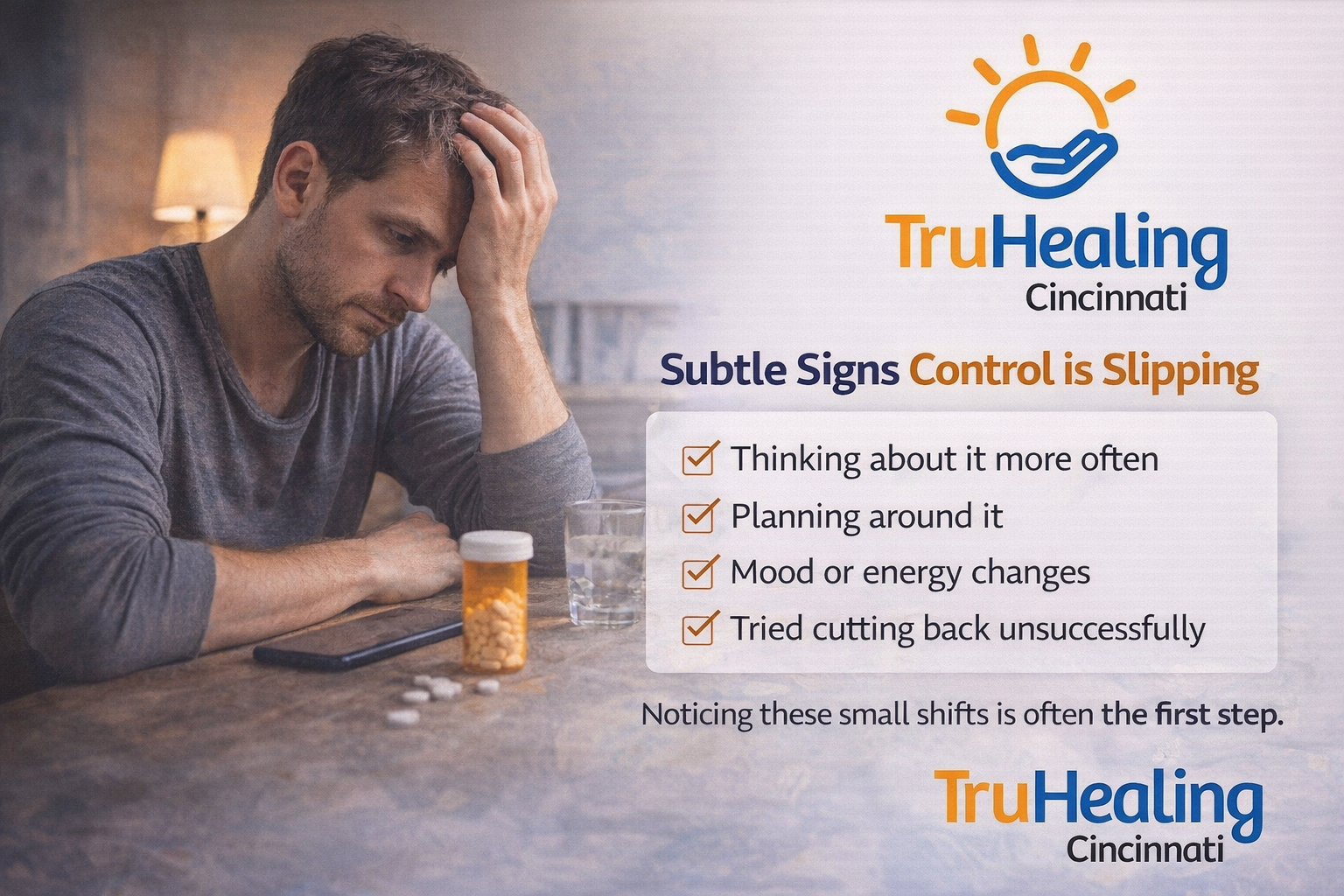
- You think about it more often than you used to
- You plan around it without meaning to
- You notice it affecting your mood or energy
- You’ve tried to cut back—but it doesn’t last
Nothing here screams “problem.”
But together, they tell a story.
Not of failure.
Of awareness.
And awareness is where this process begins.
Step 2: Stop Measuring Yourself Against “Worse” Cases
This is one of the biggest reasons people wait.
You compare.
“I’m not as bad as…”
“I still have things under control.”
“This doesn’t look like what I thought it would.”
And because of that, you minimize what you’re experiencing.
But here’s something important:
You don’t need to qualify for help by being worse.
You only need to recognize that something doesn’t feel right anymore.
That’s enough.
Step 3: Understand That Control Can Shift Quietly
Most people don’t wake up one day and suddenly feel out of control.
It happens gradually.
Control becomes effort.
Effort becomes negotiation.
Negotiation becomes routine.
And before you realize it, something that used to feel optional starts to feel necessary.
Not in an obvious way.
In a quiet, background way.
That’s often the moment where things are worth paying attention to.
Step 4: Let Curiosity Lead Instead of Fear
You don’t have to jump to conclusions.
You don’t have to label yourself.
You don’t have to decide everything right now.
You can just get curious.
- What’s actually happening here?
- What patterns am I noticing?
- What would it feel like to change this—even a little?
Curiosity keeps the door open.
Fear usually shuts it.
Step 5: Explore Support Without Losing Who You Are
One of the biggest hesitations is identity.
“If I get help, does that mean I have to become someone I’m not?”
No.
Support isn’t about replacing you.
It’s about helping you understand what’s happening—so you can make decisions that actually feel aligned with your life.
You don’t have to walk in with a label.
You can walk in with questions.
That’s enough.
Step 6: Notice the Difference Between Thinking About Change and Experiencing It
There’s a gap between knowing something might need to change…
…and actually feeling what change is like.
On your own, it often stays in your head.
With support, it becomes something you can experience in real time.
You get feedback.
Clarity.
Perspective that’s hard to access alone.
And that can shift things faster than you expect.
Step 7: Give Yourself Permission to Be in the Middle
You don’t have to be fully committed.
You don’t have to be fully certain.
You can be in the middle.
Still questioning.
Still unsure.
Still figuring it out.
That space isn’t weakness.
It’s honesty.
And it’s where a lot of meaningful change actually begins.
What Most People Realize Once They Start
This is something we hear often.
“I thought I had to be sure before I reached out.”
But what actually happens is the opposite.
Clarity comes after you take a step—not before.
You don’t need confidence to begin.
You just need enough awareness to not ignore what you’re feeling.
People from places like Louisville, Kentucky and Springfield, Ohio often come in feeling exactly like this.
Not fully convinced.
Not fully committed.
Just aware enough to ask, what if I looked at this more honestly?
And that’s where things start to shift.
You Don’t Have to Call It “Addiction” to Take It Seriously
This might be the most important part.
You don’t have to use that word.
You don’t have to fit into a category.
You don’t have to justify your experience to anyone.
If something feels off, that matters.
If something feels like it’s taking more than it’s giving, that matters.
And if you’ve been thinking about opioid addiction treatment—even quietly—that thought didn’t come from nowhere.
It came from a part of you that’s paying attention.
This Is About Alignment, Not Labels
At the end of the day, this isn’t about diagnosis.
It’s about alignment.
Does your current pattern match the life you want?
Does it support how you want to feel?
Does it give you more than it takes?
If the answer is unclear—or starting to shift—that’s worth exploring.
Not because you have to.
But because you deserve clarity.
FAQs
What if I don’t think I’m addicted?
You don’t have to identify that way. Many people seek support because something feels off—not because they use a specific label.
Can I get help without committing to something long-term?
Yes. You can start with a conversation, ask questions, and explore your options without making a full commitment.
What if I still feel in control?
That’s okay. Support can help you understand your patterns before things feel out of control.
Will I be judged?
No. The goal is to meet you where you are, not define you.
How do I know if I should take the next step?
If you’re thinking about it, that’s already a signal. You don’t need certainty—just willingness to explore.
What does the first step actually look like?
Usually, it’s just a conversation. No pressure. Just clarity.
Ready to Talk?
If something in this feels familiar—even a little—you don’t have to figure it out alone.
Call (513) 429-7900 or visit the page to learn more about our opioid addiction treatment in Cincinnati, Ohio.