
There’s a quiet kind of guilt that shows up when someone leaves treatment early.
You stop answering calls. You miss a session. Then another. Eventually it feels easier to disappear than to explain what happened. If that’s where you are right now, you’re not alone—and more importantly, you’re not disqualified from coming back.
Many people who eventually find stability in opioid addiction treatment have a chapter where they stepped away for a while. Programs like understand that recovery isn’t a straight road. It’s more like a trail that sometimes loops back on itself.
People often return when they’re ready to try again—not when everything is perfectly sorted out.
If you’re thinking about restarting treatment, even quietly, the steps forward may be simpler than you expect. For many people coming from nearby communities such as Springfield, Ohio, the hardest part isn’t restarting treatment—it’s getting past the feeling that they have to explain everything first.
You don’t.
Let Go of the Idea That You “Ruined Your Chance”
The first barrier to restarting treatment usually isn’t logistics.
It’s shame.
Many people assume leaving treatment means they wasted their opportunity. They imagine staff members being disappointed or frustrated. They worry that returning will come with lectures or uncomfortable conversations.
In reality, treatment providers see this pattern often.
Recovery is rarely linear. People pause. They relapse. They return later with new insight. None of this erases the work they did before.
Leaving treatment didn’t erase the progress you made.
It simply means the process took a different turn.
And the door to recovery rarely closes because someone stepped away for a while.
Understand That Restarting Treatment Is More Common Than You Think
People tend to believe they’re the only ones who vanished mid-treatment.
They picture everyone else finishing the program perfectly while they were the one who “couldn’t do it.”
But the truth inside recovery spaces is very different.
Clients leave treatment for many reasons:
- Life pressures become overwhelming
- Therapy begins uncovering painful memories
- Cravings intensify temporarily
- Financial or family obligations interfere
- Fear of failure grows too heavy
None of these experiences make someone unusual.
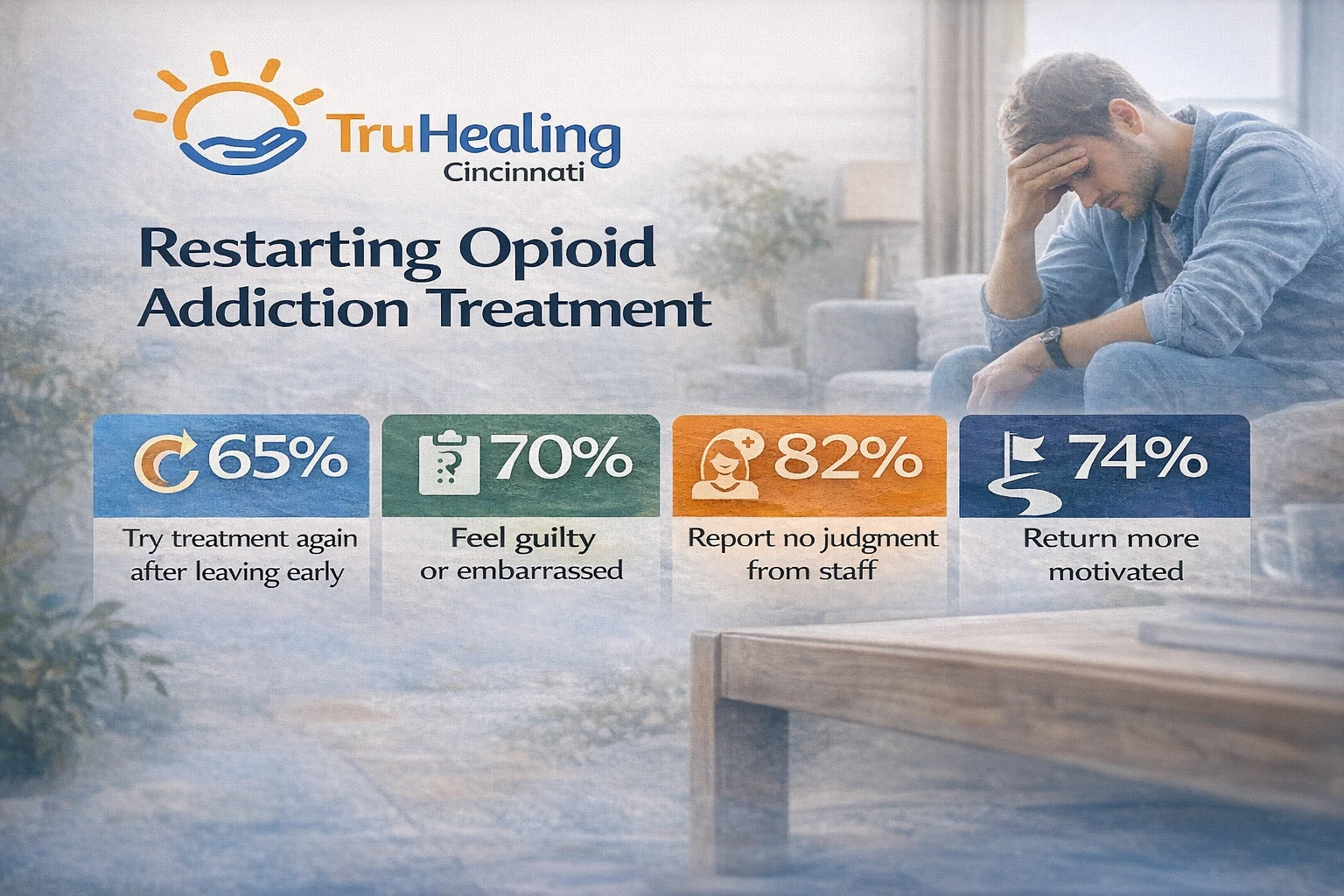
Many people who ultimately achieve long-term recovery stepped away at least once before returning to treatment.
Restarting opioid addiction treatment isn’t a sign that recovery failed.
It’s often a sign that recovery is still trying to happen.
You Don’t Owe Everyone a Full Explanation
One of the biggest fears people carry about coming back to treatment is the idea that they’ll have to explain everything.
Where they went.
Why they stopped attending.
What happened during the time away.
That expectation alone can keep people from reaching out.
But the reality is much simpler.
Most treatment teams only need to know one thing: that you want to start again.
A message can be incredibly short.
“I’d like to restart treatment.”
That’s enough.
You don’t need to rehearse a story or justify your absence. Recovery spaces understand that the path forward matters far more than the explanation behind the pause.
Reach Out in the Simplest Way Possible
Your mind might try to complicate the process of reconnecting with treatment.
It might suggest that you need to feel ready first. Or that you need the perfect message. Or that you should wait until life is calmer.
None of that is necessary.
The first step can be incredibly small.
A phone call.
A short email.
A contact form submission.
That small action reopens a door that may feel closed right now.
Once the door is open, treatment teams can help guide the rest of the process.
Recovery rarely begins with a dramatic comeback.
It begins with a quiet moment of reaching out again.
Expect Some Awkwardness—and Let It Pass
Returning to treatment after disappearing can feel uncomfortable at first.
You might worry about seeing staff members again. You might wonder whether anyone remembers you or what they might think.
That awkwardness is normal.
But it usually fades quickly.
Recovery environments are built around honesty and second chances. Most people inside those spaces understand that setbacks are part of the journey.
In fact, many of the people sitting beside you may have their own stories about leaving treatment and returning later.
The discomfort rarely lasts long.
And the courage it takes to come back often earns quiet respect from others in recovery.
Focus on the Next Step, Not the Entire Road
One reason people hesitate to restart treatment is that they begin thinking too far ahead.
They imagine every possible outcome.
What if they relapse again?
What if treatment still feels difficult?
What if people expect too much from them?
Those thoughts can become overwhelming.
Recovery becomes easier when the focus narrows.
Instead of worrying about the entire journey, concentrate on the next step.
Attend the next appointment.
Show up to the next group session.
Have one honest conversation.
Recovery grows through small actions repeated consistently.
You don’t have to map the entire future.
You only have to take the next step.
Let the Door Stay Open, Even If Life Is Still Messy
Many people delay returning to treatment because they believe they need to get their life under control first.
They think they should stop using entirely before coming back. Or resolve personal problems before asking for help.
But treatment isn’t designed for perfect circumstances.
People return when life still feels messy.
When cravings are still present.
When emotions feel overwhelming.
When they simply know they can’t keep repeating the same cycle.
That’s exactly when treatment becomes most helpful.
Programs like opioid addiction treatment exist to support people through those uncertain moments—not after everything has already been fixed.
The Strength It Takes to Try Again
Restarting treatment doesn’t always feel like courage.
Often it feels like defeat.
But from the outside, the decision to try again looks very different.
It means you haven’t given up on yourself.
It means part of you still believes life can be different.
And that belief—no matter how small it feels right now—is enough to start moving forward again.
For individuals traveling from communities such as Louisville, Kentucky, returning to treatment often becomes the moment where recovery truly begins to take hold.
Not because the road suddenly becomes easy.
But because they decided the road was still worth walking.
FAQ About Restarting Opioid Addiction Treatment
Can I restart treatment after leaving a program early?
Yes. Many treatment centers expect that some clients will return after stepping away. Recovery paths are rarely linear, and returning to treatment is common.
Will staff judge me for leaving treatment?
Most treatment professionals understand that addiction recovery includes setbacks. Their focus is usually on helping you move forward rather than criticizing past decisions.
Do I have to start treatment from the beginning again?
Not always. Treatment teams often evaluate where you left off and help determine the most appropriate place to re-enter care.
What if I relapsed while I was away?
Relapse is a common part of recovery for many people. Treatment programs are designed to help individuals return safely and rebuild stability after setbacks.
Is it too late to come back to treatment?
No. Recovery timelines are different for everyone. The decision to return—even after time away—can still lead to meaningful change.
What if I feel embarrassed about returning?
Embarrassment is very common, but it often fades quickly once people reconnect with treatment. Recovery communities tend to be supportive environments where second chances are respected.
Stepping away from treatment doesn’t mean the opportunity disappeared.
Sometimes it simply means the path took a pause.
If you’re thinking about trying again, support is still available.
Call (513) 429-7900 to learn more about our opioid addiction treatment in Cincinnati, Ohio.