
There’s a kind of exhaustion that goes beyond being tired.
It’s the kind where every morning feels like stepping back into the same storm. The same cravings. The same guilt. The same promise that tomorrow will be different, even when part of you isn’t sure how that will happen.
When people reach that point, opioid addiction treatment isn’t about demanding more strength. It’s about creating a place where the fight doesn’t have to happen alone anymore. If you’re exploring options like , it may help to know that many people arrive at treatment not energized or hopeful—but simply worn down.
And that doesn’t disqualify you from recovery.
Sometimes it’s exactly where recovery begins.
For individuals traveling from surrounding communities such as Springfield, Ohio, that first step toward treatment often comes at the moment when continuing the cycle feels harder than asking for help.
When Fighting Addiction Starts to Feel Impossible
Most people who struggle with opioids don’t wake up one day and suddenly decide to seek treatment.
Instead, they spend months or years trying to manage the problem quietly.
They promise themselves they’ll cut back.
They try to stop on their own.
They hide how bad things have become.
Each attempt takes emotional energy.
Eventually, that energy runs low.
This kind of burnout can make people feel ashamed. They may believe exhaustion means they’ve failed somehow.
But emotional exhaustion is often the mind’s signal that the current way of coping is no longer sustainable.
And that signal matters.
It’s the moment when a different path becomes possible.
Opioid Addiction Treatment Creates Stability When Life Feels Chaotic
Addiction has a way of destabilizing everything around it.
Sleep becomes unpredictable. Relationships feel strained. Daily responsibilities begin slipping through the cracks.
Inside a structured treatment program, that chaos is replaced with consistency.
Days follow a rhythm.
Morning check-ins help people ground themselves emotionally. Therapy sessions provide space to unpack thoughts and experiences. Peer support reminds people they are not alone in what they’re facing.
This structure isn’t meant to control people.
It’s meant to support them.
Think of treatment like scaffolding around a building that needs repair. The structure holds everything steady while the real work of rebuilding happens inside.
And for people coming from nearby areas like Louisville, Kentucky, entering that environment can feel like stepping out of a storm into calmer air.
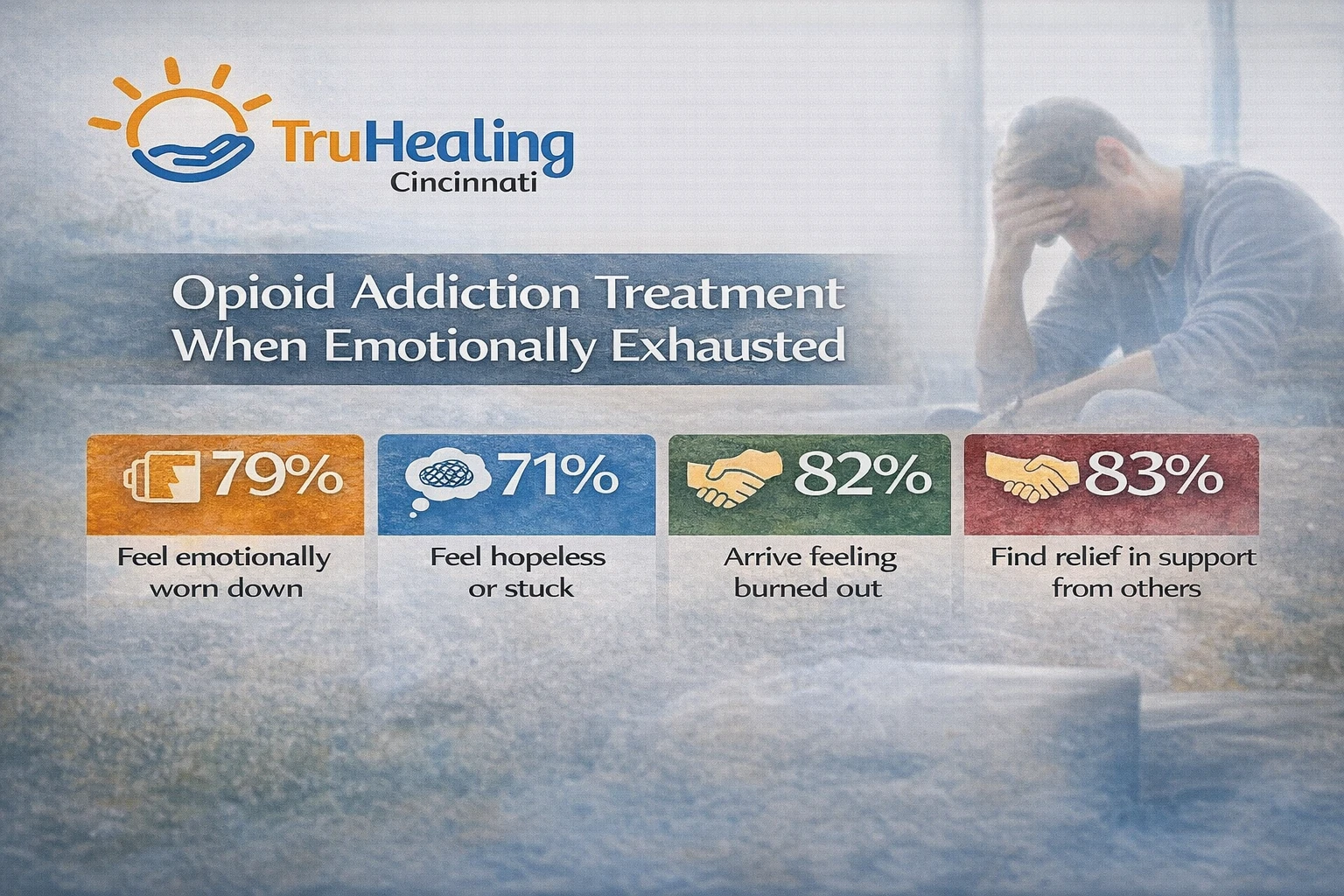
You Don’t Have to Win the Battle Alone
One of the most common beliefs people carry into addiction is the idea that they should be able to handle it themselves.
They believe asking for help means they’re weak.
But addiction rarely responds to determination alone.
Long-term opioid use changes brain chemistry. Stress tolerance decreases. Emotional regulation becomes more difficult. Cravings can feel overwhelming even for people with strong willpower.
That’s why opioid addiction treatment focuses on more than just stopping drug use.
It provides therapy, peer support, medical guidance, and coping tools that help people rebuild stability from the inside out.
Recovery works best when it’s shared.
Not fought alone in silence.
The Unexpected Relief Many People Feel in Treatment
People often expect treatment to feel intimidating.
And yes, walking through the door for the first time can bring nerves and uncertainty.
But something surprising often happens during those early days.
Relief.
The constant pressure to manage addiction alone begins to ease. The mental noise quiets slightly. The cycle of secrecy and guilt pauses.
Many people describe the experience like setting down a heavy backpack after carrying it for miles.
Nothing dramatic changes overnight.
But for the first time in a long time, breathing feels a little easier.
Recovery Doesn’t Begin with Huge Breakthroughs
Movies often portray recovery as a dramatic transformation.
Real life is quieter.
Healing usually starts with small, almost ordinary moments.
Someone sleeps through the night without waking in panic.
Someone laughs during a conversation they once would have avoided.
Someone finishes a therapy session feeling understood rather than judged.
These small moments matter.
Inside opioid addiction treatment, they accumulate day by day.
Over time, those small changes begin reshaping how people respond to stress, relationships, and their own emotions.
Recovery rarely happens in one giant leap.
It grows in steady steps.
Emotional Burnout Doesn’t Mean You’ve Failed
Feeling emotionally drained can convince people they’re beyond help.
But exhaustion is not a sign that recovery is impossible.
In many cases, it’s the moment when people become most open to change.
The old ways of coping have stopped working. The cycle has become too heavy to carry alone.
That moment of realization can be painful.
But it also creates space for something new.
Treatment programs recognize this stage not as failure—but as an opening.
An opening for rest, reflection, and rebuilding.
Healing Happens Through Connection
Addiction thrives in isolation.
It convinces people that no one could understand their experience or that sharing their struggles would lead to judgment.
Treatment challenges that isolation.
In group therapy sessions, people hear stories that mirror their own. They realize others have walked similar paths and found ways forward.
This sense of connection can be powerful.
Shame loses its grip when it’s spoken out loud. Support grows stronger when it’s shared.
And slowly, the exhaustion that once felt permanent begins to ease.
Recovery becomes less about surviving alone and more about moving forward together.
The Strength You Need May Already Be There
When people feel burned out, they often assume they’ve run out of strength.
But strength doesn’t always look like determination or energy.
Sometimes strength looks like honesty.
It looks like admitting the current situation isn’t sustainable.
It looks like asking for support instead of continuing to struggle silently.
Choosing treatment isn’t giving up.
It’s choosing a different way forward.
FAQ About Opioid Addiction Treatment
What does opioid addiction treatment involve?
Treatment typically combines several approaches, including therapy, medical care, group support, and relapse prevention planning. These components address both the physical and emotional aspects of addiction.
Do I need to feel motivated before entering treatment?
Not necessarily. Many people begin treatment feeling uncertain, skeptical, or emotionally exhausted. Motivation often grows as recovery begins.
How long does opioid addiction treatment last?
Treatment length varies based on individual needs. Some people begin with residential programs, while others start with outpatient services that allow them to continue work or family responsibilities.
Will treatment help with emotional burnout?
Yes. Treatment environments provide structured support, counseling, and peer connection that can help people recover from the emotional exhaustion that addiction often creates.
What if I’ve tried to quit before?
Many people attempt recovery multiple times before finding lasting stability. Previous attempts often provide valuable insight that strengthens future recovery efforts.
Can recovery really happen after feeling this burned out?
Yes. Emotional exhaustion often marks the point where people become open to new approaches and support systems that make recovery possible.
When you’ve been fighting addiction for a long time, the idea of starting again can feel overwhelming.
But recovery doesn’t require endless energy.
Sometimes it simply begins with finding a place where you can rest, breathe, and let others help carry the weight.
Call (513) 429-7900 to learn more about our opioid addiction treatment in Cincinnati, Ohio.