
You made it through detox. That brutal, body-wrenching phase where everything hurt and nothing made sense. Maybe it was five years ago. Maybe five months. But either way, you crossed that line. And if you’re being honest? Life got…quieter. Too quiet.
You’re not using. You’re not falling apart. But you’re also not feeling much.
And deep down, you wonder—is this it?
Here’s what nobody told you at the start: medical detox is just the beginning. Not the solution. Not the finish line. It’s the on-ramp. And it’s okay if you’re feeling stuck now. That doesn’t mean you failed. It means you’re in the middle of something real.
Detox Cleared the Fog—But What About the Rest?
Medical detox works. It helps your body stabilize. Clears the chemicals out. Keeps you safe when your system is screaming. But once it’s over, what’s left?
The truth: everything detox couldn’t touch. The grief. The numbness. The old wiring in your brain that still whispers lies. Detox can’t fix those. It wasn’t meant to.
In places like Lexington, Kentucky, alumni often come out of detox feeling like they just got dropped back into life mid-scene. No script. No direction. Just a sober body and a mind still catching up.
That disorientation is real. And you’re not weak for feeling it.
Long-Term Sobriety Isn’t Always Joyful—and That’s Okay
People love to celebrate milestones. “One year sober!” “Five years clean!” And you might smile and nod and say thank you. But inside? You’re thinking: I should feel happier than this.
Let’s strip the shame off that right now.
Loneliness can hit just as hard at five years as it did at five weeks. Emotional flatness? Not a sign you’re broken. Just a sign that sobriety alone doesn’t fill the hole.
You got your life back. But you’re still figuring out how to live it.
In Lawrenceburg, Kentucky, we’ve seen long-term alumni sit with this exact ache. They’ve done the meetings. The routines. The work. But something still feels off. And often, it’s because the deeper healing—the identity, the purpose, the connection—got left behind.
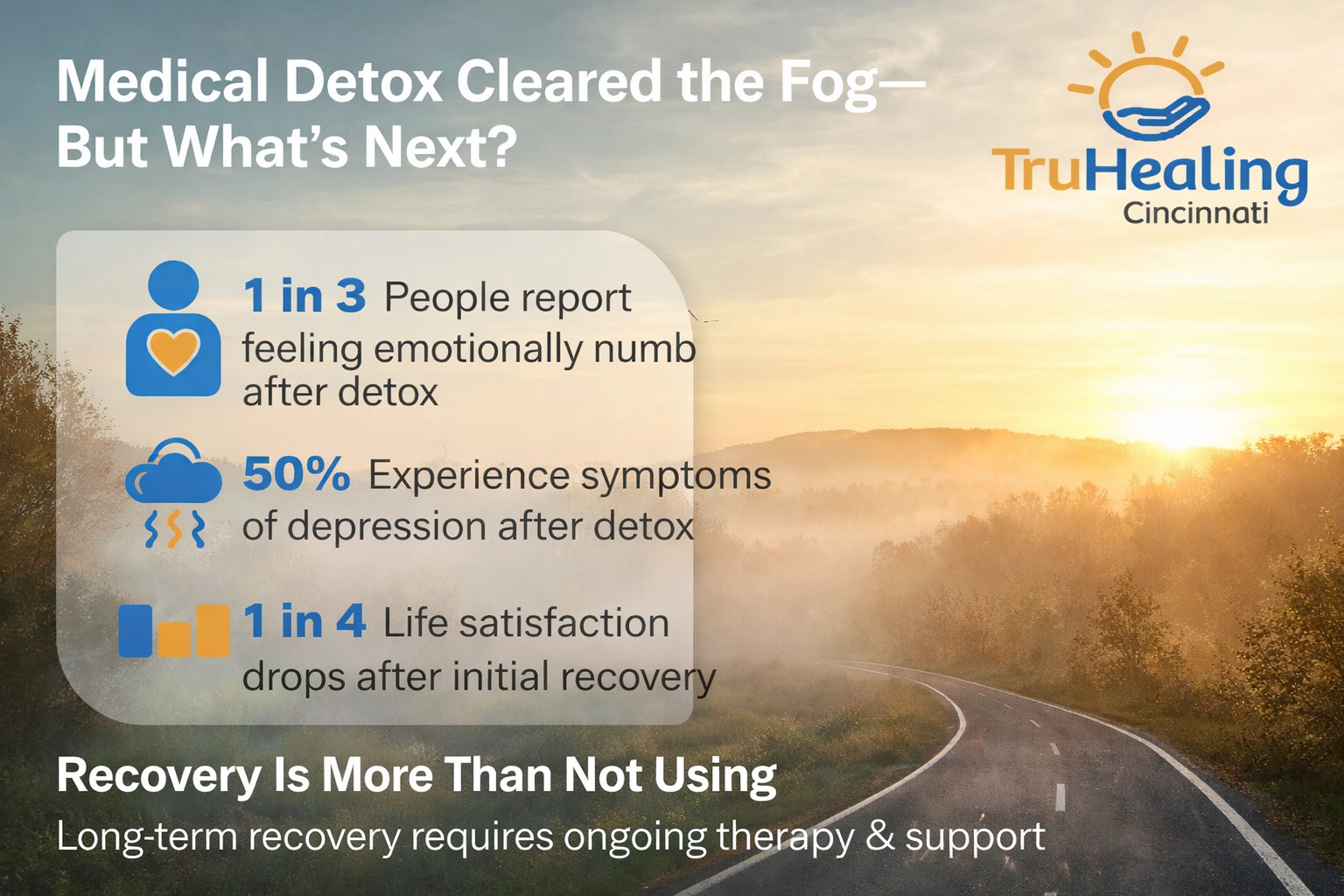
Recovery Is More Than Not Using
There’s a dangerous idea that floats around early recovery: that if you just stop using, life will magically get better.
You know by now, that’s not how it works.
You stopped using, and maybe you still feel anxious every day. Or bored. Or emotionally dead inside. That’s not failure. That’s your brain begging for more than survival.
Recovery is more than symptom management. It’s learning how to build joy. Connection. Meaning.
If detox was the emergency surgery, the rest of this—community, therapy, spiritual work—is the rehab. You can live without it. But you won’t thrive.
When You’re Sober But Still Feel Lost
Let’s name it: long-term sobriety can feel directionless.
Maybe you’re showing up to meetings, but they don’t hit like they used to. Or you’re working, parenting, keeping the peace—but everything feels hollow.
That’s not rare. That’s normal.
Sobriety doesn’t immunize you from emotional pain. And it definitely doesn’t give you a pass from doing deeper work. If anything, it makes space for the real stuff to surface: unresolved trauma, identity questions, spiritual hunger.
If you’re starting to feel all that, good. It means your system is stable enough to feel. And now it’s time to respond.
Coming Back Isn’t Starting Over
You don’t need to crash and burn to reconnect. You don’t have to relapse to earn your spot back in the circle.
You just have to be honest.
There’s no shame in saying, “Hey, I need more than this.” Or, “I’m doing all the right things and I still feel empty.” That’s not weakness—it’s maturity.
We’ve worked with alumni all across Lexington, Kentucky, who’ve walked back through our doors not because they relapsed, but because they refused to settle. Because they wanted more than just white-knuckling life.
You can come back to support, to community, to deeper work—without apology.
Rediscovering Purpose After Detox
Detox got you stable. Now it’s time to ask: what do you want to build?
Because here’s the thing: healing is not a one-time event. It’s a lifestyle. And long-term recovery means actively shaping the kind of person you want to be. That takes courage. But it also takes community.
So if your days feel gray, if joy feels like a foreign language, if you’re sober but spinning—it’s time to get real about what’s next.
And we can help.
What Help Looks Like Now (It’s Not What You Think)
Help might not look like rehab again. It might look like trauma work. Or couples therapy. Or reconnecting with your body through movement or mindfulness.
It might mean joining an alumni group where people are talking about parenting, grief, or intimacy—not just cravings and triggers.
In Lawrenceburg, Kentucky, we’ve seen long-term recovery deepen not through willpower, but through real connection. That’s the secret sauce. Staying connected to people who know the difference between “clean” and alive.
You Don’t Have to Settle for Numb
There’s a myth that the longer you’re sober, the more “grateful” you should feel. And if you’re not feeling it, then something’s wrong with you.
Nope. That’s emotional gaslighting.
You’re allowed to want more.
You’re allowed to want laughter that feels real. Relationships that go deep. Mornings where you wake up excited—not just sober.
Detox opened the door. But the real healing? That’s still unfolding.
And you get to choose how far you want to go.
Frequently Asked Questions
Is it normal to feel disconnected even years after detox?
Yes, absolutely. Many people experience emotional flatness or spiritual disconnection in long-term recovery. It’s not a sign of failure—it’s a signal that you might be ready for deeper emotional or relational work.
What can I do if I feel like sobriety isn’t enough?
Start by naming it. Talk to a therapist or trusted recovery peer. Consider re-engaging with a support network or alumni group. Emotional fulfillment often requires work beyond physical sobriety—like purpose-building, spiritual exploration, or relationship repair.
Do I have to relapse to return to treatment?
Not at all. You’re allowed to come back for support at any time. Many alumni return to therapy, group work, or other services simply because they want to feel more connected, not because they’ve “messed up.”
How does TruHealing Cincinnati support long-term alumni?
We offer continued care beyond detox—including outpatient services, alumni meetings, therapy, and access to resources that support long-term growth. If it’s time to go deeper, we’re here to walk that path with you.
I went through medical detox, but never did therapy. Is it too late?
Never. Therapy and other supportive services can start at any point in your recovery. In fact, many people find they’re more ready for it after they’ve been sober for a while. Detox laid the foundation. Now it’s time to build.
If you’re reading this and something’s stirring—good. That’s the part of you that still wants more. The part that isn’t okay with “just getting by.” That voice deserves to be heard.
And you deserve more than numbness.
Call (513) 429-7900 to learn more about our medical detox program in Cincinnati, Ohio.
We’re not here to judge where you’ve been. We’re here to walk with you into what’s next.