
You never thought you’d be here again. You had a stretch of sobriety—maybe 90 days, maybe more. You were showing up. You were building something. And then…
It slipped.
A moment, a weekend, a slow unraveling—it doesn’t always look like rock bottom. Sometimes relapse is quiet. Sometimes it happens after a great week. Sometimes it looks like a “just once” that turned into “again.”
Now you’re sitting with the weight of it: the fear, the shame, the regret. But underneath it all, there’s a quiet question trying to break through: Can I go back?
The answer is yes. And what happens next might not be what you think.
At TruHealing Cincinnati, we’ve walked with hundreds of people who returned to opioid addiction treatment after a relapse. And we want to tell you this—gently, clearly, and truthfully: You didn’t fail. You’re allowed to come back.
Let’s talk about what that really looks like.
Relapse Doesn’t Erase the Work You’ve Done
First, let’s rewrite the lie that relapse cancels everything.
You may be thinking:
- “I blew it.”
- “They’ll be disappointed in me.”
- “I wasted their time.”
You didn’t.
Relapse doesn’t make the progress you made any less real. The insight you gained, the days you stayed sober, the patterns you began to unlearn—those still count. They’re still yours.
You’re not back at the starting line. You’re just walking a harder stretch of the path. That’s not failure. That’s recovery, in all its imperfect, complicated, deeply human truth.
The First Days Back Are Tender—But They’re Also Powerful
Coming back to treatment after relapse feels different. There’s a heaviness that wasn’t there before. A quietness. Sometimes even shame.
You might walk through the doors with your head low. You might feel the sting of seeing familiar staff or group members. You might even wonder if you belong.
Here’s what we want you to know: You do.
What we see when you walk in isn’t someone who gave up. It’s someone who came back. And that says more about your strength than any streak ever could.
What often surprises people is how quickly that weight begins to lift. Just being in a safe space again—one where you don’t have to pretend—can loosen the shame enough for hope to breathe.
You’re Not the Only One Who Relapsed
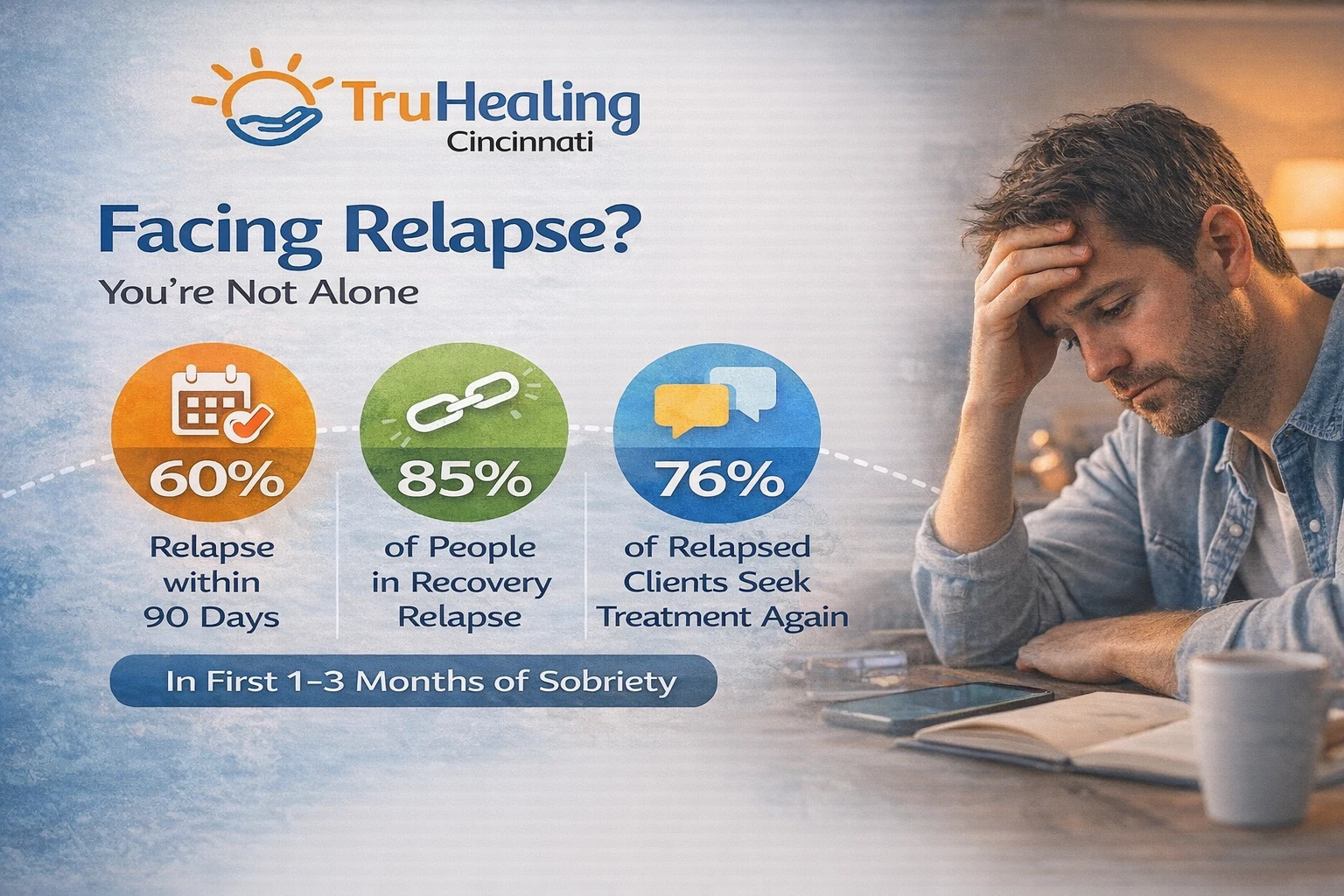
Relapsing after 90 days (or even longer) is painfully common. Especially in opioid recovery.
You may have heard stats. You may have seen friends go through it. But when it happens to you, it feels isolating. Like you’re the only one who couldn’t “keep it together.”
You’re not.
We’ve seen people return after three months, six months, a year. We’ve seen people who stayed sober for a decade come back into care because life got heavy and their tools ran out.
There’s no shame in needing help again. In fact, recognizing that you do? That’s growth.
What Might Be Different This Time
Coming back doesn’t mean repeating everything exactly as before.
When you return to opioid addiction treatment, we’ll work with you to reassess:
- What supported your sobriety last time
- What made staying sober hard outside treatment
- What kind of support you need now—not just to quit, but to stay well
This might mean:
- A different therapist or treatment track
- Stronger medication support (like adjusting MAT)
- More attention to trauma, mental health, or family dynamics
- Building a more realistic plan for post-treatment life
We’re not looking to punish you for relapsing. We’re looking to support you differently now that we know more.
What Clients Say About Coming Back
“I thought I’d feel humiliated. But honestly? I felt more grounded coming back. I didn’t need to impress anyone this time. I just needed to be honest.”
– Alumni, Returned to Outpatient After 4 Months
“The second time in treatment, I let myself cry in group. I didn’t the first time. I was too busy trying to prove I was okay.”
– Client, Now 6 Months Sober
“I assumed they’d be disappointed. But they welcomed me back like family. It was the first time I believed relapse didn’t make me unworthy.”
– Former Patient, Now Peer Support Volunteer
The Emotional Landscape of Returning
Relapse often comes with a side order of emotional whiplash. When you return to treatment, you may notice:
- Deep shame or self-blame
- Anger at yourself or others
- Fear of trusting the process again
- Grief for “losing” the sobriety you had
- A fragile kind of hope
We don’t rush you through these feelings. We sit with you in them. You don’t need to be enthusiastic. You don’t need to be sure. You just need to show up—and let healing start from there.
When You’re Ready, We’re Here—Wherever You Are
Whether you’re in Cincinnati or looking for opioid addiction treatment in Lexington, Kentucky or exploring support in Lawrenceburg, we believe in second chances. And third ones, too.
Because recovery isn’t about how many times you fall. It’s about how many times you decide to come back.
FAQs: Returning to Opioid Addiction Treatment After Relapse
Will I be judged for relapsing?
No. At TruHealing Cincinnati, relapse is understood—not shamed. Our team is trained to support returning alumni with compassion, not criticism. You will be welcomed, not punished.
Do I have to go back through detox again?
It depends on what and how much you used, how long it’s been, and what symptoms you’re experiencing. If needed, we’ll guide you through safe medical detox. If not, we’ll pick up with the appropriate level of care.
Can I do a different level of care this time?
Yes. We’ll assess together what makes the most sense. Maybe you need more structure (residential or PHP), or maybe you’d benefit from a slower pace like IOP. We adjust based on you—not a preset path.
Will I have to tell the group I relapsed?
Only if and when you want to. Many people share their relapse experience as a way to reconnect and rebuild trust, but you’ll never be forced to disclose more than you’re ready for.
What if I’m scared this time won’t work either?
That fear is valid. It doesn’t disqualify you. You don’t have to believe 100% that you can stay sober. You just need to believe enough to show up. We’ll walk with you from there.
You Didn’t Lose Your Spot—You’re Still Worthy of Care
Here’s the quiet truth about relapse that no one talks about: coming back might be the most important part of your recovery.
Because it shows you’re still fighting. Still choosing life. Still willing to hope—even if that hope is shaky.
Call (513) 429-7900 to learn more about our Opioid Addiction Treatment services in Cincinnati, Ohio.
We’re not here to restart your clock.
We’re here to remind you: the story’s still yours to write.