
You’ve done the hardest thing: you got them through the door.
That moment—the one you may have been dreading for weeks or praying for for years—is over. The intake forms are signed. The bag is packed. Your child, your teen, your young adult is in treatment.
And now?
Now you’re in the silence that follows.
And it’s heavier than you expected.
Parents often tell us the moment after drop-off feels like emotional whiplash. You go from urgent logistics and sleepless nights to a strange, hollow quiet. There’s no real guidebook for this part. The wait. The fear. The “what now?”
At TruHealing Cincinnati, we’ve supported countless families through these first fragile days. We’ve answered the shaky-voiced phone calls. We’ve sat with the grief, the guilt, the hope, and the raw unknown of it all.
This blog is for you—the parent still pacing after the crisis. Here’s what really happens in the first 72 hours of a residential treatment program, and what you can expect as your child begins their first steps toward healing.
Step One: Stabilization, Not Perfection
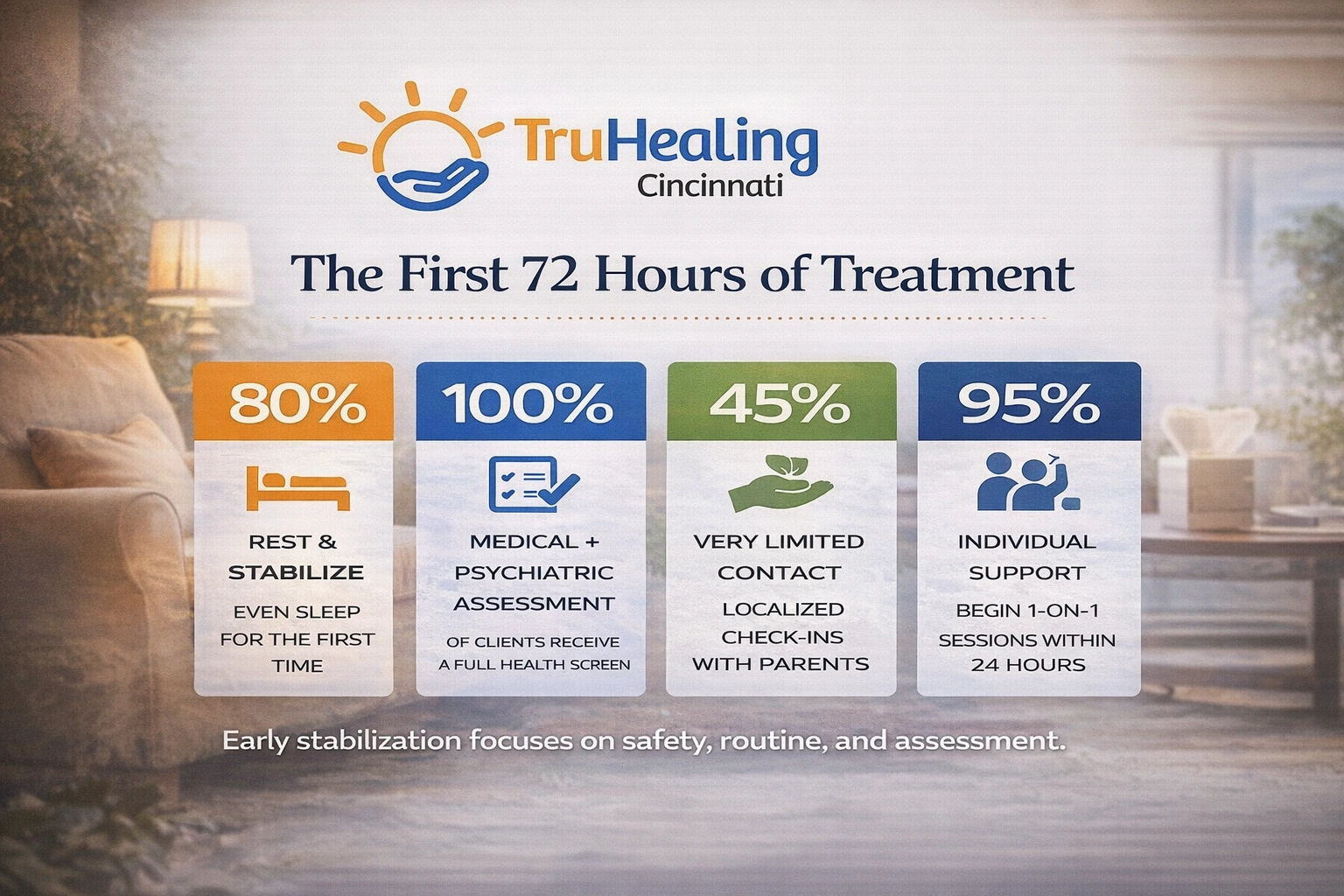
Your child doesn’t walk into a residential treatment program and immediately become “okay.” These first 72 hours aren’t about transformation. They’re about stabilization.
That means:
- Getting sleep for the first time in days—or weeks
- Beginning to rehydrate and eat regularly
- Coming off of substances safely (if needed)
- Regulating emotional overwhelm—without expecting insight just yet
Some kids walk in with relief. Some walk in angry. Some dissociate. Some crash.
All of it is normal.
All of it is held with care.
During this initial stabilization period, we’re not looking for progress—we’re creating the foundation that makes progress possible.
The Intake Process: Medical, Emotional, Human
Within the first 24 hours, your child will go through an intake process. At TruHealing Cincinnati, this includes:
- A full medical screening: checking vitals, documenting medications, and ruling out urgent health issues
- A psychiatric and clinical assessment: gathering mental health history, substance use patterns, family dynamics, and risk factors
- Safety planning: assessing for self-harm risk, suicidal ideation, or aggressive behaviors
- Emotional check-ins: helping them begin to feel safe in a new and unfamiliar environment
This process is not cold or robotic. We don’t “process” clients. We meet them.
Our team has worked with young adults in psychosis, panic, shutdown, and post-overdose grief. We’re trained to engage, not escalate. To hold structure without shame.
You’re not handing your child off to strangers. You’re entrusting them to people who’ve made it their life’s work to help in moments like this.
The First Day Is Often Quiet—And That’s by Design
Most parents are surprised by how low-stimulation the first day is. But that’s intentional. Your child may be disoriented, resistant, or running on adrenaline. We don’t rush them into programming or demand vulnerability.
Instead, the first 24–48 hours often include:
- Rest in a calm, contained room
- Simple meals and hydration support
- One-on-one staff check-ins rather than group sessions
- Gentle orientation to the space and routine
Think of it like decompression. Your child has likely been in fight-or-flight for weeks, if not longer.
We help their nervous system exhale—slowly and safely.
Communication Might Be Limited at First
This is one of the hardest parts for parents: the wait.
During early stabilization, many residential programs limit or delay phone contact. Why?
Because early contact with family—especially parents—can:
- Re-trigger emotional distress
- Cause confusion if family dynamics are complicated
- Delay acclimation to the treatment environment
- Become a bargaining chip or escape strategy
That doesn’t mean you’re cut off. At TruHealing Cincinnati, a clinician or case manager will typically call you within 24–48 hours of admission to give a status update, answer questions, and begin building trust.
Once your child stabilizes, structured communication will begin—often in the form of scheduled calls, letter writing, or family therapy sessions.
Your Child May Not “Thank You”—Yet
This part can sting.
You may be waiting for a moment of gratitude. For your child to say, “I know I need this. Thank you for helping me.”
But in the first 72 hours? That’s rare.
What’s more common:
- Blaming you for making them go
- Begging to come home
- Total emotional shutdown
- Rage, grief, or regression
Don’t panic.
This doesn’t mean they’re not going to engage. It just means they’re overwhelmed.
Our staff holds boundaries with compassion. We’ll walk your child through those big reactions and help them begin to move toward stability—without forcing false compliance or minimizing their feelings.
Your child’s resistance is part of the work. And it’s not a reflection of whether you made the right decision.
The Shift Usually Starts Around Day Three
By the 72-hour mark, many clients begin to soften.
They’ve eaten a few meals. Slept. Had their first group. Maybe they laughed, maybe they cried. They’ve seen that the staff are consistent, kind, and not afraid of their pain.
And that’s when something shifts.
Not magically. Not all at once.
But often enough that parents tell us, “They sounded different when I finally talked to them.”
This isn’t a fix. But it’s a foothold.
The beginning of your child’s return to themselves may not look like joy. It might look like stillness, or curiosity, or less anger.
But that’s progress. And we’ll name it when it happens—so you don’t miss it.
If You’re Sending Your Child from Out of Town…
We know some families travel for care. If you’re looking for a residential treatment program in Lexington, Kentucky or exploring options near Lawrenceburg, TruHealing Cincinnati is accessible and experienced in working with out-of-area families.
We coordinate regular updates, help arrange family sessions remotely, and support reintegration planning with your unique needs in mind.
You don’t have to be local to feel connected.
FAQs: What Parents Ask in the First 72 Hours
When will I hear from someone?
Usually within 24–48 hours, you’ll receive a phone call from a clinician or care team member with updates on your child’s status and next steps.
Why can’t I talk to my child right away?
Initial contact is delayed to help your child stabilize and avoid emotional escalation. Once they’re regulated, structured communication will begin.
What if my child refuses treatment?
Refusal is common early on. Our team is skilled in building engagement slowly and respectfully. Many resistant clients become willing once they feel safe.
How long will my child stay in residential care?
It varies. Most residential programs last between 28–45 days, but we’ll assess readiness, progress, and post-treatment planning along the way.
Can I bring them personal items?
Yes—with guidelines. We’ll provide a list of allowed and prohibited items and help coordinate any needed deliveries or drop-offs.
What support is available for me?
We offer family therapy, parent support groups, and referrals for your own counseling if needed. You deserve support, too.
Call (513) 429-7900 or visit TruHealing Cincinnati’s Residential Treatment Program to talk through what the next 72 hours—and the next steps—can look like for your family. There’s no such thing as a perfect handoff into treatment. But there is such a thing as a safe, steady start. We’re here to help your family find it.