
I didn’t walk into TruHealing Cincinnati with hope in my pocket. I didn’t even come with expectations. By that point, I’d tried everything—detox, inpatient, therapy, IOP, you name it. I wasn’t some first-timer “willing to do whatever it takes.” I was tired. And skeptical. Not because I didn’t want to get better—but because I didn’t believe I could.
So when someone suggested Partial Hospitalization Treatment, I honestly rolled my eyes. Another acronym. Another program. Another chance to feel like a failure.
But I went. Maybe out of desperation. Maybe just to prove it wouldn’t work. And then something weird happened: it didn’t suck. In fact, it helped. Not because it was easy or magical. But because—for the first time—I felt like a human being in treatment. Not a project to be fixed.
Learn more about TruHealing Cincinnati’s Partial Hospitalization Treatment here.
What Didn’t Work Before
Here’s the part people don’t talk about enough: not all treatment fits every person. That doesn’t mean you’re broken or resistant. It just means the system isn’t one-size-fits-all.
For me, inpatient programs were too extreme. I felt like I had to become a totally different person overnight—and then was dropped back into my life like nothing happened. I’d white-knuckle my way through the structure, but I never learned how to live outside of it.
Outpatient therapy, on the other hand, felt too light. A couple sessions a week weren’t enough to interrupt the mental loops I was stuck in. I’d leave the office and go right back to the same patterns.
Each time I tried and didn’t make it, the disappointment got heavier. Not just from others, but from myself. Eventually I stopped hoping. Stopped trusting. Stopped trying.
Why Partial Hospitalization Treatment Was Different
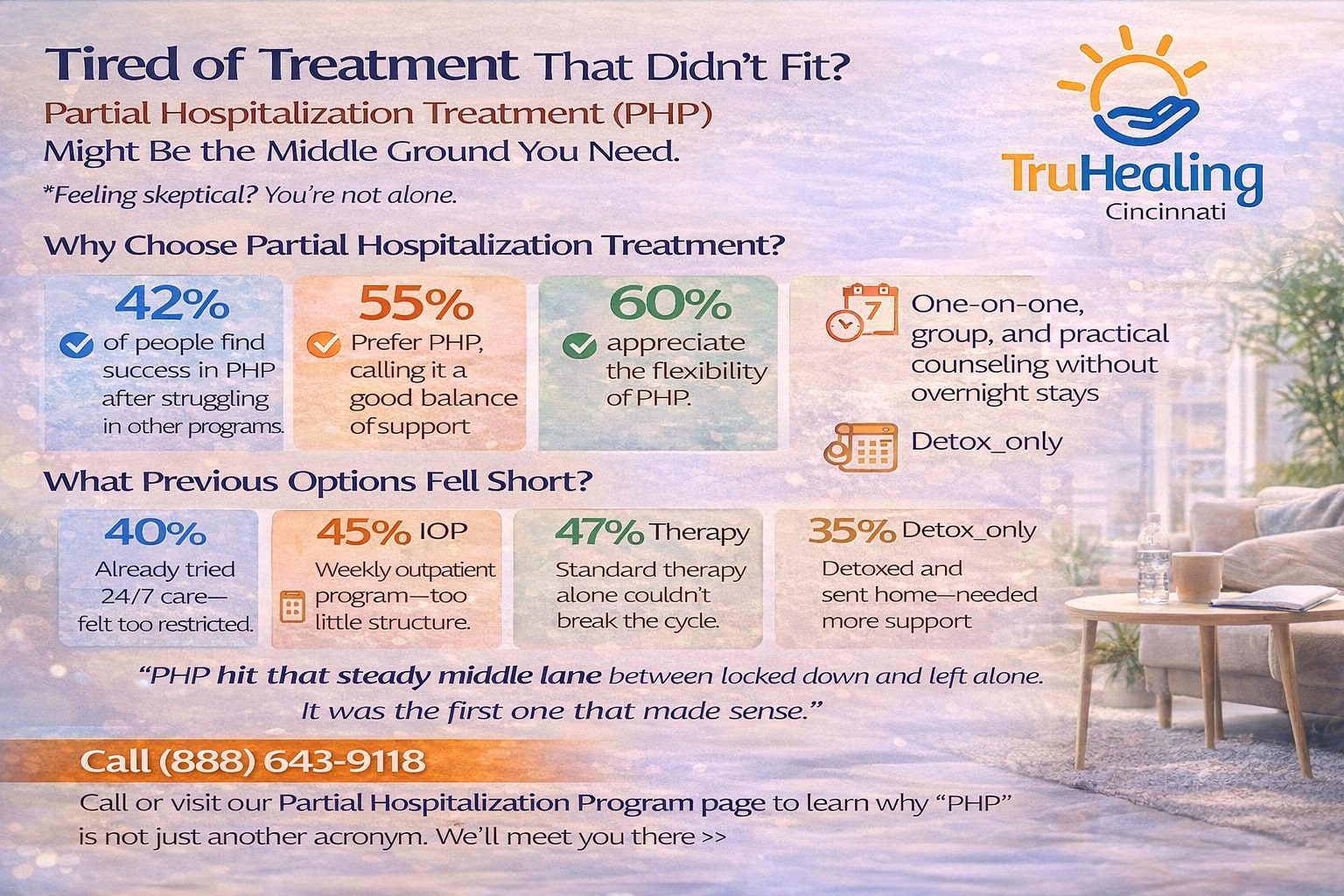
Partial Hospitalization Treatment (PHP) was the first thing that met me in the middle.
It was structured—but not suffocating. Intensive—but not isolating. I was there five days a week, six hours a day. It gave me a solid routine, daily accountability, and a space to process what I was going through. But I still went home at night. I still had to deal with laundry and traffic and texts from my sister. And that was the point.
I wasn’t escaping my life to heal. I was learning to stay present in it, without losing myself.
I Didn’t Have to Pretend Anymore
In a lot of the other programs, I felt this pressure to perform recovery. To say the right things. To cry at the right times. To “be grateful.” At TruHealing, especially in PHP, that pressure evaporated.
No one acted like I had to believe in the process on day one. They let me be skeptical. They let me show up annoyed, detached, even flat-out cynical. And over time, that’s what made me soften. Because they didn’t try to sell me hope—they showed up consistently, with honesty.
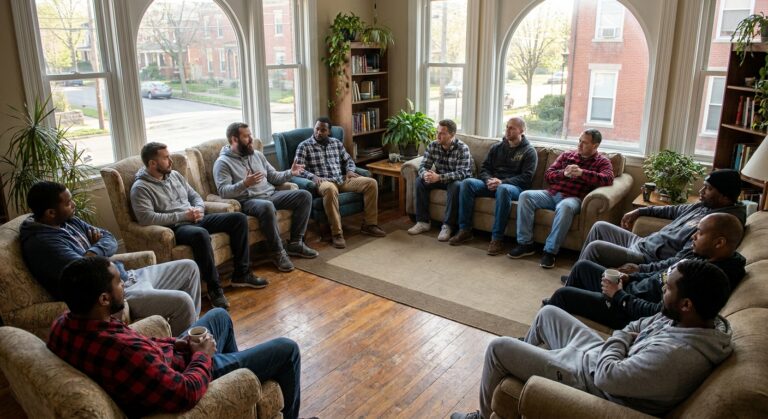
It didn’t feel like group therapy. It felt like real conversations with people who had been through it too.
“I used to think not believing in treatment was the problem. Turns out, I just hadn’t found a version that believed in me first.”
– PHP Client, 2023
Learning How to Actually Cope
One of the biggest breakthroughs for me in PHP wasn’t some dramatic moment—it was realizing I didn’t actually have coping skills. I had avoidance strategies. I had numbing. I had spirals. But coping? Not really.
In PHP, we didn’t just talk about feelings—we practiced. We broke down reactions. We identified patterns. I learned how to pause, name what I was feeling, and make a different choice. That was brand new for me.
And because I went home every night, I had a chance to try those skills in real time—not just in a sterile treatment bubble. When I came back the next day, I could talk about what worked, what didn’t, and what felt impossible.
That daily rhythm changed everything.
A Program That Didn’t Feel Like a Sentence
Look—I’m not going to say PHP cured me. It didn’t. Recovery isn’t a cure. It’s a practice. But this was the first place that made the practice feel doable.
At TruHealing Cincinnati, I didn’t feel like I was being watched or judged. I felt like I was being seen. And when I slipped up or backslid a little (because I did), they didn’t hit me with shame or start over at square one. They asked what happened. They helped me see it without spiraling.
If you’re in Lawrenceburg or Lexington, Kentucky, and looking for Partial Hospitalization Treatment that actually respects where you’re coming from—this is one of those rare places that gets it.
If You’re Still Skeptical, You’re Not Wrong
If you’ve tried treatment before and it didn’t help, your doubt is earned. You’re not broken. You’re not impossible. You just haven’t found the right fit yet.
Partial Hospitalization Treatment might not be the answer for everyone. But if you need real support without being cut off from your life—if you want to be treated like a whole person, not a walking diagnosis—it’s worth considering.
Frequently Asked Questions About Partial Hospitalization Treatment
What is Partial Hospitalization Treatment?
Partial Hospitalization Treatment (PHP) is a structured, intensive program that provides a high level of care during the day while allowing you to return home at night. It’s often a step between inpatient and outpatient care.
Who is PHP for?
PHP is ideal for people who need more support than weekly therapy can offer but don’t require 24/7 supervision. It’s a good fit for those who’ve tried other programs or are transitioning out of inpatient care.
How long does PHP usually last?
While each person’s timeline is different, many PHP programs run for several weeks. At TruHealing Cincinnati, the program length is based on your needs, progress, and goals—not a fixed calendar.
Can I work or go to school while in PHP?
It depends on your schedule. PHP typically runs during the day, five days a week. Some people adjust work or school temporarily to focus on recovery, while others move into IOP (intensive outpatient) once they stabilize.
How is PHP different from inpatient or IOP?
PHP gives you the structure of inpatient without the overnight stay, and more support than IOP. Think of it as the “middle lane” on the recovery highway—steady, supportive, and built to keep you moving.
Ready to Talk?
📞 Call (513) 429-7900 or visit our Partial Hospitalization Treatment page to learn more. You don’t have to believe it’ll work. You just have to show up. We’ll meet you there.