

There’s a moment—maybe it happened at your doctor’s office, or quietly at home after one too many nights blurred by drinking—when a word lands in your life like a stone.
Alcohol Use Disorder.
A diagnosis can feel like both a truth and a threat. A name for something you’ve been carrying—but also a door swinging open to unknown next steps: treatment, therapy, and for some, medication.
And if you’re here, maybe that’s the part that’s sticking:
“What if medication changes me?”
“What if I lose something important—some spark, some part of who I am?”
At TruHealing Cincinnati, we understand how fragile this moment is. That’s why our Partial Hospitalization Treatment program offers more than just clinical support—it offers space. To feel. To ask. To not be ready, but still belong.
That fear you’re feeling? It makes sense.
Let’s name it, because you’re not the only one who feels this way.
Medication can feel like surrender, like an irreversible shift in identity. Maybe you’re scared it’ll dull your personality. Make you foggy. Flatten the highs and lows that—while sometimes chaotic—still feel like you.
These aren’t silly fears. They’re real. Especially if alcohol has been part of how you’ve coped, connected, or even created. Giving it up is already a loss. And now someone’s suggesting medication too?
You’re allowed to hesitate.
Medication doesn’t erase who you are—it makes space for who you’ve always been.
When your nervous system has been shaped by years of drinking, your baseline often becomes chaos. Even pain can feel familiar. Stepping away from that doesn’t always bring peace right away. Sometimes it brings anxiety, fog, sadness.
That’s where medication might come in—not to “fix” you, not to change your essence, but to offer your brain some scaffolding. To help it remember what calm feels like. To help you build new ways of coping that aren’t soaked in shame or shakiness.
And here’s the key: you’re in charge of that decision.
In PHP, you’re not rushed into anything.
Partial Hospitalization Treatment (PHP) at TruHealing Cincinnati is structured, yes—but not rigid. It’s a space to stabilize your days while still living at home. You’ll be here most of the day, five days a week. It’s intensive—but also invitational.
You won’t be handed a prescription and told to comply. Instead, you’ll meet with clinicians who understand ambivalence. Who will walk you through options and answer the same question five different ways if that’s what you need.
You’ll meet other people who’ve had the same fears. Some who tried medication and found it helpful. Others who didn’t. You’ll hear real stories, not just clinical charts.
And maybe most importantly, you’ll learn how to trust yourself again.
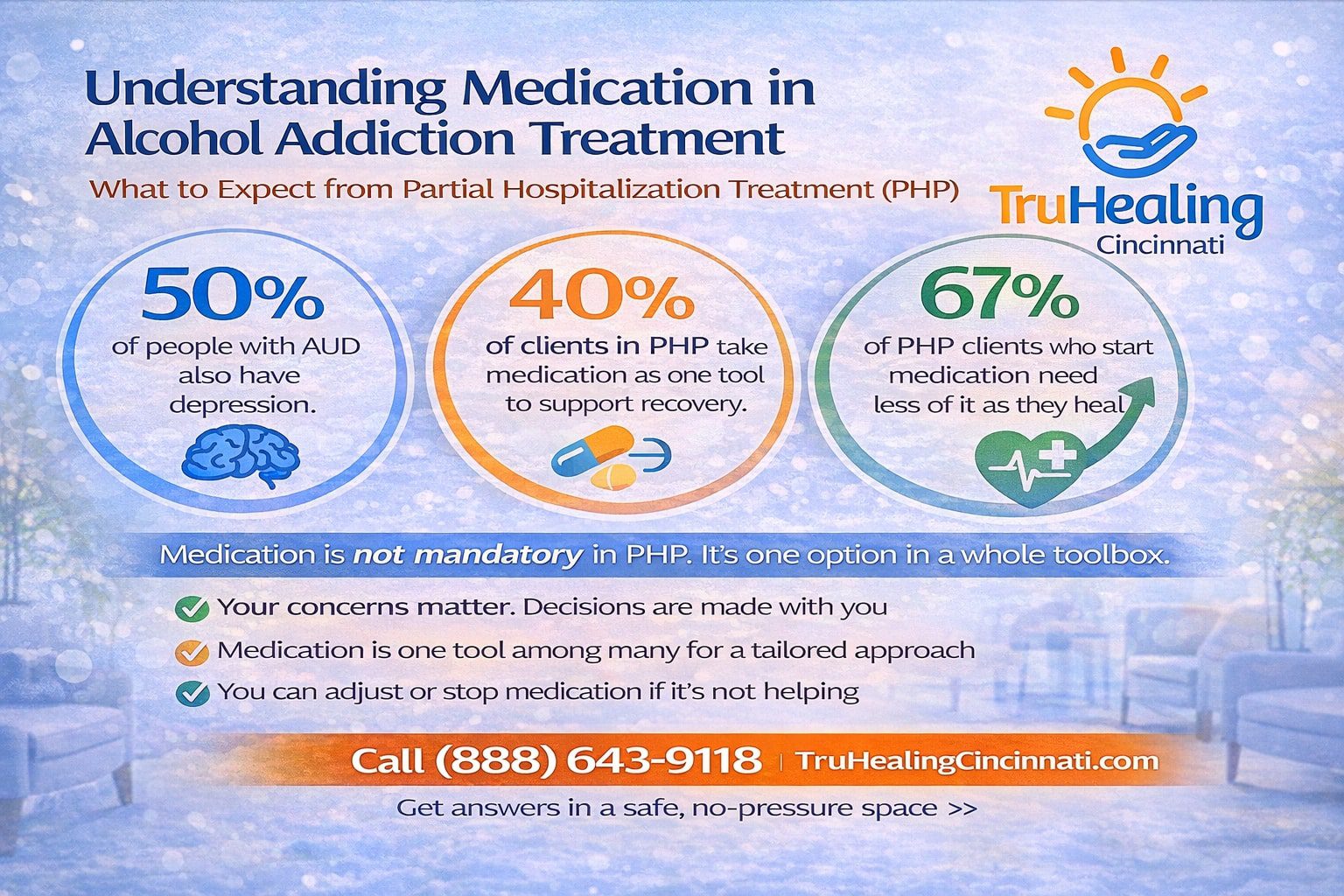
Medication is just one tool in a whole toolbox.
In PHP, we surround you with multiple supports:
- Individual and group therapy
- Education about addiction and the brain
- Trauma-informed care
- Nutrition and wellness guidance
- And when appropriate, thoughtful medication support
None of these tools are mandatory. But together, they create a net. One you don’t have to fall through.
“But what if I’m not sure I belong in treatment at all?”
This too is common. Many people—especially high-functioning adults—feel like treatment is for someone else. Someone worse off. Someone who’s lost everything.
Here’s the truth: you don’t have to lose everything to get help.
You just have to want something better than where you are now. Even if you don’t know what that looks like yet.
If you’re reading this and living near Lawrenceburg or Lexington, know that you’re not far from care that respects where you are. Looking for Partial Hospitalization Treatment in Lawrenceburg, Kentucky? Or Partial Hospitalization Treatment in Lexington, Kentucky? Our doors—and our minds—are open to you too.
There is no perfect readiness—just your next step
We won’t pretend medication is always easy, or that it works the same for everyone. But we will promise this: you won’t be rushed, dismissed, or judged.
You will be invited into a process that respects your fears and your future in equal measure.
And no matter how big the diagnosis feels right now—you are still bigger. Still you.
FAQ: Medication and Partial Hospitalization Treatment
Is medication required in PHP?
No. Medication is one option among many. If you and your care team decide it’s not right for you, that decision will be respected.
What types of medication are used in alcohol addiction treatment?
Some medications—like naltrexone or acamprosate—can reduce cravings or support brain recovery. If used, they’re prescribed based on your individual needs and discussed with full transparency.
Can I stop medication if I don’t like how it feels?
Yes. You’ll never be locked into a treatment plan. If something feels off, your care team will help you adjust safely. You’re always allowed to speak up.
What if I’ve tried medication before and it didn’t help?
That doesn’t mean you failed—or that nothing will work. We often work with clients to explore why a medication didn’t help: wrong type, wrong dose, wrong time. PHP gives you space to try again, with more support.
Will medication make me feel numb?
This fear is common—and we take it seriously. While some medications may have side effects, the goal is always stabilization, not sedation. You’ll be monitored and encouraged to share how you feel throughout the process.
📞 Ready to feel safe exploring your next step?
Call (888) 643-9118 or visit our Partial Hospitalization Treatment page to learn how we support real healing—on your terms.